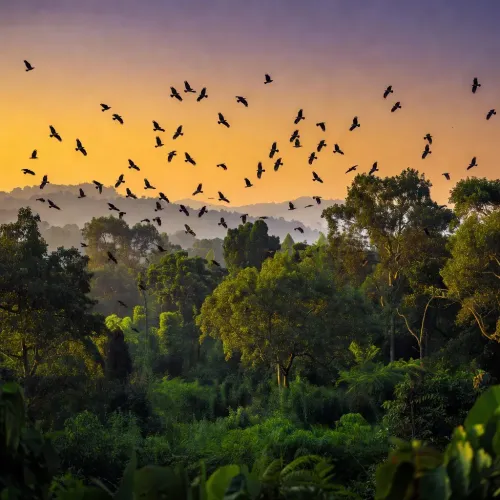
CM Himanta Welcomes Amur Falcons Back to Assam Skies
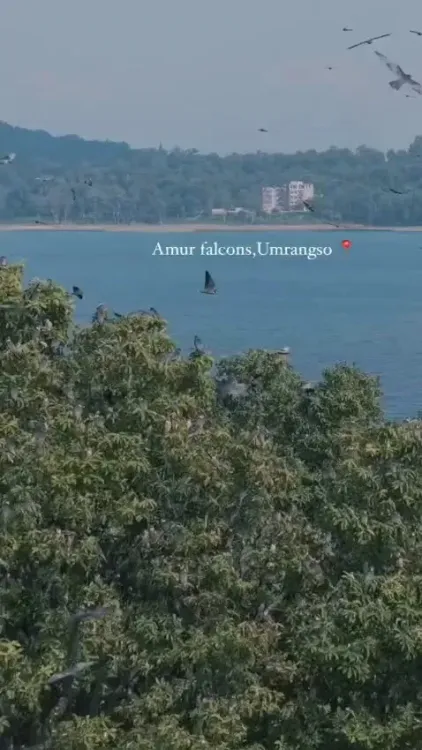
Synopsis
Assam CM Himanta Biswa Sarma welcomed the return of Amur Falcons — 150-gram birds flying 22,000 km from Mongolia to Africa — urging citizens to give the annual migrants safe skies during their November stopover in Northeast India.
Key Takeaways
Assam CM Himanta Biswa Sarma announced the return of Amur Falcons to Assam on November 5, 2026 .
Amur Falcons weigh just 150 grams yet fly 22,000 km annually between Mongolia and Africa .
The birds can fly 6,000 km non-stop and cross 3,000 km of open sea in under 80 hours .
Northeast India lies on the Central Asian Flyway and provides critical refuelling stops during the October–November passage.
Community-led protection of Amur Falcons in Nagaland began around 2012–2013 after mass-hunting reports drew international attention.
Sarma urged citizens to give the falcons 'space and safe skies' during their stopover.
They weigh less than a bar of chocolate, yet they circle the planet. Assam Chief Minister Himanta Biswa Sarma marked the return of the Amur Falcon to Assam on Thursday, November 5, calling them 'brave little travellers' and urging citizens to give the birds 'space and safe skies' during their annual stopover.
A 22,000 km journey that defies belief
The numbers in Sarma's post are staggering — and they check out. Each Amur Falcon covers roughly 22,000 km every year, shuttling between breeding grounds in Mongolia and wintering zones in Africa. The most audacious leg of that journey is an open-ocean crossing: up to 6,000 km non-stop, with 3,000 km of open sea cleared in under 80 hours. A bird weighing just 150 grams doing that, repeatedly, without fail.
Northeast India sits on the Central Asian Flyway, one of the world's great migratory superhighways, and Assam's wetlands and forests serve as a critical refuelling stop. The falcons gorge on insects here — dragonflies are a favourite — before the next gruelling stretch southward.
From mass hunting to mass protection — Nagaland's turning point
It was not always a welcome arrival. Around 2012–2013, international attention fell on large-scale hunting of Amur Falcons at roost sites in Nagaland, where tens of thousands of birds were being netted each season. The backlash was swift and effective. Community-led conservation movements took root almost overnight, and Nagaland villages that once hunted the falcons became their most fierce protectors — a rare, genuine grassroots conservation turnaround.
That precedent reshaped how the entire Northeast approaches the annual passage. State governments, forest departments, and local communities now coordinate awareness drives each October–November as the birds push through. Sarma's post fits squarely into that regional tradition of public mobilisation around the migration window.
Why a Chief Minister's post matters for a migratory bird
Senior political figures amplifying conservation messages carry weight in states where enforcement resources are thin. India is also a signatory to international agreements on migratory species, and state-level visibility — a Chief Minister calling out 'brave little travellers' to millions of followers — translates soft goodwill into on-the-ground pressure on poachers and habitat destroyers alike.
The Assam Forest Department is expected to release monitoring data on falcon numbers during this passage season. What those numbers show will tell conservationists whether the Northeast's decade-long protection effort is holding.
One hundred and fifty grams, twenty-two thousand kilometres, and a Chief Minister asking his state to look up. The least Assam can do is look back.
Point of View
High-reach act of conservation diplomacy — using a politician's platform to sustain public pressure during the narrow migration window when the birds are most vulnerable. It also signals that the Northeast's decade-long shift from falcon-hunting to falcon-protection has become politically mainstream, not just the preserve of NGOs. Regionally, it reinforces Assam's bid to position itself as a wildlife-friendly state at a time when ecotourism is a growing revenue pitch. The real test, as always, is whether the message translates into Forest Department enforcement and habitat safeguards on the ground.
NationPress
5 Nov 2026
Frequently Asked Questions
Where do Amur Falcons stop in India during migration?
Amur Falcons use Northeast India — particularly Nagaland and Assam — as key refuelling stopovers during their annual migration along the Central Asian Flyway between Mongolia and Africa , typically passing through in October and November .
How far do Amur Falcons migrate each year?
Amur Falcons travel roughly 22,000 km every year. They are capable of flying 6,000 km non-stop and can cross 3,000 km of open ocean in under 80 hours , making them one of the most remarkable long-distance migrants on Earth.
Why were Amur Falcons hunted in Nagaland?
Around 2012–2013 , large-scale hunting of Amur Falcons at roost sites in Nagaland drew international attention. Local communities subsequently launched conservation drives, transforming former hunting villages into active protectors of the species.
What did Assam CM Himanta Biswa Sarma say about Amur Falcons?
CM Himanta Biswa Sarma posted on November 5, 2026 welcoming the falcons back to Assam, describing them as 'brave little travellers' and calling on citizens to give them 'space and safe skies' as they refuel during their migration stopover.
What is the Central Asian Flyway?
The Central Asian Flyway is one of the world's major migratory bird routes, stretching from breeding grounds in Central and Northeast Asia southward through South and Southeast Asia to wintering areas in Africa . Northeast India provides critical stopover habitat along this route.