Kishan Reddy: ₹2,814-cr Cabinet push to mine India's EV future
Synopsis
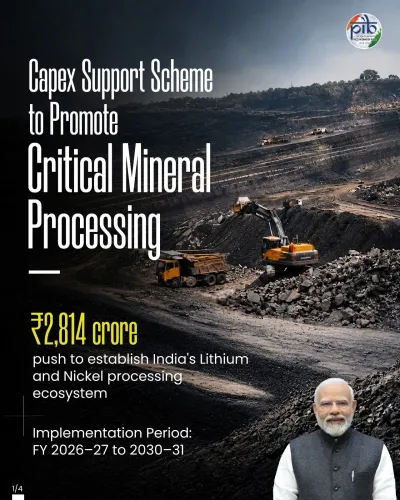
Union Minister G. Kishan Reddy announces a ₹2,814-crore Union Cabinet approval to build domestic lithium and nickel processing facilities, targeting annual capacities of 60,000 and 1,00,000 tonnes respectively, expected to save ₹4,800–5,300 crore in foreign exchange under the National Critical Minerals Mission.
Key Takeaways
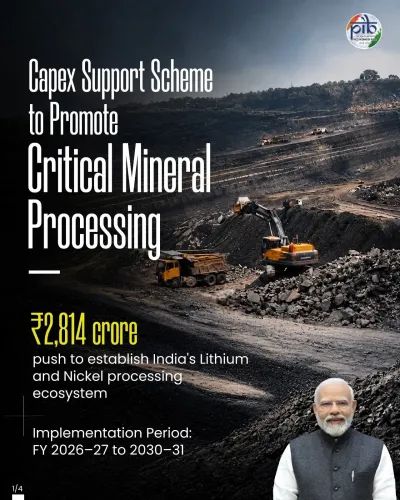
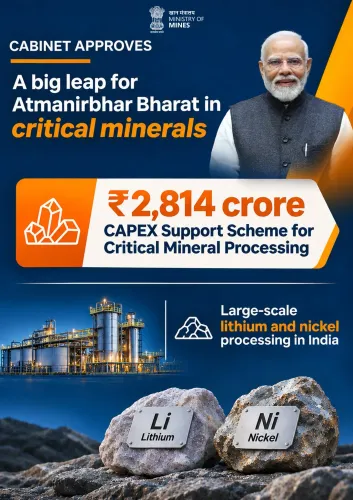
The Union Cabinet has approved ₹2,814 crore in Capex Support for domestic critical mineral processing.
Targeted annual capacities: 60,000 tonnes of lithium and 1,00,000 tonnes of nickel .
The measure is projected to save ₹4,800–5,300 crore in foreign exchange annually.
It complements the National Critical Minerals Mission , which was backed by a 2023 MMDR Act amendment adding 24 minerals to the priority exploration list.
Lithium and nickel are critical inputs for EV batteries, smartphones, laptops, grid storage, and specialty steel.
The initiative directly targets India's import dependence in strategic materials central to the energy transition.
India's electric mobility ambitions just got a critical mineral backbone. Union Coal and Mines Minister G. Kishan Reddy on Friday, November 6, 2026, spotlighted a landmark Union Cabinet decision: a ₹2,814-crore Capex Support to build domestic processing capacity for lithium and nickel — the two minerals at the heart of every EV battery on the road.
What ₹2,814 crore is buying India
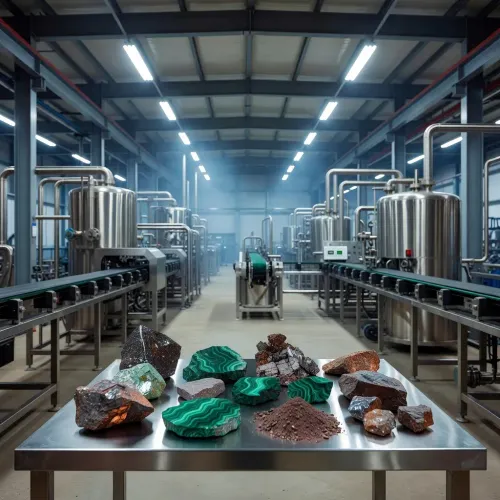
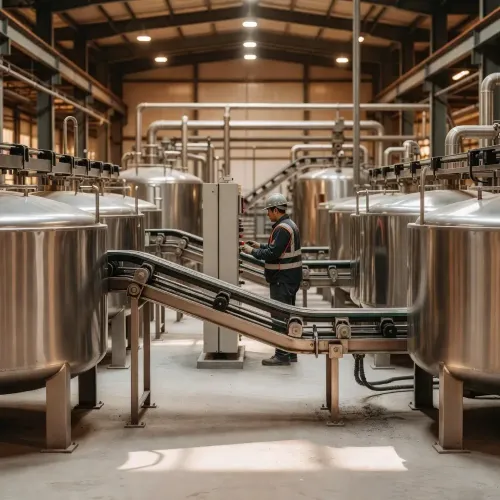
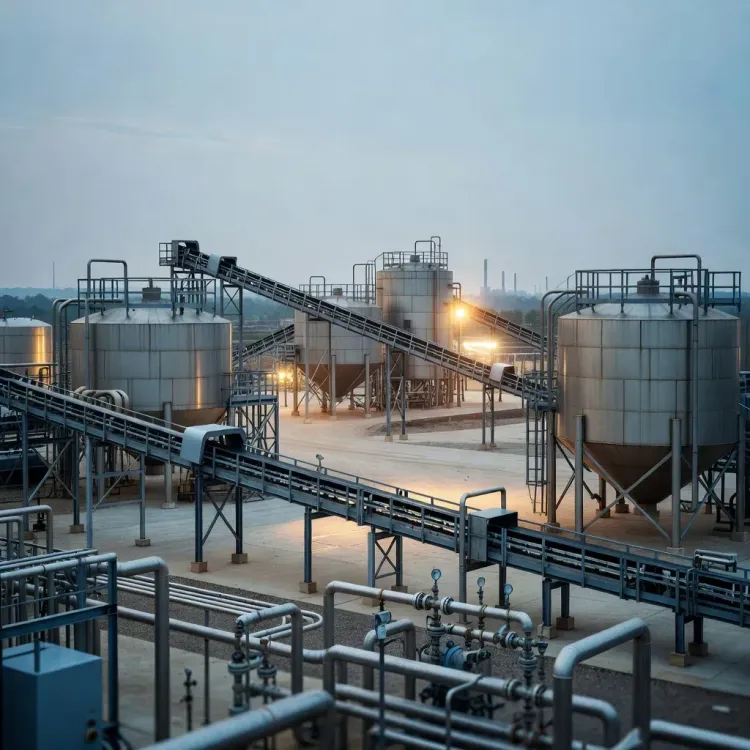
The Cabinet approval sets hard capacity targets: 60,000 tonnes of lithium and 1,00,000 tonnes of nickel processed annually inside Indian borders. Right now, both minerals flow overwhelmingly through foreign refineries — a vulnerability that leaves India's EV supply chain exposed to global price shocks and geopolitical disruptions. The government's own estimate puts the annual foreign-exchange drain to be plugged at somewhere between ₹4,800 crore and ₹5,300 crore once these facilities reach full capacity.
Kishan Reddy framed the stakes plainly: lithium and nickel are not niche commodities. They power smartphones, laptops, grid-scale storage systems, and the specialty steel that goes into industrial infrastructure. Securing their domestic processing is, in effect, securing the manufacturing backbone of India's energy transition.
Where this fits inside the Critical Minerals Mission
The Capex Support is designed as a direct complement to the National Critical Minerals Mission, the Centre's flagship programme to accelerate exploration, mining, and processing of strategic materials. That mission itself grew from a 2023 amendment to the Mines and Minerals (Development and Regulation) Act, which added 24 critical minerals to a priority list eligible for faster exploration clearances and auction. Friday's Cabinet approval is the financial muscle behind that statutory foundation — moving the initiative from a list on paper to funded, operational capacity.
The Mines Ministry — which Kishan Reddy helms — has been central to both the legislative and the investment architecture of this push. His post, tagged @MinesMinIndia and carrying #CabinetDecisions, signals the Ministry's intent to own the narrative on India's critical minerals buildout as EV adoption accelerates.
India's supply-chain bet in a contested global race
India is not alone in this scramble. Major economies have treated critical mineral supply chains as a strategic priority since global EV targets turned lithium and nickel into geopolitically sensitive commodities. India's approach — using capital expenditure support to de-risk domestic processors rather than relying on import substitution by tariff — mirrors strategies adopted by other large manufacturing nations seeking Atmanirbhar (self-reliant) industrial capacity in the energy-transition era.
The next pressure point will be execution: how quickly processing plants move from approval to commissioning, and whether India can complement domestic processing with new mineral block auctions or technology tie-ups to secure raw-material feed for the facilities being built.
India has the policy, the mission, and now the capital commitment. The clock starts now on whether refinery capacity can keep pace with the EV targets written into its own national plans.
Point of View
814-crore commitment transforms the National Critical Minerals Mission from a framework into a capital-backed industrial programme. For the Mines Ministry, anchoring domestic lithium and nickel processing capacity is as much a strategic-security play as an economic one, insulating India's EV and electronics supply chains from the geopolitical volatility that has repeatedly rattled global commodity markets. The projected foreign-exchange saving of up to ₹5,300 crore annually also gives the government a concrete, measurable return to defend the outlay against fiscal scrutiny. The critical variable now is not ambition but speed — whether India can commission these processing facilities before its own EV adoption curve outpaces the supply chain being built to serve it.
NationPress
6 Nov 2026
Frequently Asked Questions
What is the ₹2,814-crore Capex Support for critical minerals?
It is a Union Cabinet-approved capital expenditure support of ₹2,814 crore aimed at building domestic processing facilities for lithium and nickel, with targeted annual capacities of 60,000 tonnes and 1,00,000 tonnes respectively, to reduce India's dependence on imported processed minerals.
Why are lithium and nickel important for India?
Lithium and nickel are the primary materials used in electric vehicle batteries and energy storage systems. They are also used in smartphones, laptops, and specialty steel, making them critical to India's EV ambitions and broader manufacturing ecosystem.
What is the National Critical Minerals Mission?
The National Critical Minerals Mission is a Central government initiative to accelerate the exploration, mining, and processing of strategic minerals needed for sectors like clean energy and electronics. It was bolstered by a 2023 amendment to the MMDR Act that added 24 minerals to a priority list.
How much foreign exchange will India save from this Cabinet decision?
The government estimates the domestic processing capacity, once fully operational, will save approximately ₹4,800 to ₹5,300 crore in foreign exchange annually by reducing mineral imports.
Who is G. Kishan Reddy and what ministry does he lead?
G. Kishan Reddy is India's Union Minister of Coal and Mines and also serves as the BJP's Telangana state president. His Ministry oversees mineral exploration, mining policy, and the implementation of the National Critical Minerals Mission.