CM Pema Khandu Hails PMGKAY on 12 Years of Garib Kalyan
Synopsis
Arunachal Pradesh Chief Minister Pema Khandu on June 8, 2026, hailed the Pradhan Mantri Garib Kalyan Anna Yojana as a landmark Antyodaya initiative, affirming its role in delivering free foodgrains to India's most vulnerable households and ensuring no family sleeps hungry.
Key Takeaways
Pema Khandu , Chief Minister of Arunachal Pradesh , publicly praised PMGKAY on June 8, 2026 , under the hashtag #12YearsOfGaribKalyan .
PMGKAY was originally launched in March 2020 to provide an additional 5 kg of free grain per person per month to NFSA beneficiaries during the COVID-19 pandemic.
The scheme is anchored in the Antyodaya philosophy of uplifting the poorest, a concept drawn from Deendayal Upadhyaya's integral humanism.
The National Food Security Act of 2013 forms the legal and logistical backbone through which PMGKAY benefits are delivered.
Future extensions of PMGKAY and revisions to state-level distribution norms remain key policy decisions to watch.
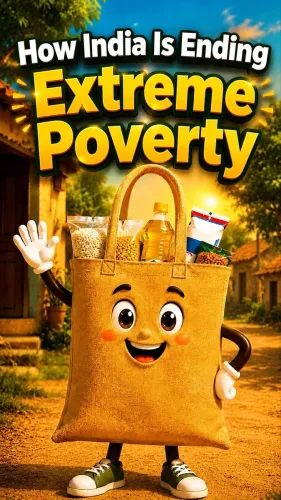
Arunachal Pradesh Chief Minister Pema Khandu on Monday, June 8, 2026, paid tribute to the Pradhan Mantri Garib Kalyan Anna Yojana (PMGKAY), calling it a landmark initiative that has strengthened food security for millions of vulnerable Indians and embodied the principle of Antyodaya.
Context
Posting on the occasion marked by the hashtag #12YearsOfGaribKalyan, CM Khandu wrote that the scheme ensures 'free foodgrains reach the most vulnerable sections of society' and that 'no one sleeps hungry and every family is assured of basic food security.' The post reflects a broader chorus of BJP leaders reaffirming the party's welfare credentials through in-kind food transfer programmes.
As Chief Minister of Arunachal Pradesh since 2016, Khandu has consistently aligned state messaging with central government welfare priorities, and this post continues that pattern.
Policy Backdrop
PMGKAY was launched in March 2020 as an emergency food relief measure during the COVID-19 pandemic, providing an additional 5 kg of free grain per person per month to beneficiaries covered under the National Food Security Act (NFSA) of 2013. The NFSA itself legally entitled priority households to subsidised foodgrains, forming the delivery backbone on which PMGKAY additions were layered.
The philosophical anchor of Antyodaya — drawn from thinker Deendayal Upadhyaya's concept of integral humanism and the uplift of the poorest — has been a recurring frame in BJP-led welfare communication since 2014. An earlier scheme, Antyodaya Anna Yojana, introduced in 2000, had similarly targeted the poorest families with highly subsidised foodgrains, establishing a lineage that PMGKAY built upon.
Stakeholders and Impact
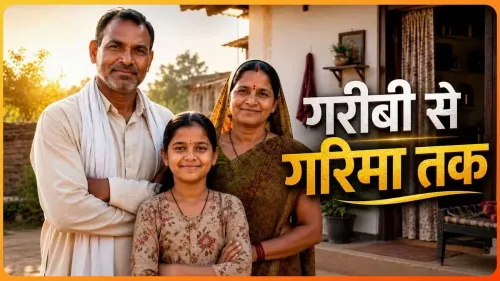
The primary beneficiaries of PMGKAY are households enrolled under the NFSA, spanning priority households and those on the Antyodaya Anna Yojana list — among the most economically marginalised sections of Indian society. Successive extensions of the scheme have kept free-grain distribution active across states, including in Arunachal Pradesh, a state with significant tribal and rural populations dependent on public distribution.
State governments serve as the critical last-mile link in this chain, overseeing procurement norms, fair-price shop operations, and beneficiary identification. CM Khandu's public endorsement signals continued administrative commitment at the state level to sustaining these distribution channels.
What's Next
Attention will remain on parliamentary and cabinet decisions regarding any further extension of PMGKAY beyond its current deadlines, as well as potential revisions to state-level procurement and distribution norms. For Arunachal Pradesh, the challenge lies in strengthening last-mile delivery to remote and border communities, where logistical constraints have historically complicated food distribution. How the central and state governments calibrate the scheme's scope in the coming months will determine whether its food security gains are sustained and deepened.
Point of View
The communication bridges ideological branding with ground-level governance. It also signals Arunachal Pradesh's administrative alignment with New Delhi at a moment when PMGKAY's continuation may be under review. The pattern underscores how welfare schemes have become a primary terrain of political signalling for the ruling party across the centre-state axis.
NationPress
23 Oct 2026
Frequently Asked Questions
What is Pradhan Mantri Garib Kalyan Anna Yojana?
Pradhan Mantri Garib Kalyan Anna Yojana (PMGKAY) is a central government scheme launched in March 2020 that provides free foodgrains to beneficiaries covered under the National Food Security Act, originally introduced as pandemic relief and subsequently extended.
Why did Pema Khandu post about PMGKAY?
Arunachal Pradesh Chief Minister Pema Khandu posted about PMGKAY on June 8, 2026, to mark the occasion highlighted by the hashtag #12YearsOfGaribKalyan, praising the scheme for strengthening food security for vulnerable Indians.
What is Antyodaya and how does it relate to PMGKAY?
Antyodaya is a philosophical principle rooted in Deendayal Upadhyaya's concept of integral humanism, focused on uplifting the poorest sections of society. PMGKAY and related food schemes are framed by the BJP as expressions of this Antyodaya commitment.
Who benefits from PMGKAY in Arunachal Pradesh?
Households enrolled under the National Food Security Act in Arunachal Pradesh, including priority households and Antyodaya Anna Yojana beneficiaries, are eligible for free foodgrains under PMGKAY, with the state government managing last-mile distribution.
Will PMGKAY be extended further?
The future of PMGKAY depends on parliamentary and cabinet decisions regarding extensions beyond current deadlines; any changes to the scheme's scope or state-level distribution norms are key policy developments to monitor.