CM Pema Khandu Marks 12 Years of Modi's Nari Shakti Push
Synopsis
Arunachal Pradesh Chief Minister Pema Khandu marked 12 years of the Modi government by crediting PM Modi with advancing women's empowerment across science, defence, agriculture, and governance, pointing to landmark policies including the Nari Shakti Vandan Adhiniyam as proof of a sustained national commitment.
Key Takeaways
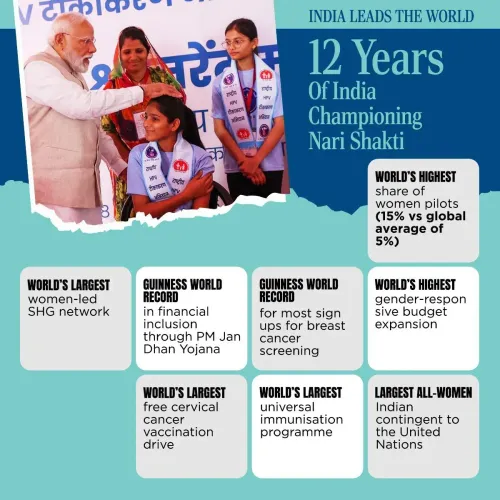
CM Pema Khandu posted on June 12, 2026 , marking 12 years of PM Modi's Nari Shakti agenda.
The Beti Bachao Beti Padhao scheme, launched in 2015 , targeted the child sex ratio and girl-child education.
The Nari Shakti Vandan Adhiniyam of 2023 reserves 33 percent of Lok Sabha and state assembly seats for women.
The Mahila Shakti Kendra programme, expanded from 2017 , provides district-level support centres for women.
Implementation of women's parliamentary reservation depends on the completion of delimitation, which remains pending.
Women's participation in defence, science, and entrepreneurship is cited as evidence of a shift from protection-focused to leadership-enabling policy.
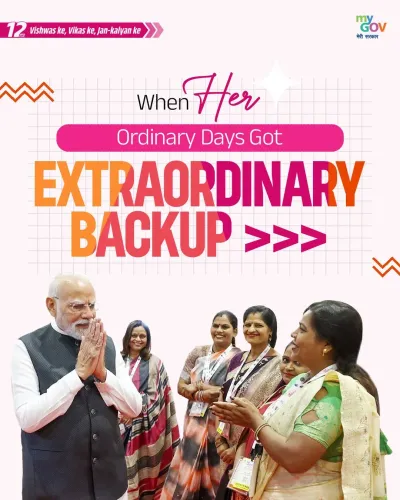
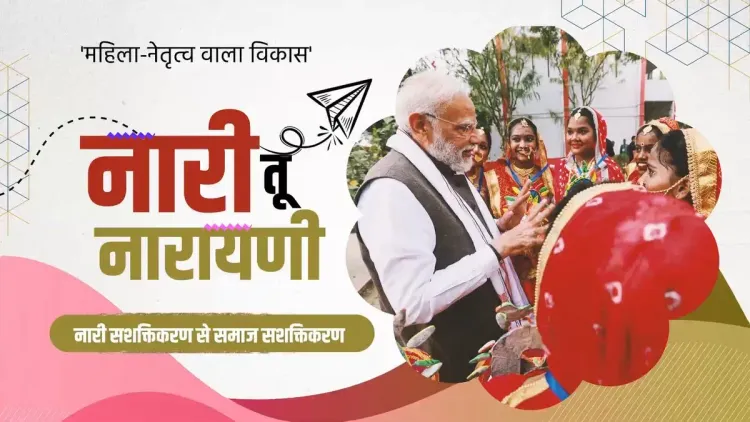
Arunachal Pradesh Chief Minister Pema Khandu on Friday, June 12, 2026, credited Prime Minister Narendra Modi with placing women at the centre of India's development agenda over the past 12 years, saying the journey from empowerment to leadership is shaping the India of tomorrow.
Context
Marking what BJP leaders are calling #12YearsOfNariShakti and #12YearsOfSeva, Khandu wrote that the Prime Minister has consistently sought to advance women's dignity, opportunity, representation, and economic empowerment since taking office in 2014. 'Today, women are leading in science, defence, agriculture, entrepreneurship, and governance,' he said, adding that 'when Nari Shakti moves forward, the nation moves forward with her.'
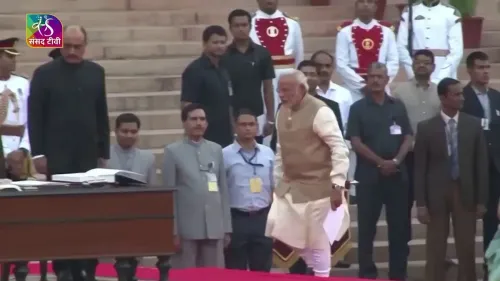
The post is part of a broader BJP commemoration marking 12 years of the Modi government, with leaders across the party amplifying the women's empowerment theme simultaneously.
Policy Backdrop
The Modi government's women-focused policy record spans more than a decade. The Beti Bachao Beti Padhao scheme, launched in 2015, targeted the declining child sex ratio and promoted girl-child education across districts. It was followed in 2017 by the expansion of the Mahila Shakti Kendra programme, which established one-stop support centres for women at the district level.
The most significant legislative milestone came in 2023 with the passage of the Nari Shakti Vandan Adhiniyam, a constitutional amendment that reserves 33 percent of seats for women in the Lok Sabha and state assemblies. The reservation, once delimitation is completed, is expected to fundamentally alter the composition of elected bodies at both the national and state levels.
Together, these measures represent a policy arc that has shifted from protective and survival-focused interventions toward enabling women's active leadership in public life and the economy.
Stakeholders and Impact
The constituencies directly addressed by this policy arc are vast. Women now constitute a growing share of enrolments in premier science and technology institutions, serve in combat roles in the armed forces, and lead self-help groups and micro-enterprises across rural and semi-urban India.
For a state like Arunachal Pradesh, where tribal women have historically faced compounded barriers of geography and social norms, the national policy framework provides a reference point for state-level programmes. Chief Minister Khandu's endorsement signals alignment between the state government and the central government's narrative on gender-inclusive development.
Political analysts note that women voters have become a decisive demographic in Indian elections, and the BJP's consistent framing of women's empowerment as a core governance achievement is as much an electoral strategy as a policy commitment.
What's Next
The immediate watch point is the implementation timeline for the Nari Shakti Vandan Adhiniyam. The women's reservation in Parliament and state assemblies is contingent on the completion of delimitation, a process that has yet to conclude. How and when that reservation takes effect will be the most concrete test of the policy's reach.
On the economic side, new schemes targeting women-led enterprises and expanding financial inclusion for rural women are expected to remain central to the government's messaging. As the 12-year milestone is marked, the transition Khandu describes — from empowerment to leadership — will be measured against outcomes in representation, wage parity, and institutional participation in the years ahead.
Point of View
Using state-level voices to amplify a central government narrative at scale. The framing — 'from empowerment to leadership' — marks a deliberate rhetorical evolution: the party is no longer content to claim it protected women; it now claims it elevated them to leadership. The Nari Shakti Vandan Adhiniyam gives that claim a concrete legislative anchor, even as its implementation remains tied to delimitation. With women voters increasingly decisive in Indian elections, this messaging serves both as a governance report card and as forward-looking electoral positioning.
NationPress
24 Sept 2026
Frequently Asked Questions
What is the Nari Shakti Vandan Adhiniyam?
The Nari Shakti Vandan Adhiniyam is a 2023 constitutional amendment that reserves 33 percent of seats for women in the Lok Sabha and state legislative assemblies. It will come into effect after the completion of delimitation.
What is Beti Bachao Beti Padhao?
Beti Bachao Beti Padhao is a central government scheme launched in 2015 to address the declining child sex ratio and promote the education and welfare of the girl child across India.
Why is CM Pema Khandu talking about women's empowerment?
CM Khandu posted in the context of BJP marking 12 years of the Modi government, using the hashtags #12YearsOfNariShakti and #12YearsOfSeva to highlight women-focused policies as a key achievement of the past decade.
What is the Mahila Shakti Kendra programme?
The Mahila Shakti Kendra programme, expanded from 2017, provides one-stop support centres for women at the district level, offering services related to health, education, and livelihood.
When will women's reservation in Parliament be implemented?
The Nari Shakti Vandan Adhiniyam has been passed, but the reservation of 33 percent seats for women in Parliament and state assemblies will only take effect after the delimitation exercise is completed, the timeline for which has not been finalised.