CM Pema Khandu Hails Modi's 12 Years of Women's Empowerment
Synopsis
Arunachal Pradesh Chief Minister Pema Khandu marked twelve years of the Modi government by crediting PM Narendra Modi with transforming Indian women from welfare beneficiaries into active partners in nation-building, citing gains in defence, entrepreneurship, and Parliament.
Key Takeaways
CM Pema Khandu posted on June 12, 2026 , praising PM Narendra Modi 's twelve-year record on women's empowerment under #12YearsOfNariShakti .
The Beti Bachao Beti Padhao scheme, launched in 2015 , was a flagship early intervention targeting the child sex ratio and girls' education.
Women were inducted as fighter pilots and granted permanent commissions in the armed forces beginning 2015–2016 .
The Constitution (106th Amendment) Act, 2023 reserved one-third of Lok Sabha and state assembly seats for women.
Mudra loans and Deendayal Antyodaya Yojana self-help groups have channelled credit to women-led micro-enterprises since 2014 .
Implementation of women's reservation provisions remains pending, contingent on delimitation and the next census.
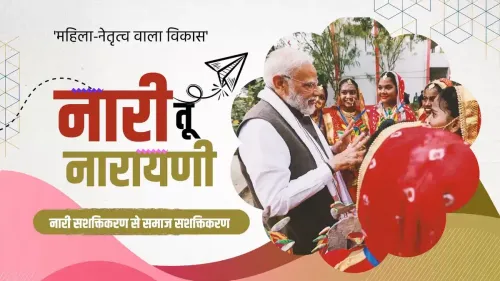
Arunachal Pradesh Chief Minister Pema Khandu on Friday, June 12, 2026, praised Prime Minister Narendra Modi's twelve-year governance record on women's empowerment, stating that 'a truly developed India can only be built with empowered women.' Posting under the hashtags #12YearsOfNariShakti and #12YearsOfSeva, the senior BJP leader framed India's women not as passive beneficiaries but as 'active partners in nation-building.'
Context
The post marks twelve years of the Narendra Modi-led central government, a milestone that BJP leaders across states have been marking with coordinated messaging on governance outcomes. Khandu highlighted women's advances 'from the skies to the battlefield, from startups to Parliament,' invoking a broad canvas of sectors where female participation has grown since 2014. The framing reflects the ruling party's 'Nari Shakti' narrative, which positions women's progress as both a welfare achievement and an economic growth driver.
Policy Backdrop
The Beti Bachao Beti Padhao scheme, launched in 2015, was among the first flagship interventions, targeting the declining child sex ratio and promoting girls' education and survival. Around the same period, the armed forces opened permanent commissions for women officers and inducted women fighter pilots, beginning in 2015–2016. Female entrepreneurship received a structural push through Mudra loans and Deendayal Antyodaya Yojana self-help groups, channelling institutional credit to women-led micro-enterprises across the country.
The most consequential legislative step came in September 2023, when Parliament passed the Constitution (106th Amendment) Act — commonly known as the Women's Reservation Bill — reserving one-third of seats for women in the Lok Sabha and state assemblies. Khandu's reference to women in Parliament directly echoes this landmark law, which the BJP has cited as a defining achievement of the Modi era.
Stakeholders and Impact
The primary stakeholders are Indian women across income levels — from rural self-help group members accessing Mudra credit to urban professionals entering defence and aviation. Women entrepreneurs have been a particular focus, with government data pointing to a steady rise in female-owned micro and small enterprises since the Pradhan Mantri Mudra Yojana's inception. For Arunachal Pradesh, a border state where female literacy and economic participation have historically lagged national averages, alignment with central women-empowerment schemes carries direct developmental significance.
State-level BJP leaders like Khandu serve a dual function in this messaging ecosystem: they amplify the national narrative while signalling that frontier and tribal-majority states are integrated into the broader development story. Arunachal Pradesh, with its significant tribal women's workforce in agriculture and weaving, stands to benefit from expanded self-help group networks and digital financial inclusion drives.
What's Next
The operative question for the 'Nari Shakti' agenda is the rollout of the Women's Reservation provisions, which are contingent on a fresh delimitation exercise and the next census — both pending as of mid-2026. Analysts and women's rights groups will watch whether the Union Budget or dedicated Nari Shakti Vandan events announce new targets for female labour-force participation. For Arunachal Pradesh, the state government's own gender-budget allocations and implementation of central schemes on the ground will be the more immediate test of whether the political messaging translates into measurable outcomes.
Point of View
Timed to the twelfth anniversary of the Modi government and designed to consolidate the party's claim on the women's empowerment agenda ahead of the next electoral cycle. By invoking domains as varied as defence, startups, and Parliament in a single breath, the statement maps the 'Nari Shakti' brand onto every major policy vertical, making it harder for rivals to contest on any single front. The reference to Parliament is particularly pointed, keeping the spotlight on the Women's Reservation Act even as its actual implementation awaits delimitation — a sequencing that allows the party to claim credit without being held to a delivery deadline. For a border-state chief minister like Khandu, echoing central messaging also reinforces his position as a reliable federating voice within the BJP's national structure.
NationPress
29 Jul 2026
Frequently Asked Questions
What is the #12YearsOfNariShakti hashtag about?
The hashtag marks twelve years of the Narendra Modi government and is used by BJP leaders to highlight policies promoting women's empowerment, from the Beti Bachao Beti Padhao scheme to the Women's Reservation Bill passed in 2023.
What is the Women's Reservation Bill that Pema Khandu's post alludes to?
The Constitution (106th Amendment) Act, 2023, reserves one-third of seats for women in the Lok Sabha and state legislative assemblies. Its implementation depends on a fresh delimitation exercise and the next national census.
What has the Modi government done for women in the armed forces?
Beginning in 2015–2016, the central government opened permanent commissions for women officers and inducted women as fighter pilots into the Indian Air Force, marking a significant shift in military gender policy.
How has the Modi government supported women entrepreneurs?
Through Mudra loans under the Pradhan Mantri Mudra Yojana and self-help groups under the Deendayal Antyodaya Yojana, the government has extended institutional credit and livelihood support to women-led micro and small enterprises since 2014.
Why is Pema Khandu posting about national women's empowerment schemes?
As Arunachal Pradesh Chief Minister and a senior BJP leader, Khandu routinely aligns state messaging with central government priorities, reinforcing the party's national development narrative and signalling the state's participation in flagship schemes.