CM Pema Khandu hails 12 years of youth empowerment under Modi
Synopsis
Arunachal Pradesh Chief Minister Pema Khandu has praised PM Narendra Modi's 12-year record on youth empowerment, citing government figures of over 6 crore youth skilled, 1.64 crore trained under PMKVY, a near-50 percent rise in ITIs, and Khelo India's growing sports pipeline.
Key Takeaways
CM Pema Khandu posted on 13 June 2026 crediting PM Narendra Modi 's government with transforming India's youth ecosystem over 12 years .
The government claims over 6 crore youth have been empowered through skill development initiatives since 2014 .
More than 1.64 crore individuals have been trained under the Pradhan Mantri Kaushal Vikas Yojana (PMKVY) .
The number of Industrial Training Institutes (ITIs) has risen from 9,977 to over 14,682 — an increase of nearly 47 percent.
The Khelo India programme is cited as a key vehicle for developing sporting talent at the grassroots level nationwide.
The post is part of coordinated BJP messaging under #12YearsOfModiGovernment and #ViksitBharat .
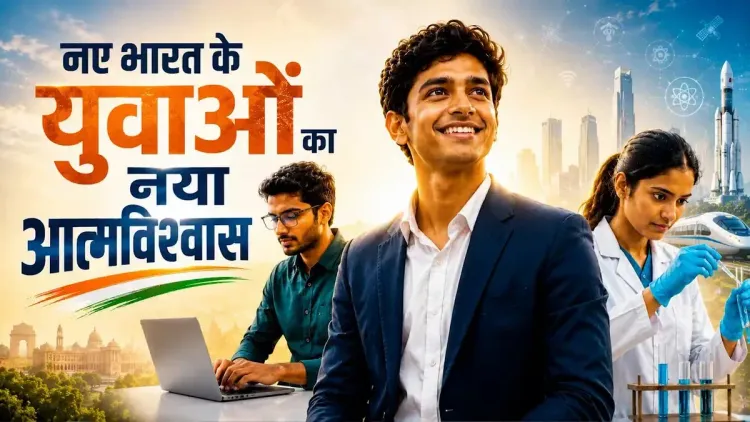
Arunachal Pradesh Chief Minister Pema Khandu on Saturday, 13 June 2026, credited Prime Minister Narendra Modi's decade-plus tenure with transforming India's youth from opportunity-seekers into opportunity-creators, citing government figures on skill development, vocational training, and sports promotion. The post, shared under the hashtag #12YearsOfYuvaShakti, highlighted key metrics across flagship central schemes as part of broader celebrations marking 12 years of the Modi government.
Context
In his post, CM Khandu stated that over 6 crore youth have been empowered through skill development initiatives since 2014, with more than 1.64 crore trained specifically under the Pradhan Mantri Kaushal Vikas Yojana (PMKVY). He also noted that the number of Industrial Training Institutes (ITIs) has grown from 9,977 to over 14,682, and that the Khelo India programme continues to nurture sporting champions across the country. These figures, as cited in the post, reflect the government's own reported data as of mid-2026.
The post aligns with a wave of similar tributes from BJP leaders nationwide marking the anniversary of the National Democratic Alliance government's return to power in May 2014. As a senior BJP leader and the Chief Minister of a border state with a young demographic profile, Khandu's endorsement carries particular regional resonance for Arunachal Pradesh, where access to vocational training and sports infrastructure has historically lagged behind more urbanised states.
Policy Backdrop
The Skill India Mission, launched in 2015, brought together multiple skilling schemes under a single umbrella with the explicit goal of bridging the employability gap among India's large youth population. PMKVY, introduced the same year, became the mission's primary delivery vehicle, offering short-term, industry-aligned certification courses to school dropouts and first-time job-seekers.
The Khelo India programme, launched in 2017, was designed to revive grassroots sports culture, develop infrastructure at the district level, and create structured talent pathways through annual games and athlete scholarships. Together, these initiatives form part of a broader government strategy — reinforced by Startup India and Atmanirbhar Bharat — to leverage India's demographic dividend by shifting youth from dependence on public-sector employment toward entrepreneurship and self-reliance. The National Policy for Skill Development and Entrepreneurship (2015) set the legislative and institutional framework underpinning these efforts.
Stakeholders and Impact
The primary beneficiaries of these programmes are India's estimated 600 million-plus youth population, particularly those in semi-urban and rural areas where formal employment pathways are limited. The expansion of ITIs — from under 10,000 to nearly 15,000 — is especially significant for states like Arunachal Pradesh, where geographical remoteness makes access to conventional higher education difficult.
Young entrepreneurs and startup founders have been indirect beneficiaries of the ecosystem built around these schemes, with India now ranking among the world's top startup nations by registered entities. Athletes nurtured under Khelo India have begun appearing at national and international competitions, signalling a gradual strengthening of India's sports pipeline ahead of events such as the 2028 Los Angeles Olympics.
What's Next
Attention will turn to the next periodic labour-force survey data, which will offer an independent measure of how effectively skilling has translated into employment outcomes. The performance of Khelo India-supported athletes at the 2026 Asian Games will also serve as a near-term benchmark for the programme's effectiveness.
Any supplementary allocations or structural changes to ITI modernisation in the upcoming 2026-27 Union Budget could signal the government's intent to deepen or redirect its skilling agenda. For Arunachal Pradesh and other frontier states, the pace of scheme implementation at the grassroots level will determine whether the headline numbers translate into tangible economic mobility for local youth.
Point of View
Reinforcing the BJP's central narrative that the Modi government has converted India's demographic bulge into a strategic asset rather than a liability. By foregrounding quantitative milestones — ITI counts, PMKVY enrolments, skilling figures — the messaging seeks to shift the youth debate from unemployment anxiety to capability-building achievement. For a border-state leader whose constituency has historically been underserved by central skilling infrastructure, the endorsement also serves a local signalling function: that Arunachal Pradesh is a participant in, not an outlier from, the national development story. The post fits a well-established pattern ahead of election cycles where the party systematically documents governance deliverables under the Viksit Bharat 2047 framework.
NationPress
25 Sept 2026
Frequently Asked Questions
What is PMKVY and how many youth have been trained under it?
PMKVY stands for Pradhan Mantri Kaushal Vikas Yojana, a central government scheme launched in 2015 to provide short-term, industry-aligned skill training and certification. According to government figures cited by CM Pema Khandu, over 1.64 crore youth have been trained under the scheme as of mid-2026.
How many ITIs are there in India in 2026?
According to figures shared by Arunachal Pradesh CM Pema Khandu, the number of Industrial Training Institutes in India has grown from 9,977 to over 14,682 during the tenure of the Modi government, representing a near-47 percent increase.
What is the Khelo India programme?
Khelo India is a central government programme launched in 2017 to promote grassroots sports, build sports infrastructure at the district level, and support athletes through scholarships and structured competitions, with the long-term goal of improving India's international sporting performance.
What is #12YearsOfYuvaShakti about?
#12YearsOfYuvaShakti is a hashtag used by BJP leaders to mark 12 years of the Narendra Modi government, specifically highlighting achievements in youth empowerment, skill development, entrepreneurship, and sports under schemes such as PMKVY, Skill India, and Khelo India.
What is the Viksit Bharat vision mentioned in the post?
Viksit Bharat, meaning 'Developed India', is the Modi government's long-term vision to transform India into a fully developed economy by 2047, the centenary of independence, with human capital, innovation, and youth entrepreneurship as central pillars.