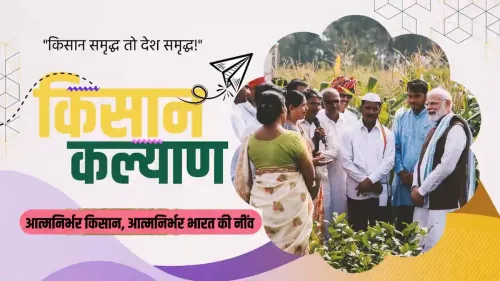
CM Pema Khandu Hails 12 Years of Modi Govt Kisan Welfare
Synopsis
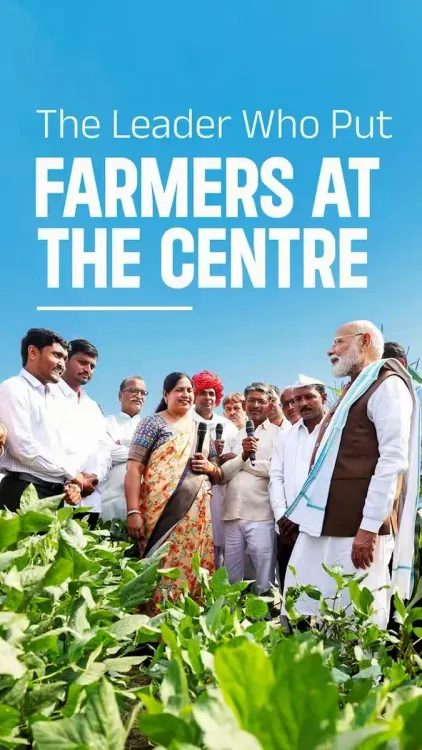
Arunachal Pradesh Chief Minister Pema Khandu has lauded 12 years of the Modi government's farmer welfare agenda, citing direct income support, modern irrigation, and crop protection as transformative pillars of India's rural growth story under the #12YearsOfKisanSamriddhi campaign.
Key Takeaways
Arunachal Pradesh CM Pema Khandu on 11 June 2026 praised the Modi government's 12-year agricultural record on X.
The post is part of the #12YearsOfKisanSamriddhi and #12YearsOfSeva campaign by BJP leaders nationwide.
PM-KISAN , launched in 2019 , provides direct income support to landholding farmers via direct benefit transfers.
The Pradhan Mantri Krishi Sinchai Yojana , expanded from 2015 , targets irrigation coverage and reduced monsoon dependence.
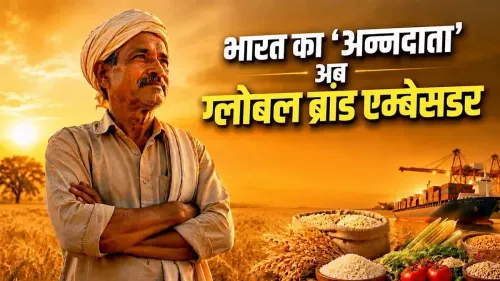
Khandu invoked the term Annadata to highlight the government's framing of farmers as central to national development.
State-level utilisation of central farm schemes and upcoming Union Budget agriculture allocations remain key areas to watch.
Arunachal Pradesh Chief Minister Pema Khandu on Thursday, 11 June 2026, credited the Narendra Modi-led central government with transforming Indian agriculture over the past twelve years, citing direct farmer support, modern technology, improved irrigation, and stronger crop protection as pillars of the shift.
Context
Khandu's post, shared under the hashtags #12YearsOfKisanSamriddhi and #12YearsOfSeva, frames the BJP government's agricultural record as a decisive departure from an era when, in his words, 'farmers were left to battle uncertainty on their own.' The message invokes the term Annadata — the traditional Sanskrit honorific for farmers meaning 'provider of food' — to underscore the government's stated commitment to rural welfare.
The post is part of a coordinated communications push by BJP leaders at both central and state levels marking twelve years of the party's governance at the Centre, with agriculture and farmer welfare positioned as flagship achievements.
Policy Backdrop
The central government's agricultural strategy since 2014 has rested on several major programmes. The Pradhan Mantri Kisan Samman Nidhi (PM-KISAN), launched in 2019, delivers direct income support to landholding farmers across India through direct benefit transfers, bypassing intermediaries.
Separately, the Pradhan Mantri Krishi Sinchai Yojana, expanded from 2015 onwards, has aimed at widening irrigation coverage and reducing the sector's dependence on monsoon rainfall. Crop insurance and technology adoption — including digital land records and soil health cards — have also been central planks of this rural economic strategy.
Khandu's framing of 'Kisan Kalyan transforming Bharat' directly echoes the Centre's sustained narrative linking farmer prosperity to broader national development, a messaging alignment that state-level BJP leaders have consistently maintained.
Stakeholders and Impact
India's agricultural sector employs a significant share of the country's workforce, making farmer welfare policies consequential for hundreds of millions of rural households. Direct benefit transfer schemes such as PM-KISAN have channelled funds directly into farmers' bank accounts, with the government citing this as a means of reducing leakage and improving targeting.
In a state like Arunachal Pradesh, where terrain and connectivity challenges have historically limited access to institutional credit and modern inputs, centrally sponsored irrigation and technology programmes carry particular relevance for smallholder and subsistence farmers.
The #12YearsOfKisanSamriddhi campaign reflects an attempt to consolidate and communicate this record to rural voters and stakeholders ahead of ongoing legislative and budgetary cycles.
What's Next
Attention will now turn to state-level utilisation reports for PM-KISAN and irrigation schemes, which will indicate how effectively central allocations have translated into ground-level outcomes in states including Arunachal Pradesh. Parliamentary discussions on agriculture allocations in the next Union Budget are also expected to revisit these themes.
As the BJP marks this governance milestone, the political salience of farmer welfare messaging is likely to remain high, with state chief ministers continuing to anchor local development narratives to central scheme achievements.
Point of View
Twelve years into its central tenure. By anchoring Arunachal Pradesh's development story to flagship central schemes, Khandu simultaneously claims credit for local progress while reinforcing the prime minister's national image. The timing, under a structured hashtag campaign, suggests a coordinated party-wide communications exercise rather than a standalone state-level statement.
NationPress
23 Sept 2026
Frequently Asked Questions
What is PM-KISAN and how does it help farmers?
PM-KISAN, or Pradhan Mantri Kisan Samman Nidhi, is a central government scheme launched in 2019 that provides direct income support to landholding farmers in India through direct benefit transfers to their bank accounts, reducing dependence on intermediaries.
What did Pema Khandu say about farmers on 11 June 2026?
Arunachal Pradesh Chief Minister Pema Khandu posted on X that under Prime Minister Narendra Modi, agriculture has become a pillar of India's growth story, powered by direct support, modern technology, better irrigation, and stronger crop protection, marking 12 years of the BJP's Kisan welfare agenda.
What is the #12YearsOfKisanSamriddhi campaign?
#12YearsOfKisanSamriddhi is a BJP-led social media campaign marking twelve years of the Modi government's agricultural and farmer welfare policies, with party leaders at central and state levels highlighting schemes such as PM-KISAN and Pradhan Mantri Krishi Sinchai Yojana.
What is the Pradhan Mantri Krishi Sinchai Yojana?
Pradhan Mantri Krishi Sinchai Yojana is a central government irrigation scheme expanded from 2015 that aims to widen irrigation coverage across India and reduce the agricultural sector's dependence on monsoon rainfall.
Why does Pema Khandu frequently highlight central government farm schemes?
As Arunachal Pradesh Chief Minister and a senior BJP leader, Pema Khandu regularly aligns state messaging with central government farmer welfare priorities, linking local rural development to national programmes to reinforce the BJP's governance narrative.