CM Pema Khandu Hails 12 Years of Farmer Empowerment Under Modi
Synopsis
Arunachal Pradesh Chief Minister Pema Khandu on June 11, 2026, credited twelve years of Modi government policy with transforming Indian farmers into entrepreneurs, citing PM-KISAN, Soil Health Cards, Namo Drone Didi, and agricultural exports crossing $51 billion as milestones of rural empowerment.
Key Takeaways
CM Pema Khandu posted on June 11, 2026 marking twelve years of the Modi government's farmer welfare programmes.
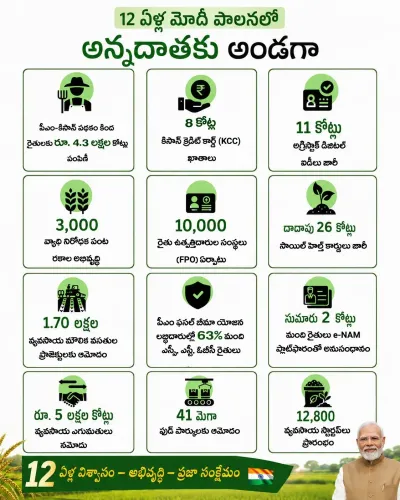
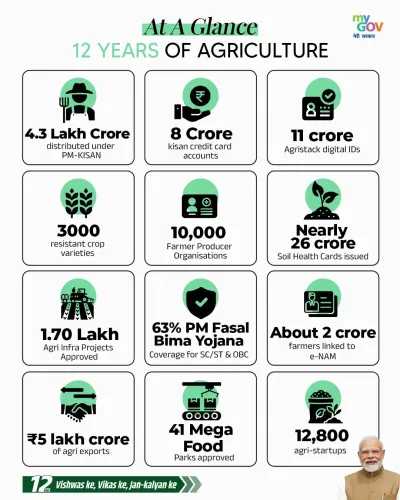
PM-KISAN delivers ₹6,000 annual direct income support to landholding farmer families via direct benefit transfer.
The Soil Health Card scheme (launched 2015 ) and Pradhan Mantri Krishi Sinchayee Yojana expanded scientific farming and irrigation access.
The Namo Drone Didi initiative trains rural women as drone operators for precision agriculture tasks.
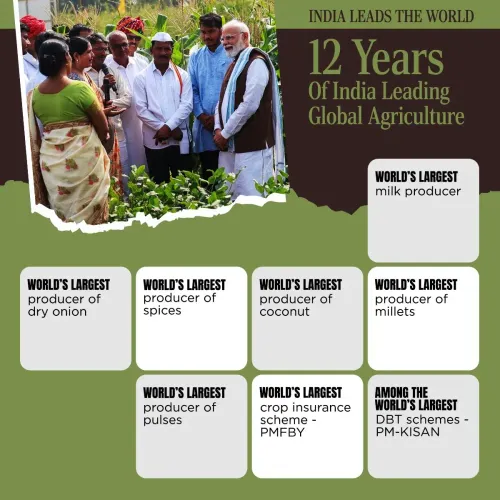
Agricultural exports are cited as 'crossing $51 billion ', framed as a marker of India's rural growth story.
The post connects farmer empowerment to the broader Viksit Bharat 2047 national development vision.
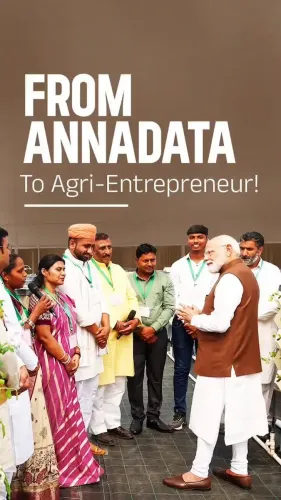
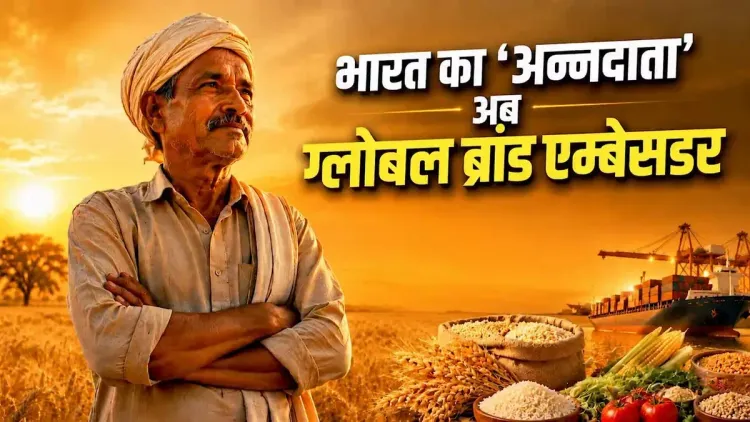
Arunachal Pradesh Chief Minister Pema Khandu on Thursday, June 11, 2026, marked twelve years of the Modi government's agricultural policy record, saying the Indian farmer has transformed from a mere food provider into 'an entrepreneur, innovator, and ambassador of India's growth story.'
Context
Posting on the occasion of the #12YearsOfKisanSamriddhi campaign, CM Khandu highlighted a suite of central schemes — PM-KISAN, Soil Health Cards, expanded irrigation, and the Namo Drone Didi initiative — as evidence of technology and empowerment reaching 'the last mile.' The post is part of a broader BJP effort to mark twelve years since the party came to power at the Centre in May 2014.
Khandu credited the transformation to the 'visionary leadership' of Prime Minister Narendra Modi, framing rural prosperity as inseparable from India's national growth narrative. The post pointed to record agricultural production and agricultural exports 'crossing $51 billion' as visible outcomes of this policy direction.
Policy Backdrop
PM-KISAN, launched in February 2019, provides an annual direct income support of ₹6,000 to landholding farmer families through direct benefit transfers, bypassing intermediaries. The scheme is widely cited by the government as a flagship example of technology-enabled welfare delivery at scale.
The Soil Health Card scheme, rolled out from 2015, issues cards detailing soil nutrient status and fertiliser recommendations, promoting scientific nutrient management. The Pradhan Mantri Krishi Sinchayee Yojana, also launched in 2015, aimed to expand irrigation coverage and improve water-use efficiency across farming districts.
The Namo Drone Didi initiative trains rural women as drone operators for crop monitoring, spraying, and precision agriculture tasks — positioning women as active agents in agricultural modernisation rather than passive beneficiaries.
Stakeholders and Impact
The direct beneficiaries of these programmes span hundreds of millions of Indian farmers and a growing cohort of rural women entering technology-linked livelihoods. Since 2014, the central government has consciously shifted from input-subsidy-heavy approaches toward direct benefit transfers and export orientation — a structural change that has reshaped how agricultural welfare is delivered and measured.
The framing of the farmer as an 'entrepreneur' and 'innovator' is also significant in political terms: it aligns the agricultural sector with the Viksit Bharat 2047 vision, linking rural prosperity metrics directly to national development goals. For Arunachal Pradesh, a state with a substantial agrarian and horticulture economy, this national narrative carries particular resonance.
What's Next
Attention will now turn to upcoming commerce ministry data on agricultural exports and production statistics, which will either substantiate or complicate the government's claims of record performance. Further expansion of drone-based agricultural services — potentially through state-level rollout plans and budget allocations — is also being watched closely by farm-sector observers.
As the BJP continues its anniversary messaging cycle under #12YearsOfSeva, the degree to which rural voter sentiment tracks with these welfare narratives will be a key indicator heading into future electoral cycles. The success of farmer-centric branding in states like Arunachal Pradesh may well shape how regional leaders pitch central schemes to their own constituencies.
Point of View
Soil Health Cards, Namo Drone Didi — the post moves beyond generic praise and anchors the tribute in policy specifics, lending it credibility beyond mere political loyalty. The framing of the farmer as 'entrepreneur and innovator' is strategically significant: it repositions agricultural welfare as an economic modernisation story rather than a relief narrative, aligning with the Viksit Bharat 2047 arc. For a border state like Arunachal Pradesh, where agriculture and horticulture underpin rural livelihoods, this messaging also serves a local constituency-building function ahead of future electoral cycles.
NationPress
23 Sept 2026
Frequently Asked Questions
What is PM-KISAN and how much money do farmers get?
PM-KISAN is a central government scheme launched in February 2019 that provides ₹6,000 per year in direct income support to landholding farmer families, transferred in three instalments of ₹2,000 directly into their bank accounts.
What is the Namo Drone Didi initiative?
Namo Drone Didi is a government initiative that trains rural women as drone operators for agricultural tasks such as crop monitoring, pesticide spraying, and precision farming, empowering women as active participants in modern agriculture.
What did CM Pema Khandu say about Indian farmers?
Arunachal Pradesh Chief Minister Pema Khandu said that under Prime Minister Modi's leadership, the Indian farmer has evolved from being seen only as an 'annadata' (food provider) into 'an entrepreneur, innovator, and ambassador of India's growth story.'
What is India's agricultural export figure cited by the BJP?
The post by CM Pema Khandu cites agricultural exports 'crossing $51 billion' as evidence of the growth achieved under twelve years of the Modi government's farm policies.
What is the Soil Health Card scheme?
The Soil Health Card scheme, launched in 2015, issues cards to farmers detailing the nutrient status of their soil and recommending appropriate fertiliser use, promoting scientific and efficient farming practices across India.