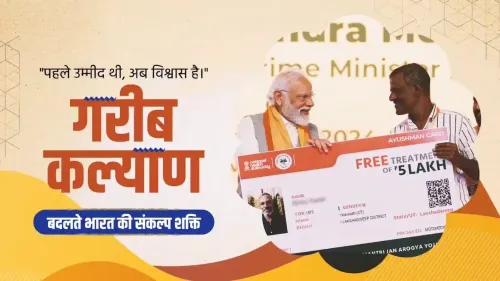
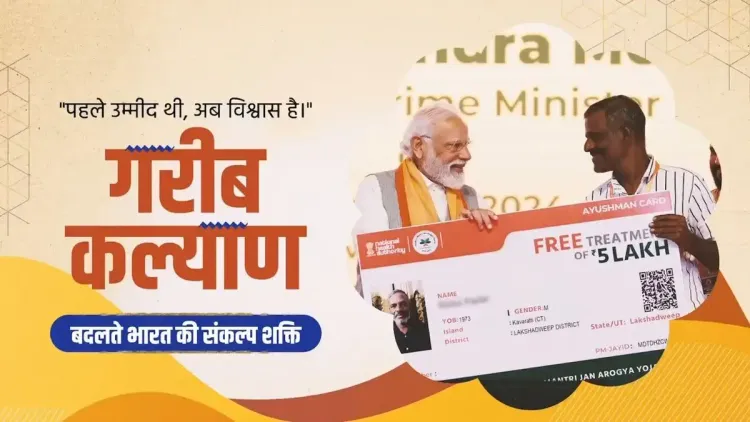
Sonowal marks 12 years of Modi govt's Garib Kalyan welfare push
Synopsis
Union Minister Sarbananda Sonowal on June 8 marked twelve years of PM Modi's Garib Kalyan welfare drive, citing Antyodaya values, DBT-led last-mile delivery, and the Viksit Bharat 2047 goal as the foundation of India's poverty-alleviation push.
Key Takeaways
Union Minister Sarbananda Sonowal posted on June 8, 2026 to mark 12 years of the Modi government's poverty-focused welfare agenda under the #12YearsOfGaribKalyan campaign.
The post invokes the Antyodaya principle — reaching the poorest first — as the ideological basis of welfare delivery since May 2014 .
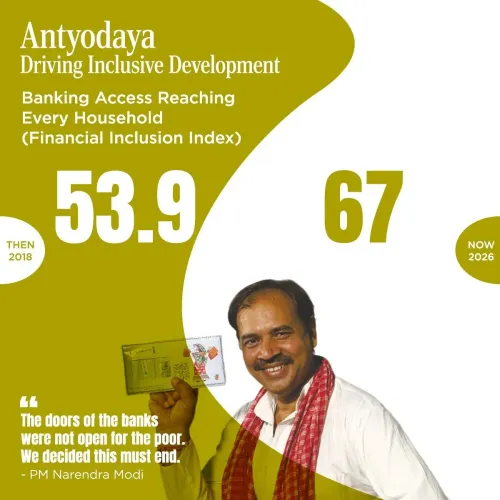
Key policy instruments cited in the broader framework include the Direct Benefit Transfer (DBT) system and the Jan Dhan-Aadhaar-Mobile (JAM) trinity for financial inclusion.
The Pradhan Mantri Garib Kalyan Anna Yojana (PMGKAY) , launched in 2020 , extended free foodgrains to hundreds of millions and has been made a permanent feature of food security.
Sonowal linked welfare delivery to the Viksit Bharat 2047 vision, framing upliftment of the poor as the core metric of India's path to developed-economy status.
Next Union Budget allocations for social-sector schemes will be a key indicator of the government's continued fiscal commitment to last-mile welfare.
Union Ports and Shipping Minister Sarbananda Sonowal on Monday, June 8, 2026, marked twelve years of the Narendra Modi government's welfare agenda, invoking the Antyodaya principle of reaching the poorest first and tying grassroots empowerment to the broader Viksit Bharat national vision.
Context
The post, shared under the hashtag #12YearsOfGaribKalyan, comes as the BJP-led government completes twelve years in office since May 2014. Sonowal described the period as one guided by 'the spirit of Antyodaya,' a longstanding policy principle of prioritising the most marginalised. He credited Prime Minister Modi's vision with ensuring 'real empowerment and dignity are reaching the last mile, free from middlemen or leakages.'
The Antyodaya framework, originally rooted in the philosophy of social reformer Pandit Deendayal Upadhyaya, has been a recurring ideological anchor for the current government's welfare architecture since 2014.
Policy Backdrop
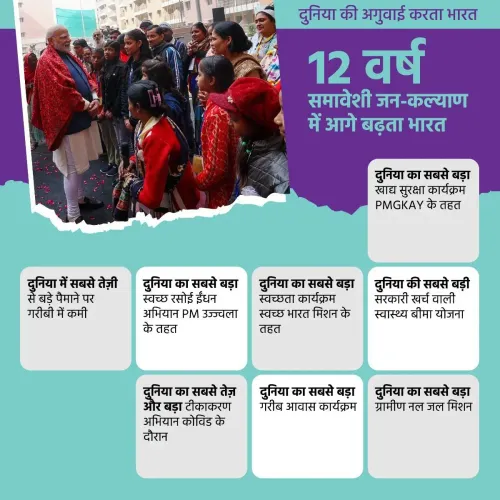
The twelve-year arc Sonowal references encompasses a significant restructuring of how welfare is delivered in India. The expansion of the Direct Benefit Transfer (DBT) system routed subsidies directly to beneficiaries' bank accounts, with the Jan Dhan-Aadhaar-Mobile (JAM) trinity forming the technological backbone of financial inclusion from 2014 onward.
The Pradhan Mantri Garib Kalyan Anna Yojana (PMGKAY), launched in 2020 during the pandemic, extended free foodgrains to hundreds of millions of households and has since been continued as a permanent feature of the food security framework. Flagship programmes such as PM Awas Yojana and the Swachh Bharat Mission also explicitly target last-mile beneficiaries, embedding the Antyodaya ethos into infrastructure and sanitation delivery.
The minister's message frames these programmes not as standalone interventions but as the foundational layer of the government's Viksit Bharat 2047 goal — the national ambition to achieve developed-economy status by India's centenary of independence.
Stakeholders and Impact
The primary beneficiaries of the welfare architecture Sonowal highlights are poor and low-income households across rural and urban India — those at the bottom decile who were historically most vulnerable to subsidy leakages and intermediary diversion. The DBT system is credited with streamlining transfers to this segment, though independent verification of leakage-reduction figures remains an ongoing area of policy research.
For the BJP as a political organisation, the #12YearsOfGaribKalyan messaging represents a concerted effort to consolidate the party's identity as a pro-poor governance force ahead of future electoral cycles. Senior ministers across portfolios have amplified similar themes around the government's tenure milestones.
What's Next
Attention will now turn to the next Union Budget, where allocations for social-sector schemes — including the continuation and possible rationalisation of PMGKAY and housing programmes — will be closely watched by welfare economists and opposition parties alike. Any parliamentary discussion on extending or restructuring Garib Kalyan programmes will test whether the government's stated commitment to last-mile delivery translates into fresh fiscal commitments. The framing of poverty alleviation as the 'very foundation of a Viksit Bharat' signals that welfare spending will remain a politically salient metric of national progress through 2047.
Point of View
Electoral, and administrative. By anchoring the message in Antyodaya, the party invokes a pre-independence philosophical lineage that transcends routine policy anniversaries. The emphasis on 'middleman-free' delivery is a pointed contrast with the pre-2014 subsidy architecture, a comparison the government has consistently used to frame its DBT reforms as a structural break from the past. With the Viksit Bharat 2047 goal now woven into virtually every ministerial communication, the welfare narrative is being consciously elevated from a social-sector concern to a civilisational project — a framing that will likely intensify as the next general election approaches.
NationPress
24 Oct 2026
Frequently Asked Questions
What is the Garib Kalyan welfare scheme in India?
'Garib Kalyan' refers broadly to a suite of poverty-alleviation programmes launched or expanded under the Modi government since 2014, including the Pradhan Mantri Garib Kalyan Anna Yojana (PMGKAY) which provides free foodgrains, and DBT-linked schemes for housing, sanitation, and financial inclusion.
What does Antyodaya mean in Indian welfare policy?
Antyodaya, meaning 'upliftment of the last person,' is a principle rooted in the philosophy of Pandit Deendayal Upadhyaya. It has been adopted by the current government as the guiding ethos for targeting welfare programmes at the poorest and most marginalised households first.
What is the Viksit Bharat 2047 vision?
Viksit Bharat 2047 is the Modi government's national goal to transform India into a developed economy by 2047, the centenary of independence. Poverty alleviation and last-mile welfare delivery are positioned as foundational to achieving this vision.
How does Direct Benefit Transfer reduce leakages in welfare?
The Direct Benefit Transfer (DBT) system routes subsidies and welfare payments directly into beneficiaries' bank accounts using the Jan Dhan-Aadhaar-Mobile (JAM) infrastructure, bypassing intermediaries and reducing the scope for diversion or corruption in welfare delivery.
Why is Sarbananda Sonowal posting about welfare when he is the Ports Minister?
As a senior BJP leader and former Chief Minister of Assam, Sonowal regularly amplifies the party's governance messaging beyond his specific portfolio. Posts marking government milestones such as the 12-year Garib Kalyan anniversary are a common practice among Union Ministers to reinforce the party's political narrative.