Rijiju Hails 12 Years of Garib Kalyan, Cites 25 Cr Poverty Exit
Synopsis
Union Minister Kiren Rijiju marked 12 years of the Modi government's Garib Kalyan agenda on June 8, 2026, citing over 25 crore people exiting poverty and crediting schemes in health, housing, sanitation, and financial inclusion for driving inclusive development and the rise of a new middle class.
Key Takeaways
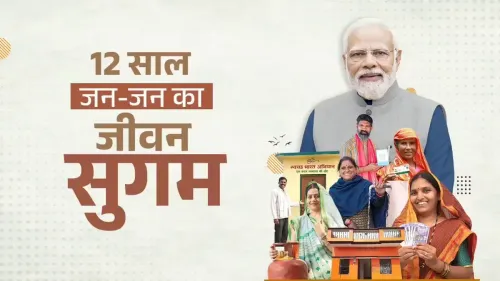
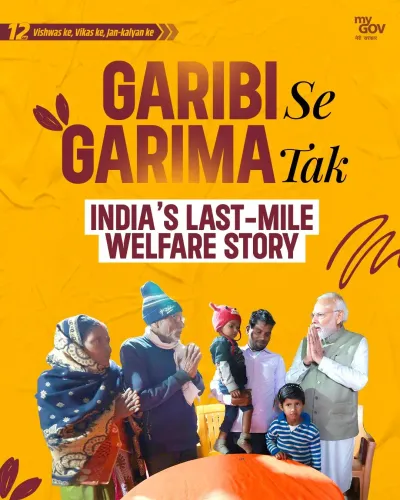
Union Parliamentary Affairs Minister Kiren Rijiju posted on June 8, 2026 to mark #12YearsOfGaribKalyan under PM Narendra Modi .
The minister cited over 25 crore people moving out of poverty as evidence of inclusive development and last-mile delivery.
NITI Aayog 's 2023 Multidimensional Poverty Index recorded a decline of approximately 13.5 crore in multidimensional poverty between 2015-16 and 2019-21.
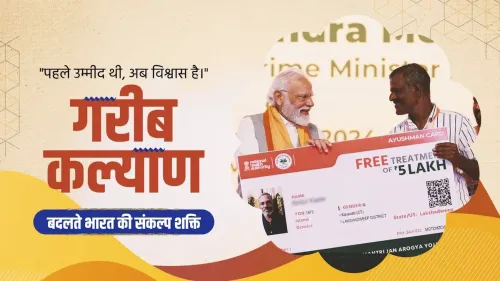
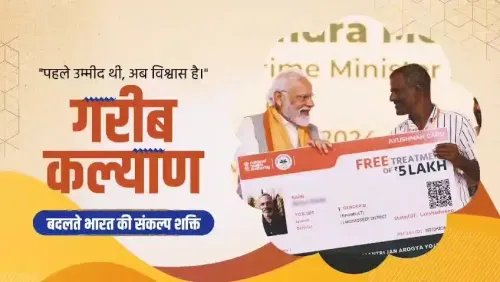
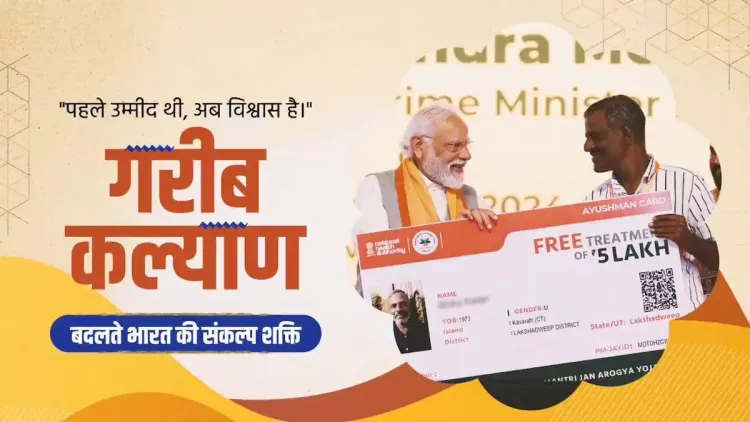
Key schemes referenced include Pradhan Mantri Jan Dhan Yojana , Swachh Bharat Mission , Ayushman Bharat (up to Rs 5 lakh health cover), and Pradhan Mantri Awas Yojana .
The next NITI Aayog poverty index update and welfare-scheme data are expected during the upcoming monsoon session of Parliament .
Rijiju also holds the Ministry of Minority Affairs portfolio, making welfare reach to marginalised communities a dimension of his messaging.
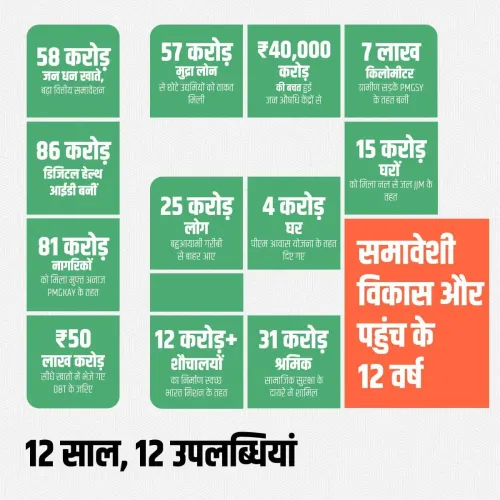
Union Parliamentary Affairs Minister Kiren Rijiju on Monday, June 8, 2026, credited Prime Minister Narendra Modi's government with lifting over 25 crore people out of poverty, citing gains in healthcare, housing, sanitation, financial inclusion, food security, and clean water as markers of inclusive development under the #12YearsOfGaribKalyan campaign.
Context
Rijiju's post marks the 12th anniversary of the Modi government's welfare push, framed under the Garib Kalyan (welfare of the poor) umbrella that has branded a wide range of centrally sponsored schemes since 2014. The minister stated that 'over 25 crore people moving out of poverty and the rise of a new middle class reflect the success of inclusive development and last-mile delivery.' The post accompanies a video, reinforcing the government's communications effort around the milestone.
The #12YearsOfGaribKalyan hashtag signals a coordinated messaging exercise across the ruling Bharatiya Janata Party, with senior ministers amplifying welfare outcome data to mark a full dozen years since PM Modi first took office in May 2014.
Policy Backdrop
Pradhan Mantri Jan Dhan Yojana, launched in August 2014, opened bank accounts for previously unbanked households, forming the foundation of direct-benefit transfers. Swachh Bharat Mission, started in October 2014, targeted universal sanitation coverage and the elimination of open defecation across rural and urban India.
Ayushman Bharat, introduced in 2018, extended health cover of up to Rs 5 lakh per year to eligible poor families, while Pradhan Mantri Awas Yojana, begun in 2015, aimed to construct pucca (permanent) houses for rural and urban poor households. Together, these schemes constitute the core of what the government describes as last-mile delivery infrastructure.
NITI Aayog's National Multidimensional Poverty Index report released in 2023 recorded a decline of approximately 13.5 crore people living in multidimensional poverty between 2015-16 and 2019-21, providing an official benchmark that the government has cited in subsequent welfare communications.
Stakeholders and Impact
The primary beneficiaries of these programmes are poor rural households and first-generation bank account holders who gained access to formal financial services, subsidised housing, and cashless health coverage. The government's framing of an emerging 'new middle class' positions former below-poverty-line families as upwardly mobile consumers, a narrative with implications for both social policy and electoral messaging.
For minority communities — a constituency that falls within Rijiju's portfolio as Minister of Minority Affairs — schemes such as Pradhan Mantri Awas Yojana and Jan Dhan have been presented as instruments of economic integration, though independent assessments of differential reach remain ongoing.
What's Next
The next NITI Aayog Multidimensional Poverty Index update is awaited and is expected to cover data beyond the 2019-21 reference period, which would provide a more current statistical basis for the government's poverty-reduction claims. Welfare-scheme utilisation figures are also anticipated to be tabled during the upcoming monsoon session of Parliament.
As the government enters its second consecutive decade, the political salience of welfare delivery metrics is likely to intensify, with opposition parties expected to scrutinise the methodology and coverage of poverty-count figures ahead of state assembly cycles.
Point of View
Using milestone hashtags to consolidate a decade-plus of scheme launches into a single, electorally resonant data point. The invocation of '25 crore out of poverty' is designed to shift the political conversation from scheme design to outcome, pre-empting opposition critiques by anchoring the claim in the broadly accepted NITI Aayog poverty-index framework. As a minister who straddles parliamentary affairs and minority outreach, Rijiju's amplification also signals that welfare delivery is being positioned as a cross-community achievement, not just a rural Hindu voter story. The timing ahead of a potential monsoon session debate on welfare expenditure suggests this is groundwork for a legislative messaging offensive.
NationPress
24 Sept 2026
Frequently Asked Questions
What is Garib Kalyan and why is 2026 its 12th anniversary?
Garib Kalyan refers to the Modi government's overarching welfare agenda covering health, housing, sanitation, and financial inclusion schemes launched from May 2014 onward. The 12th anniversary in June 2026 marks twelve years since PM Narendra Modi first took office.
How many people has India lifted out of poverty according to the government?
Union Minister Kiren Rijiju cited over 25 crore people moving out of poverty. NITI Aayog 's 2023 Multidimensional Poverty Index independently recorded a decline of approximately 13.5 crore people in multidimensional poverty between 2015-16 and 2019-21.
What are the main welfare schemes under Garib Kalyan?
Key schemes include Pradhan Mantri Jan Dhan Yojana for financial inclusion, Swachh Bharat Mission for sanitation, Ayushman Bharat providing up to Rs 5 lakh health cover, and Pradhan Mantri Awas Yojana for affordable housing for the rural and urban poor.
Who is Kiren Rijiju and what ministries does he hold?
Kiren Rijiju is a senior BJP leader from Arunachal Pradesh and currently serves as Union Minister of Parliamentary Affairs and Minister of Minority Affairs in the Modi government .
When will updated poverty data for India be available?
The next NITI Aayog Multidimensional Poverty Index update, expected to cover data beyond the 2019-21 reference period, is awaited. Welfare-scheme utilisation figures are also likely to be tabled during the upcoming monsoon session of Parliament .