CM Gujarat: 25 Crore Lifted from Poverty Under PM Modi
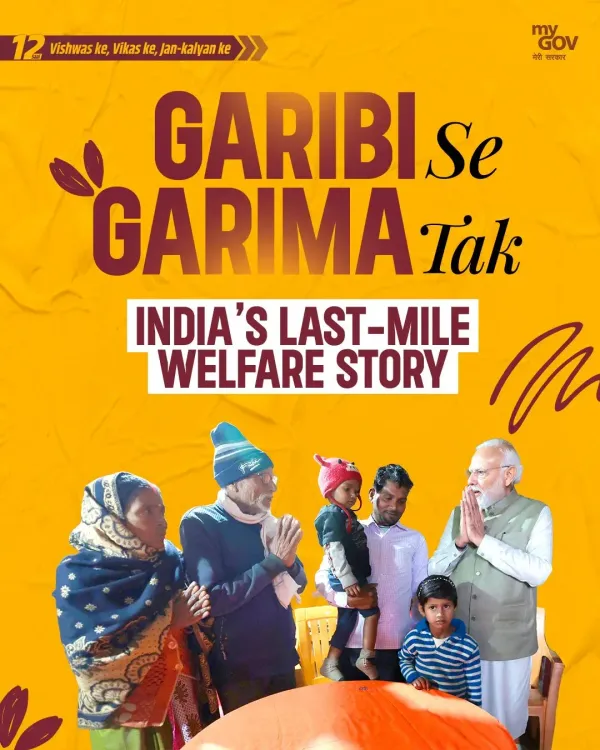
Synopsis
The Gujarat Chief Minister's Office marked 12 years of the Modi government's Garib Kalyan programmes on June 8, 2026, stating over 25 crore deprived citizens have benefited through housing, sanitation, tap water, and health schemes — framing the decade as a shift from poverty to dignity.
Key Takeaways
The Gujarat CMO post on June 8, 2026 marks 12 years of the Union government's Garib Kalyan welfare framework under PM Narendra Modi .
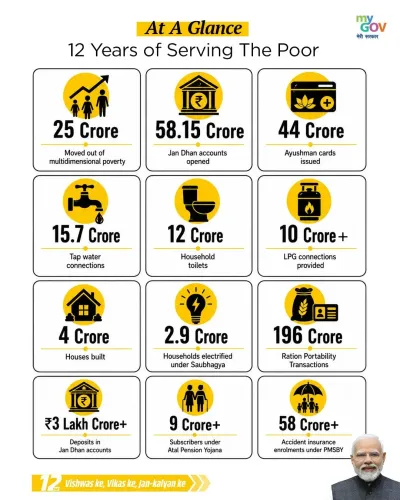
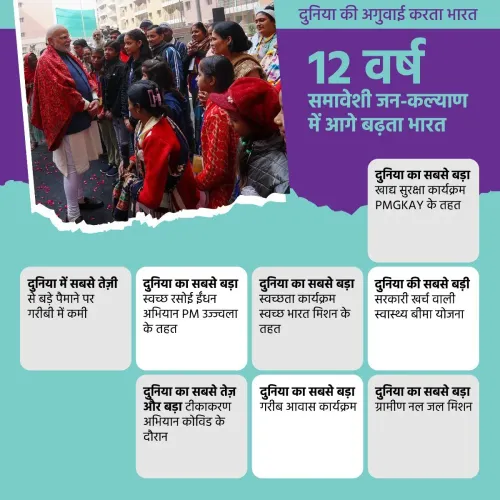
The post claims over 25 crore deprived citizens have moved from poverty to dignity across four domains: housing, health, sanitation, and drinking water.
Swachh Bharat Mission (launched October 2014 ) targeted over 10 crore individual household toilets to end open defecation.
Jal Jeevan Mission (announced August 2019 ) aims to connect 19 crore rural households with functional tap-water supply.
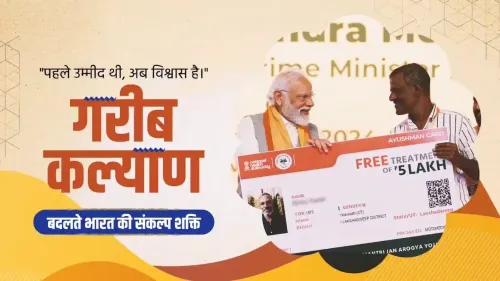
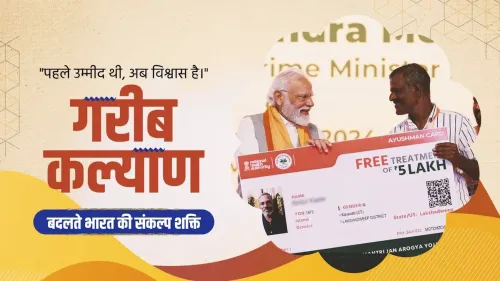
Ayushman Bharat PMJAY (launched September 2018 ) provides up to Rs 5 lakh annual health cover per family for the bottom 40 percent of households.
The Garibi se Garima framing signals that welfare delivery will remain a central pillar of the ruling party's political communication going forward.
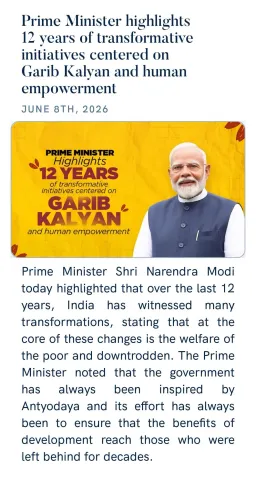
The Chief Minister's Office of Gujarat, in a post on Monday, June 8, 2026, highlighted that over 25 crore deprived citizens have moved from poverty to dignity under the welfare programmes of the Union government led by Prime Minister Narendra Modi — marking 12 years of what the ruling dispensation calls Garib Kalyan (welfare of the poor).
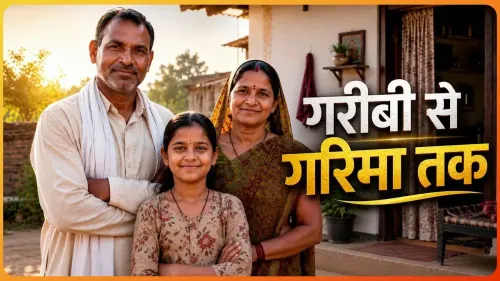
The post stated that from homes to health security, and from toilets to tap water, the lives of the poor and needy are transforming, invoking the phrase 'Garibi se Garima' — meaning 'from poverty to dignity' — to frame over a decade of social infrastructure delivery.
Context
The hashtag #12YearsOfGaribKalyan marks twelve years since the Narendra Modi-led government took office in May 2014. The Gujarat CMO's amplification of the milestone reflects the tight messaging alignment between the Gujarat state government and the Union government on welfare delivery narratives. The post bundles four flagship programme domains — housing, health, sanitation, and drinking water — into a single headline figure.Policy Backdrop
The four pillars referenced in the post correspond to distinct national schemes. Swachh Bharat Mission, launched in October 2014, targeted the construction of over 10 crore individual household toilets to end open defecation. Pradhan Mantri Awas Yojana, launched in 2015 for both rural and urban segments, aimed to deliver pucca houses to eligible poor families, with the rural phase later extended beyond its original 2022 deadline. Jal Jeevan Mission, announced in August 2019, set out to provide functional household tap-water connections to 19 crore rural households. Ayushman Bharat Pradhan Mantri Jan Arogya Yojana, rolled out in September 2018, extended health insurance coverage of up to Rs 5 lakh per family per year to the bottom 40 percent of households for secondary and tertiary hospital care. Since 2014, the Union government has prioritised large-scale schemes that deliver individual household assets — toilets, houses, water taps, health cards — using direct benefit transfers and geo-tagging as delivery mechanisms. These programmes are collectively branded under the Garib Kalyan umbrella.Stakeholders and Impact
The primary beneficiaries of these schemes are poor rural and urban households, particularly those previously without access to formal housing, sanitation infrastructure, piped water, or financial protection against medical expenses. The claim of over 25 crore beneficiaries, as stated in the post, aggregates across all four programme domains. Gujarat state channels routinely amplify national welfare messaging, reflecting both political alignment and the state's own implementation record under these centrally sponsored schemes. For rural families, the convergence of a pucca house, an in-house toilet, a tap-water connection, and an Ayushman health card represents a material shift in living standards that the government frames as structural poverty alleviation rather than incremental relief.What's Next
With 12 years of the Garib Kalyan framework now being formally commemorated, attention will turn to the next phase of scheme saturation — particularly any extension or merger of Jal Jeevan Mission and PMAY phases beyond their current deadlines. Reviews by NITI Aayog on coverage gaps and the Union Budget's allocation priorities for welfare infrastructure will be closely watched by state governments and civil society alike. The framing of 'Garibi se Garima' is likely to remain central to the ruling party's political communication ahead of future electoral cycles.Point of View
Not a routine scheme update. By bundling four distinct flagship programmes into a single beneficiary figure, the messaging seeks to project cumulative governance impact rather than programme-specific accountability. The 'Garibi se Garima' formulation is increasingly the Modi government's preferred counter-narrative to opposition critiques of inequality, positioning welfare delivery as structural transformation. For Gujarat specifically, echoing central welfare messaging reinforces the state's identity as a model implementation partner — a dynamic that has defined BJP-governed states' communication strategy since 2014.
NationPress
23 Oct 2026
Frequently Asked Questions
What is Garib Kalyan and why is it being marked in 2026?
Garib Kalyan refers to the umbrella of welfare schemes launched by the Modi government since May 2014, covering housing, sanitation, drinking water, and health insurance for the poor. The year 2026 marks 12 years since the government took office, prompting the commemorative messaging.
How many people have benefited from Modi government welfare schemes?
The Gujarat CMO's post states that over 25 crore deprived citizens have benefited across schemes covering homes, health, toilets, and tap water. This figure aggregates beneficiaries across multiple programmes including PMAY, Swachh Bharat Mission, Jal Jeevan Mission, and Ayushman Bharat.
What is the Jal Jeevan Mission and what is its target?
Jal Jeevan Mission is a central scheme announced in August 2019 to provide functional household tap-water connections to 19 crore rural households across India, with a focus on villages that previously lacked piped water supply.
What does Ayushman Bharat cover and who is eligible?
Ayushman Bharat Pradhan Mantri Jan Arogya Yojana, launched in September 2018, provides up to Rs 5 lakh per family per year for secondary and tertiary hospital care. It covers the bottom 40 percent of Indian households by socio-economic status.
What is the meaning of 'Garibi se Garima'?
'Garibi se Garima' is a Hindi phrase meaning 'from poverty to dignity.' It is used by the Modi government and state BJP governments to describe the intent of welfare schemes that deliver tangible household assets — houses, toilets, water taps, health cards — to the poorest citizens.