Dr. Jitendra Singh marks 12 years of Garib Kalyan mission
Synopsis
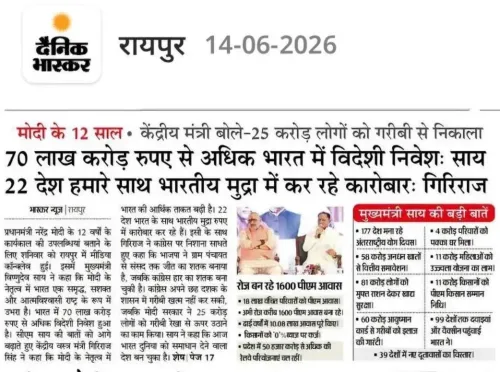
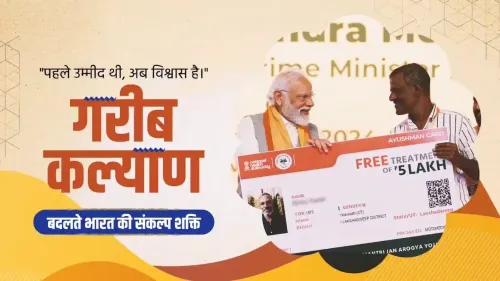
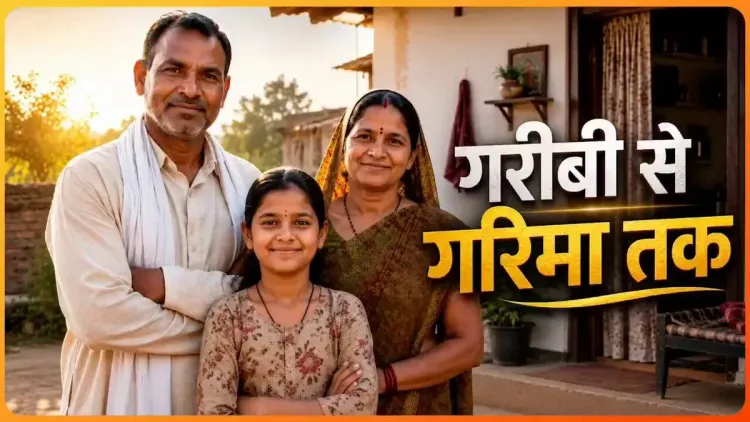
Union Minister Dr. Jitendra Singh marked twelve years of the Garib Kalyan welfare mission on June 8, 2026, invoking the government's framing of a journey from deprivation to dignity. The commemoration spans flagship schemes including Jan Dhan, Ujjwala, Awas Yojana, and the PM Garib Kalyan Anna Yojana.
Key Takeaways
Jitendra Singh posted on June 8, 2026 to mark #12YearsOfGaribKalyan , framing the mission as moving citizens 'from deprivation to self-respect.' The Garib Kalyan umbrella covers schemes launched since May 2014 , including PM Jan Dhan Yojana (August 2014), PM Ujjwala Yojana (May 2016), and PM Awas Yojana (2015).
PM Garib Kalyan Anna Yojana , providing free food grain, was first announced in 2020 and has been repeatedly extended.
The Direct Benefit Transfer (DBT) architecture routes subsidies directly to beneficiaries, reducing leakage across LPG, fertiliser, and food programmes.
Upcoming Union Budget and a NITI Aayog multidimensional poverty report are the next key milestones for the welfare policy agenda.
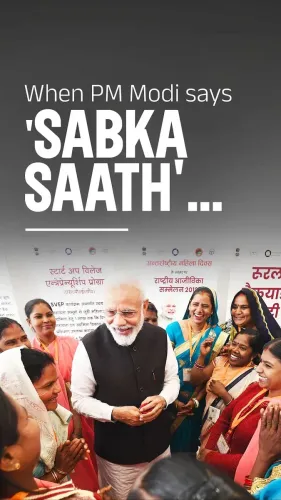
Union Science and Technology Minister Dr. Jitendra Singh on Monday, June 8, 2026, marked twelve years of the Garib Kalyan welfare mission, sharing a message of social uplift and dignity for India's poor. The minister's post, carrying the hashtag #12YearsOfGaribKalyan, encapsulated the government's framing of the journey as one moving citizens 'from deprivation to self-respect.'
Context
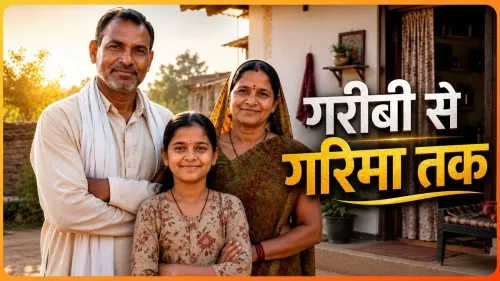
Dr. Singh's post, written in Hindi, reads: 'Abhav se swabhiman tak, har chehre par muskaan, har ghar ka utthan' — 'From deprivation to self-respect, a smile on every face, the upliftment of every home.' The message accompanied a video and was posted as part of a broader commemoration marking 12 years of welfare programmes collectively branded under the Garib Kalyan umbrella by the Narendra Modi-led central government, which took office in May 2014.
The Garib Kalyan narrative has served as an overarching label for a cluster of poverty-alleviation schemes spanning food security, housing, energy access, and financial inclusion. The phrase itself — meaning 'welfare of the poor' — has been used by the government to present its social policy as a coherent, Antyodaya-inspired mission targeting the most marginalised households.
Policy Backdrop
The twelve-year arc being commemorated traces back to a series of flagship launches. Pradhan Mantri Jan Dhan Yojana, launched in August 2014, aimed to bring unbanked households into the formal financial system. Pradhan Mantri Ujjwala Yojana, launched in May 2016, extended LPG connections to below-poverty-line families, with rural women as primary beneficiaries.
Pradhan Mantri Awas Yojana — in both its urban and rural variants, launched in 2015 — set out to provide pucca (permanent) housing to eligible poor households. Running alongside these schemes, the Direct Benefit Transfer (DBT) architecture, expanded steadily from 2014 onward, sought to route subsidies for LPG, fertiliser, and food directly to beneficiaries, reducing leakage. The PM Garib Kalyan Anna Yojana, first announced in 2020 and repeatedly extended, added free food-grain distribution as a visible pillar of the wider mission.
Stakeholders and Impact
The programmes collectively target poor households, rural women, and citizens previously excluded from formal welfare delivery. The DBT architecture in particular has been positioned as a structural shift — replacing intermediary-dependent subsidy chains with direct transfers to individual beneficiaries' bank accounts, a model made viable by the Jan Dhan account network.
Anniversary milestones such as this one are typically used by the government to reinforce the policy's narrative arc — from exclusion and deprivation toward inclusion and dignity — and to communicate programme reach to a broad public audience. Ministers across portfolios have participated in marking the occasion, reflecting its cross-cutting political significance.
What's Next
Attention will now turn to the forthcoming Union Budget for any extension or redesign of the PM Garib Kalyan Anna Yojana, whose periodic renewals have become a key fiscal and political signal. A forthcoming NITI Aayog multidimensional poverty report is also expected to provide updated headcount data that will shape the government's welfare messaging going forward. The twelve-year mark sets the stage for a renewed articulation of what the administration presents as measurable progress from want to well-being.
Point of View
And its repetition by ministers across portfolios signals coordinated messaging. The post's brevity and emotive Hindi couplet suggest it is aimed at a mass vernacular audience, not a policy constituency. With a Union Budget on the horizon, such commemorations also serve as pre-emptive political capital, signalling continuity of intent ahead of potential programme renewals or expansions.
NationPress
22 Sept 2026
Frequently Asked Questions
What is Garib Kalyan and why is 12 years being celebrated in 2026?
Garib Kalyan, meaning 'welfare of the poor,' is the umbrella branding for a cluster of central government poverty-alleviation schemes launched after the Narendra Modi government took office in May 2014 . The 12-year mark in 2026 is being commemorated as an anniversary of this welfare mission.
What schemes are included under the Garib Kalyan umbrella?
Key schemes include PM Jan Dhan Yojana for financial inclusion, PM Ujjwala Yojana for LPG access, PM Awas Yojana for housing, and PM Garib Kalyan Anna Yojana for free food-grain distribution, all supported by the Direct Benefit Transfer architecture.
What did Dr. Jitendra Singh say about Garib Kalyan?
Dr. Singh posted in Hindi: 'Abhav se swabhiman tak, har chehre par muskaan, har ghar ka utthan' — 'From deprivation to self-respect, a smile on every face, the upliftment of every home' — using the hashtag #12YearsOfGaribKalyan .
What is PM Garib Kalyan Anna Yojana?
PM Garib Kalyan Anna Yojana is a free food-grain distribution scheme first announced in 2020 and repeatedly extended by the central government as part of its food-security commitment to poor households.
What comes next for India's Garib Kalyan welfare programmes?
The forthcoming Union Budget is expected to signal whether the PM Garib Kalyan Anna Yojana will be extended or redesigned, while a forthcoming NITI Aayog multidimensional poverty report will provide updated data on programme impact.