FM Sitharaman marks 12 years of Garib Kalyan welfare push
Synopsis
Finance Minister Nirmala Sitharaman marked twelve years of the Modi government's Garib Kalyan welfare umbrella on June 8, 2026, calling it the Prime Minister's guarantee of dignity, opportunity and empowerment for every Indian — ahead of the next Union Budget cycle.
Key Takeaways
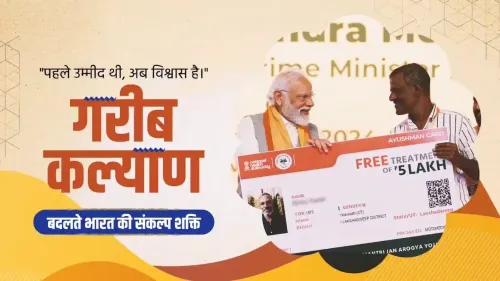
Nirmala Sitharaman posted on June 8, 2026 to mark #12YearsOfGaribKalyan , the BJP government's pro-poor welfare narrative.
The Garib Kalyan umbrella includes Pradhan Mantri Jan Dhan Yojana (August 2014), Pradhan Mantri Ujjwala Yojana (May 2016), and Pradhan Mantri Garib Kalyan Anna Yojana (March 2020).
Sitharaman described the agenda as PM Modi 's guarantee of 'dignity, opportunity and empowerment for every Indian.' The primary beneficiaries are low-income and rural households historically excluded from banking, subsidised fuel, and food-security systems.
Welfare scheme performance metrics are expected to feature in the upcoming Economic Survey and next Union Budget .
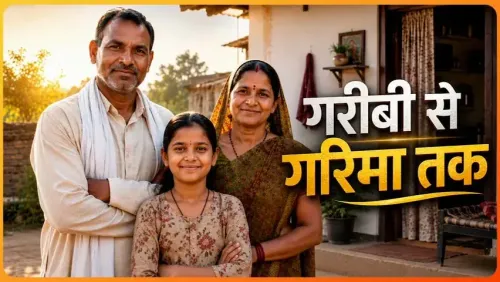
Union Finance Minister Nirmala Sitharaman on Monday, June 8, 2026, marked twelve years of the central government's Garib Kalyan welfare agenda, describing it as Prime Minister Narendra Modi's guarantee of 'dignity, opportunity and empowerment for every Indian.'
Context
The post, carrying the hashtag #12YearsOfGaribKalyan, is part of a coordinated communication effort by the ruling Bharatiya Janata Party to mark a decade-and-two-years of pro-poor programmes that the government groups under the Garib Kalyan — or 'welfare of the poor' — umbrella. Sitharaman, who oversees the Union Budget and chairs the GST Council, routinely uses her social-media presence to amplify flagship scheme milestones. The anniversary falls as the government enters the final stretch before the next Union Budget cycle, when welfare delivery metrics typically receive renewed political attention.
Policy Backdrop
The Garib Kalyan narrative took shape after May 2014 when the Modi government began rolling out a sequence of targeted welfare interventions. Pradhan Mantri Jan Dhan Yojana, launched in August 2014, aimed to bring unbanked households into the formal financial system, eventually seeding the infrastructure for direct benefit transfers. Pradhan Mantri Ujjwala Yojana, announced in May 2016, extended subsidised LPG connections to below-poverty-line families, with the government citing improved cooking-fuel access for women as a key outcome.
The umbrella expanded sharply during the COVID-19 pandemic when the Pradhan Mantri Garib Kalyan Anna Yojana was announced in March 2020, providing free foodgrains to hundreds of millions of beneficiaries. Successive Union Budgets have continued to frame social-sector spending around the same Garib Kalyan identity, linking poverty alleviation with dignity and economic participation in official communications.
Stakeholders and Impact
The primary beneficiaries of the schemes grouped under this banner are low-income households and rural communities across India, particularly those historically excluded from banking, subsidised fuel, and food-security systems. The direct-benefit-transfer architecture built over this period has been cited by the government as a tool to reduce leakage and ensure welfare reaches intended recipients. Civil-society assessments of outcomes across individual schemes have varied, with some pointing to significant coverage gains and others flagging implementation gaps at the last mile.
What's Next
Performance metrics and possible extensions of existing Garib Kalyan schemes are expected to feature prominently in the forthcoming Economic Survey and the next Union Budget. Anniversary communications of this kind typically precede policy announcements that either expand scheme coverage or introduce new beneficiary categories. Sitharaman's framing — anchoring the welfare agenda explicitly to PM Modi's personal guarantee — signals that Garib Kalyan will remain a central political and policy theme as the government approaches the next electoral and budgetary calendar.
Point of View
Opportunity and empowerment' in a single sentence, the Finance Minister frames welfare not merely as subsidy delivery but as a rights-based political compact — a framing that has electoral utility. The timing, ahead of the next budget cycle, suggests the government intends to keep Garib Kalyan as a live policy and messaging vehicle rather than a retrospective milestone. How the government translates this anniversary rhetoric into measurable scheme extensions will be closely watched by both beneficiary groups and opposition parties.
NationPress
24 Oct 2026
Frequently Asked Questions
What is Garib Kalyan and which schemes does it include?
Garib Kalyan is the Modi government's umbrella term for pro-poor welfare programmes, including Pradhan Mantri Jan Dhan Yojana (banking access), Pradhan Mantri Ujjwala Yojana (LPG connections), and Pradhan Mantri Garib Kalyan Anna Yojana (free foodgrains during the pandemic).
Why is 2026 being called 12 years of Garib Kalyan?
The BJP government counts the Garib Kalyan era from May 2014 when PM Modi first took office, making June 2026 approximately twelve years since the welfare agenda was launched.
What did Nirmala Sitharaman say about Garib Kalyan?
Sitharaman described Garib Kalyan as PM Modi's guarantee of 'dignity, opportunity and empowerment for every Indian' in a post on June 8, 2026.
Who benefits from Garib Kalyan schemes?
The primary beneficiaries are low-income and rural households across India, particularly those previously excluded from formal banking, subsidised cooking fuel, and food-security systems.
Will Garib Kalyan schemes be extended in the next Union Budget?
No official announcement has been made, but performance metrics and possible extensions of existing Garib Kalyan schemes are expected to feature in the forthcoming Economic Survey and Union Budget.