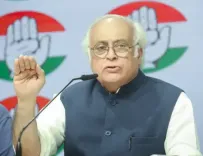
Sitharaman Marks 12 Years of Garib Kalyan Welfare Push
Synopsis
Finance Minister Nirmala Sitharaman marked the 12th anniversary of the Modi government's Garib Kalyan welfare drive, calling India a global standout in poverty reduction. The milestone spotlights flagship schemes like PMGKAY, Jan Dhan, and Ujjwala that together cover hundreds of millions of low-income Indians.
Key Takeaways
Union Finance Minister Nirmala Sitharaman posted on June 8, 2026 marking #12YearsOfGaribKalyan , calling India a global standout in fighting poverty.
The Garib Kalyan umbrella covers schemes launched since 2014 , including PMGKAY , which provides free rations to roughly 80 crore beneficiaries.
PMGKAY was first introduced in 2020 as COVID-19 relief and has been extended multiple times since.
NITI Aayog multidimensional poverty index reports have been cited by the government to claim large-scale poverty reduction since 2014.
The next NITI Aayog poverty index release and any 2026-27 Union Budget changes to PMGKAY are the key near-term markers to watch.
Union Finance Minister Nirmala Sitharaman on Monday, June 8, 2026, highlighted India's record on poverty alleviation, posting on X that the country 'has stood out globally in its fight against poverty and deprivation' under the hashtag #12YearsOfGaribKalyan.
Context
The post marks twelve years since the National Democratic Alliance government, led by Prime Minister Narendra Modi, came to power in May 2014 with a stated mandate of expanding welfare delivery to India's poorest citizens. The Garib Kalyan ('welfare of the poor') branding has since been applied to a cluster of flagship schemes spanning food security, financial inclusion, cooking-gas access, and direct cash transfers. Sitharaman's post positions this anniversary as a moment of global distinction for India's development trajectory.
Policy Backdrop
The centrepiece of the Garib Kalyan architecture is the Pradhan Mantri Garib Kalyan Anna Yojana (PMGKAY), a free-ration programme that covers roughly 80 crore beneficiaries and was first rolled out in 2020 as part of COVID-19 relief before being repeatedly extended by the central government. Alongside it, schemes such as Jan Dhan bank accounts, Ujjwala LPG connections, and direct-benefit transfers have been cited in government communications as instruments that collectively shifted India's poverty metrics. The NITI Aayog, the government's principal policy think-tank, has published multidimensional poverty index reports claiming substantial reductions in deprivation since 2014, and these findings are routinely invoked in official narratives to benchmark India against global peers.
Successive Union Budgets since 2014 have widened the fiscal envelope for direct-benefit transfers, with Sitharaman herself having presented multiple budgets that maintained or expanded food-subsidy and rural-welfare allocations. The government's position — reflected in the Finance Minister's post — is that this sustained, multi-scheme approach has made India an outlier in global poverty reduction at a time when many developing economies struggled.
Stakeholders and Impact
The primary beneficiaries of the Garib Kalyan umbrella are low-income households and rural communities across India, particularly those reliant on subsidised food, clean cooking fuel, and formal banking access for the first time. Civil-society researchers and opposition voices have at different points contested the methodology of official poverty counts and the adequacy of ration quantities, though the scale of the programmes — in terms of beneficiary numbers and fiscal outlay — is not disputed. For the ruling Bharatiya Janata Party, the twelve-year milestone provides a political reference point ahead of ongoing state election cycles.
What's Next
Attention will now turn to the next NITI Aayog multidimensional poverty index release, which is expected to provide updated data on deprivation indicators and will likely be cited by the government as evidence of continued progress. Any extension or restructuring of PMGKAY — whose periodic renewals have become a recurring budget-season announcement — in the 2026-27 Union Budget will be closely watched by welfare economists and opposition lawmakers alike. Sitharaman's post signals that the Garib Kalyan narrative will remain a central pillar of the BJP's governance messaging as the NDA government moves deeper into its third consecutive term.
Point of View
Anchoring the BJP's welfare record to a twelve-year milestone just as the NDA government consolidates its third term. By framing India as a global outlier in poverty reduction, the Finance Ministry is pre-empting opposition critiques ahead of the next NITI Aayog poverty data release, which will either validate or complicate that claim. The Garib Kalyan branding has proven durable precisely because it bundles disparate schemes — food security, financial inclusion, energy access — under a single emotive label, making it difficult for critics to attack without appearing to oppose the programmes themselves. The anniversary post also quietly sets the terms for the 2026-27 Budget debate, where PMGKAY renewal will again be a high-visibility decision.
NationPress
23 Sept 2026
Frequently Asked Questions
What is Garib Kalyan and why is 12 years being celebrated?
'Garib Kalyan' means 'welfare of the poor' and refers to the cluster of welfare schemes launched by the Modi government after it came to power in May 2014. The 12-year mark in 2026 is being used by BJP leaders, including Finance Minister Sitharaman, to highlight the government's poverty-alleviation record.
What is the Pradhan Mantri Garib Kalyan Anna Yojana (PMGKAY)?
PMGKAY is a central government scheme that provides free food grains to approximately 80 crore people in India. It was launched in 2020 as COVID-19 relief and has been extended multiple times since.
What has NITI Aayog said about poverty reduction in India?
NITI Aayog has published multidimensional poverty index reports claiming significant reductions in deprivation since 2014, which the government uses to argue India has outperformed global peers in poverty alleviation.
What should we watch for next on India's welfare policy?
The next NITI Aayog multidimensional poverty index release and any announcement about extending or modifying PMGKAY in the 2026-27 Union Budget are the key developments to track.
Why is Nirmala Sitharaman posting about welfare schemes?
As Union Finance Minister and a senior BJP leader, Sitharaman regularly uses social media to highlight the government's flagship programmes. The #12YearsOfGaribKalyan hashtag suggests a coordinated anniversary communication effort by the ruling party.