CM Samrat Choudhary Hails 12 Years of Modi Welfare Schemes
Synopsis
Bihar Chief Minister Samrat Choudhary on 8 June 2026 hailed 12 years of PM Modi's Garib Kalyan welfare drive, crediting schemes from Jan Dhan to Ayushman Bharat with delivering financial inclusion, health cover, housing, and food security to India's poorest citizens.
Key Takeaways
Bihar CM Samrat Choudhary posted on 8 June 2026 under #12YearsOfGaribKalyan praising PM Modi's welfare record.
Pradhan Mantri Jan Dhan Yojana (launched 28 August 2014 ) enabled financial inclusion and became the base for Direct Benefit Transfers.
Ayushman Bharat (2018) provides up to Rs 5 lakh annual health cover per poor family for hospital treatment.
PM Kisan Samman Nidhi delivers Rs 6,000 per year directly to landholding farmer families.
Jal Jeevan Mission (2019) targets functional tap-water connections in every rural household.
Choudhary invoked the Antyodaya principle, arguing welfare gains have reached India's most marginalised citizens.
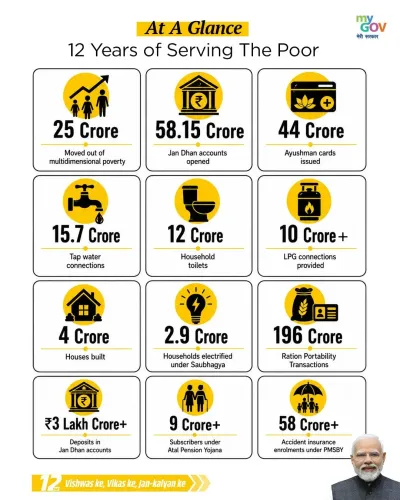
Bihar Chief Minister Samrat Choudhary on Monday, 8 June 2026, took to X to mark what he described as 12 years of Garib Kalyan — welfare for the poor — under Prime Minister Narendra Modi, listing a dozen flagship central schemes that he said had transformed the lives of India's poorest citizens through service, good governance, and compassion.
Context
In his post, Choudhary wrote: 'गरीब कल्याण के 12 वर्ष- सेवा, सुशासन और संवेदनशीलता की मिसाल' — 'Twelve years of Garib Kalyan: a model of service, good governance, and sensitivity.' The post was accompanied by the hashtag #12YearsOfGaribKalyan, situating it within a broader BJP campaign to mark the anniversary of the Modi government's welfare agenda.
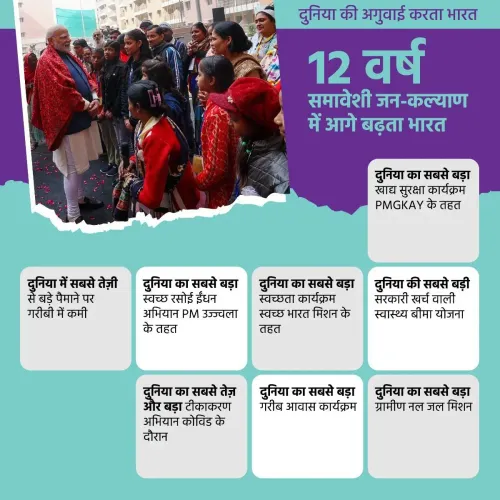
Choudhary, a senior BJP leader and Bihar's Chief Minister, enumerated twelve schemes — spanning financial inclusion, clean cooking fuel, sanitation, drinking water, housing, health insurance, farmer income support, free rations, direct benefit transfers, social security, and women's empowerment — attributing each to Modi's leadership.
Policy Backdrop
Pradhan Mantri Jan Dhan Yojana, launched on 28 August 2014, opened bank accounts for previously unbanked households and became the backbone of India's Direct Benefit Transfer architecture. Swachh Bharat Mission, initiated on 2 October 2014, sought to eliminate open defecation and position sanitation as a mass movement.
Pradhan Mantri Ujjwala Yojana, started in May 2016, provided LPG connections to women from below-poverty-line families, reducing dependence on smoke-producing solid fuels. Ayushman Bharat, rolled out in 2018, extended health insurance cover of up to Rs 5 lakh per year per poor family for secondary and tertiary hospital care.
Jal Jeevan Mission, launched in 2019, targeted functional household tap-water connections in rural India. PM Kisan Samman Nidhi, announced in the February 2019 interim budget, provides annual income support of Rs 6,000 to landholding farmer families through direct transfers. Together, these programmes reflect a sustained post-2014 policy emphasis on last-mile delivery anchored by Aadhaar-linked technology platforms.
Stakeholders and Impact
The schemes cited in Choudhary's post collectively target the country's most economically vulnerable groups: rural households without bank access, women cooking over open fires, families without toilets or piped water, small and marginal farmers, and those unable to afford hospitalisation. Bihar, one of India's most populous and economically challenged states, has been among the primary beneficiaries of several of these programmes.
Choudhary concluded his post with a reference to 'Antyodaya' — the Gandhian principle of uplifting the last person in the queue — stating that development's benefits had reached the 'antim vyakti' (last individual) under Modi's leadership. The framing reinforces the BJP's political messaging that welfare delivery, not merely welfare announcement, has been the hallmark of the past twelve years.
What's Next
State-level implementation data for Bihar under these centrally sponsored schemes will be closely watched as indicators of ground-level outcomes. Any fresh allocations or extensions announced in the next Union Budget for Jal Jeevan Mission, Ayushman Bharat, or PM Awas Yojana will determine whether the momentum described by Choudhary is sustained. The anniversary messaging also signals that the BJP intends to make its welfare record a central electoral argument heading into future state and national contests.
Point of View
He signals coordinated party messaging around the twelve-year milestone of the Modi government's welfare architecture. The invocation of 'Antyodaya' — a term with deep roots in both Gandhian and RSS thought — is a deliberate rhetorical bridge between ideological heritage and contemporary policy delivery. For Bihar, where the BJP and its allies depend heavily on the support of OBC, Dalit, and rural constituencies, this framing of welfare as lived reality rather than political promise carries significant mobilisation value ahead of future electoral cycles.
NationPress
19 Sept 2026
Frequently Asked Questions
What is 12 Years of Garib Kalyan that Bihar CM Samrat Choudhary posted about?
'12 Years of Garib Kalyan' refers to the BJP's campaign marking twelve years of PM Narendra Modi's welfare-focused governance since May 2014, covering schemes such as Jan Dhan, Ujjwala, Ayushman Bharat, and PM Kisan Samman Nidhi.
What schemes did Samrat Choudhary list in his post?
Choudhary listed twelve schemes: Jan Dhan Yojana, Ujjwala Yojana, Swachh Bharat Mission, Jal Jeevan Mission, PM Awas Yojana, Ayushman Bharat, PM Kisan Samman Nidhi, free ration scheme, Direct Benefit Transfer, social security schemes, women's empowerment initiatives, and Antyodaya-based development.
What is Ayushman Bharat and how much cover does it provide?
Ayushman Bharat is a central government health insurance scheme launched in 2018 that provides up to Rs 5 lakh per year per eligible poor family for secondary and tertiary hospital treatment.
What is PM Kisan Samman Nidhi and who benefits from it?
PM Kisan Samman Nidhi, announced in the February 2019 interim budget, provides Rs 6,000 per year in direct income support to landholding farmer families across India through three equal instalments.
Why is Bihar CM Samrat Choudhary significant in BJP politics?
Samrat Choudhary is the Chief Minister of Bihar and a senior BJP leader, making him a key figure in the party's political management of one of India's most populous states, where welfare delivery is central to electoral strategy.