CM Fadnavis Distributes 557 BDD Chawl Homes in Mumbai
Synopsis
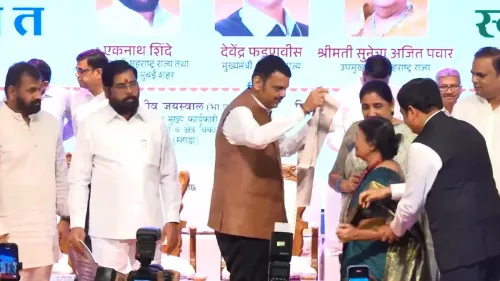
Maharashtra CM Devendra Fadnavis on 6 November 2026 distributed 557 flats under the BDD Chawl Redevelopment Project in Mumbai, alongside homes for police personnel and sanitation workers, marking a milestone in the city's long-running urban housing renewal drive.
Key Takeaways
557 homes were distributed under the BDD Chawl Redevelopment Project in Mumbai on 6 November 2026 .
The ceremony also covered dedicated housing for police personnel and 'well-equipped' homes for sanitation workers .
The BDD chawls are British-era colonial structures being replaced with modern apartments for the same original-resident families.
Allotments were made under Maharashtra's Ashray Yojana , complementing the central Pradhan Mantri Awas Yojana (Urban) launched in 2015 .
Maharashtra governments have pursued BDD redevelopment for over a decade; subsequent tranches remain the key progress indicator.
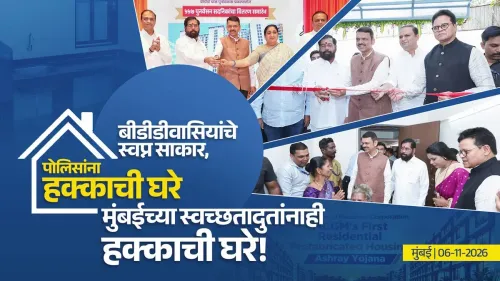
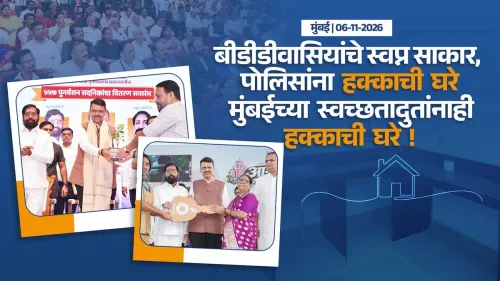
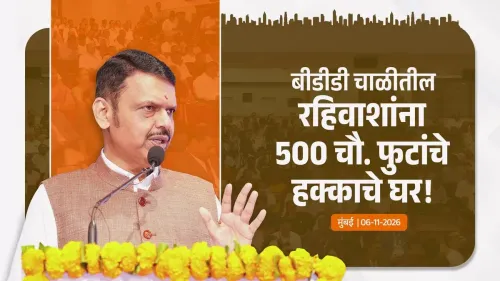
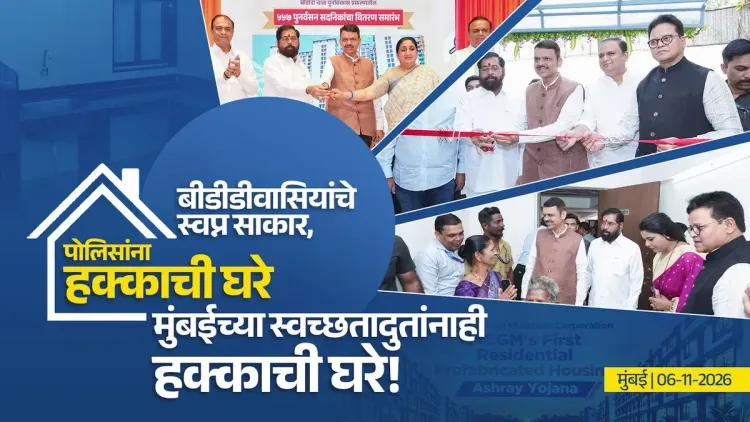
For decades, the crumbling British-era BDD chawls of Mumbai stood as monuments to unfinished promises — overcrowded, ageing, and long overdue for transformation. On 6 November 2026, Maharashtra Chief Minister Devendra Fadnavis marked what he called a 'historic day' in the city's housing story, overseeing the distribution of 557 homes under the BDD Chawl Redevelopment Project alongside dedicated housing for police personnel and sanitation workers in Mumbai.
Posting a reel of highlights from the event, CM Fadnavis wrote: 'बीडीडी चाळ पुनर्विकास प्रकल्पातील 557 सदनिकांचे वितरण' — the distribution of 557 homes under the BDD Chawl Redevelopment Project — describing it as the realisation of a dream to give Mumbaikars a rightful home in their own city. The post, tagged #AshrayYojana and #BDDChawlRedevelopment, captured ceremonies covering three distinct beneficiary groups in a single day.What the BDD Chawls Were — and Why Their Replacement Matters
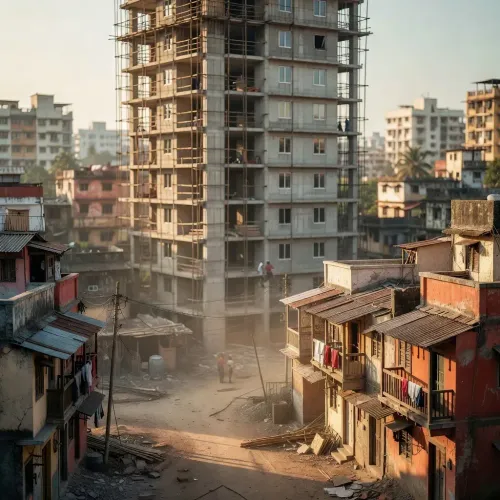
The BDD (Bombay Development Department) chawls were constructed in the early twentieth century by colonial-era authorities as mass worker housing in Mumbai's dense mill districts. Over the following hundred years, the same cramped rooms that once housed migrant labour became permanent homes for successive generations — their residents owning occupancy rights but living with leaking roofs, absent ventilation, and virtually no private sanitation.
Successive Maharashtra governments have attempted redevelopment for over a decade, repeatedly running into legal, financial, and logistical hurdles. The project involves relocating original residents to modern apartments in the same locations, ensuring they are not displaced from the city where their livelihoods are rooted. Yesterday's distribution of 557 flats represents one concrete tranche of that larger, still-ongoing mission.
Police Quarters and Sanitation Worker Homes: The Three-Part Ceremony
The day's events went beyond the BDD tranche. Housing for police personnel — a constituency that has long flagged inadequate official accommodation across Maharashtra — was formally handed over, as were 'well-equipped' homes for sanitation workers, the city's frontline workforce whose housing conditions have historically lagged far behind the urban mainstream.
The simultaneous distribution across three beneficiary categories — chawl residents, law-enforcement families, and sanitation staff — signals a deliberate political framing: that Mumbai's housing deficit cuts across occupation and class, and that the state's response should be equally broad. The Ashray Yojana, Maharashtra's state-level affordable housing scheme, provides the administrative scaffolding for such targeted allocations, working alongside the central government's Pradhan Mantri Awas Yojana (Urban), launched in 2015 with a 'Housing for All' mandate built on in-situ redevelopment and credit-linked subsidies.
Mumbai's Bigger Housing Picture — and What Comes Next
Mumbai remains one of India's most acute housing-stress cities, where colonial-era stock, speculative land markets, and a swelling population have produced a chronic shortage of affordable formal housing. The BDD redevelopment is one node in a network of similar projects across the city and in other Indian metros that still carry large inventories of legacy colonial-era housing.
The watch point now is momentum: how quickly subsequent tranches of BDD allotments follow, and whether the remaining chawl clusters under various stages of demolition and construction reach their promised timelines. 557 families have new keys. The question the city will keep asking is how soon the next wave does too.
Point of View
Police, and sanitation workers — reflects a deliberate political calculus by CM Fadnavis to demonstrate tangible urban welfare delivery ahead of any electoral cycle, anchoring BJP's Maharashtra narrative around concrete asset transfer rather than abstract promises. The BDD project has historically been a credibility test for state governments; completing even a single tranche allows the administration to claim forward momentum on a decade-old commitment. Situating the event within both the central PMAY framework and the state Ashray Yojana also lets the government double-stack credit — drawing on New Delhi's Housing for All mandate while asserting state-level execution. The harder question is whether pace scales: Mumbai's housing deficit is structural, and symbolic distributions, however genuine, matter only if subsequent tranches arrive on schedule.
NationPress
7 Nov 2026
Frequently Asked Questions
What is the BDD Chawl Redevelopment Project in Mumbai?
The BDD (Bombay Development Department) Chawl Redevelopment Project replaces century-old, dilapidated colonial-era chawls in Mumbai with modern residential apartments, allowing original residents to remain in the same areas with improved living conditions.
How many homes were distributed on 6 November 2026 in Mumbai?
Maharashtra CM Devendra Fadnavis distributed 557 homes under the BDD Chawl Redevelopment Project on 6 November 2026 , alongside separate housing for police personnel and sanitation workers.
What is the Ashray Yojana Maharashtra?
Ashray Yojana is Maharashtra's state-level affordable housing scheme designed to provide homes to urban poor and specific worker categories, often functioning alongside the central Pradhan Mantri Awas Yojana (Urban).
Who benefits from the BDD Chawl Redevelopment Project?
The primary beneficiaries are the original occupant families of the British-era BDD chawls, who receive modern flats in the same Mumbai locations, ensuring they are not displaced from the city.
What is Pradhan Mantri Awas Yojana Urban and how does it relate to Mumbai housing?
Pradhan Mantri Awas Yojana (Urban), launched in 2015 , is a central government scheme targeting 'Housing for All' through in-situ slum redevelopment and credit-linked subsidies; Maharashtra's BDD and Ashray projects draw on this framework while adding state-specific funding and targeting.