CM Majhi pays tribute to Odia freedom fighter Nilakantha Das
Synopsis
Odisha CM Mohan Charan Majhi paid a devout tribute to Pandit Nilakantha Das — freedom fighter, scholar, and key architect of the separate Odisha province formed on 1 April 1936 — on his death anniversary, honouring a man whose legacy shaped both Odia identity and India's linguistic federal map.
Key Takeaways
Odisha CM Mohan Charan Majhi paid tribute to Pandit Nilakantha Das on his death anniversary on 6 November 2026 .
Nilakantha Das was a prominent freedom fighter, educationist, and literary scholar who championed a separate, linguistically defined Odisha province.
The separate province of Odisha was constituted on 1 April 1936 , making it India's first state formed on a purely linguistic basis.
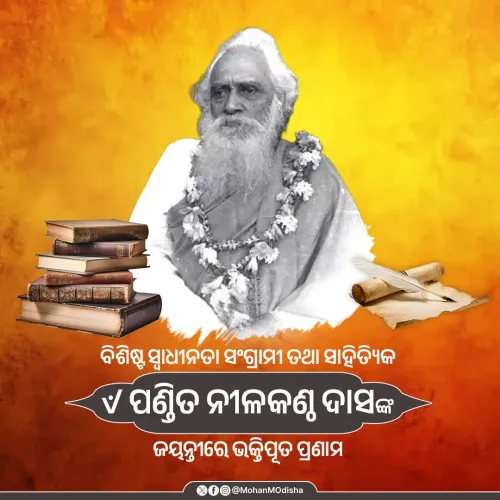
CM Majhi described Das as 'one of the principal architects of the separate Odisha province' in his Odia-language tribute post.
The tribute reflects BJP Odisha's broader practice of honouring regional icons of the state-formation era to reinforce Odia cultural identity.
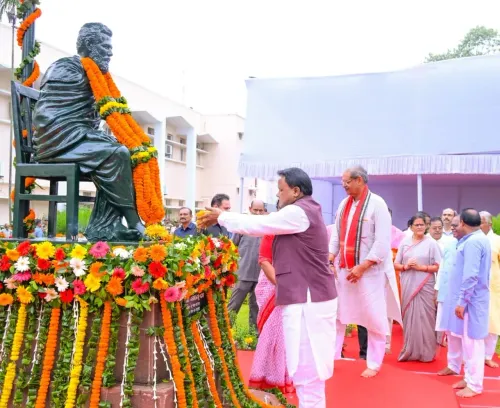
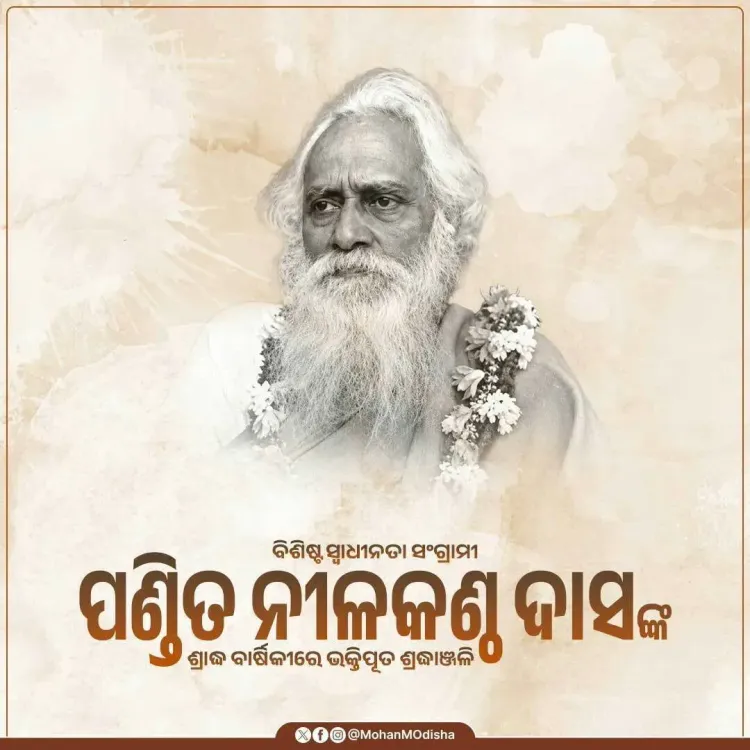
A freedom fighter who helped carve an entire state out of colonial India — Odisha Chief Minister Mohan Charan Majhi on Friday, November 6 paid a heartfelt tribute to Pandit Nilakantha Das on the scholar-statesman's death anniversary, honouring the man who gave Odisha its linguistic identity on the national map.
Posting in Odia, CM Majhi described Nilakantha Das as a 'distinguished freedom fighter, one of the principal architects of the separate Odisha province, and an eminent educationist and literary scholar' — offering what he called a bhaktiputa shraddhanjali (devout, reverential tribute) on the death anniversary.The man who put Odia on the map
Pandit Nilakantha Das stands as one of the towering figures of Odisha's dual struggle — against British colonial rule and against the administrative fragmentation that had scattered Odia-speaking populations across the provinces of Bengal, Central Provinces, and Madras. His sustained campaign for a linguistically defined homeland was not mere regionalism; it was a democratic argument that language, culture, and self-governance are inseparable. The result was historic: on 1 April 1936, the separate province of Odisha was constituted, making it the first state in India to be formed on a purely linguistic basis — a template that would eventually reshape the entire country's federal map. Beyond politics, Das was a prolific writer and educator whose literary output enriched the Odia cultural canon. His dual legacy — as a nation-builder and a man of letters — makes him a rare figure in the constellation of regional freedom-era icons.Why Majhi's tribute carries political weight today
BJP in Odisha, now governing the state after a historic win, has consistently woven its political messaging around the icons of Odisha's own state-formation story — not merely the broader national freedom movement. Paying tribute to figures like Nilakantha Das is part of a deliberate cultural project: asserting that Odia identity, Odia language, and Odia pride are values the ruling party regards as central to governance, not just ceremony. With events like Utkal Divas (celebrated on April 1 each year to mark the province's birth) serving as anchors for public memory, the government's calendar of commemorations builds a consistent narrative that Odisha's distinctiveness is worth defending and celebrating. A tribute from the Chief Minister's official handle on a death anniversary is a small but deliberate act in that larger project. The legacy of 1936 resonates in Odisha's current-day politics for a simple reason: a state that fought hard to exist does not take its cultural sovereignty for granted. Nilakantha Das is remembered not just as a historical figure but as proof that civic persistence can redraw the map of a nation.Point of View
Distinct from the dominant national Congress-era narrative. By honouring the architects of the 1936 Odisha province, the ruling party signals that Odia linguistic and cultural pride is a governing value, not just electoral symbolism. This approach also quietly reinforces the idea that the current administration sees itself as a custodian of Odia identity — a powerful frame in a state that fought hard for its existence. As Utkal Divas approaches each April, such commemorations cumulatively shape the cultural calendar of Odisha's political life.
NationPress
6 Nov 2026
Frequently Asked Questions
Who was Pandit Nilakantha Das?
Pandit Nilakantha Das was a prominent Odia freedom fighter, educationist, and literary scholar who played a leading role in the movement for a separate, linguistically defined Odisha province. He is considered one of the key architects of the separate Odisha province constituted on 1 April 1936.
When was the separate Odisha province formed?
The separate province of Odisha was constituted on 1 April 1936 , making it the first state in India to be carved out on a purely linguistic basis.
Why did Odisha become a separate state?
Odia-speaking populations were scattered across several British-era provinces including Bengal, Central Provinces, and Madras. Leaders like Nilakantha Das agitated for a unified, linguistically defined homeland, resulting in the creation of a separate Odisha province in 1936.
What did CM Mohan Charan Majhi say about Nilakantha Das?
CM Majhi described Nilakantha Das as a 'distinguished freedom fighter, one of the principal architects of the separate Odisha province, and an eminent educationist and literary scholar,' offering a devout tribute on his death anniversary.
What is Utkal Divas and how does it relate to Nilakantha Das?
Utkal Divas is celebrated every year on 1 April to mark the formation of the separate Odisha province in 1936. Nilakantha Das is honoured as one of the key figures whose agitation made that historic formation possible.