CM Sawant Highlights Goa Fish Farmer's PMMSY Success Story
Synopsis
On National Fish Farmers Day, Goa CM Pramod Sawant highlighted Vaibhav Phadte of Karmali, a PMMSY beneficiary who used state fisheries training to transform mussel farming from a hobby into a self-sustaining livelihood, framing it as a model for Goa's youth entrepreneurs.
Key Takeaways
National Fish Farmers Day is observed on 10 July annually to recognise fish farmers across India.
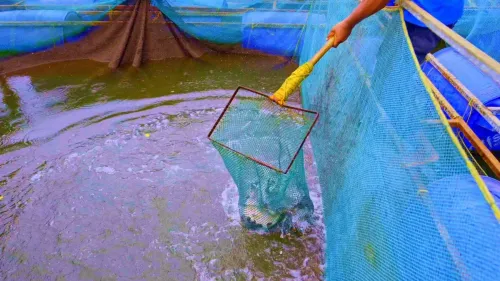
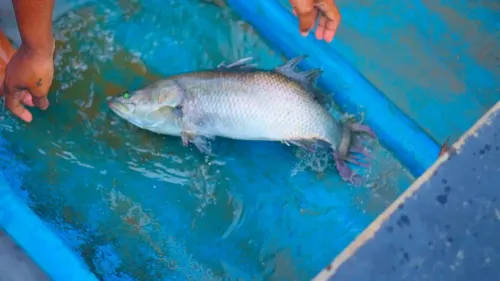
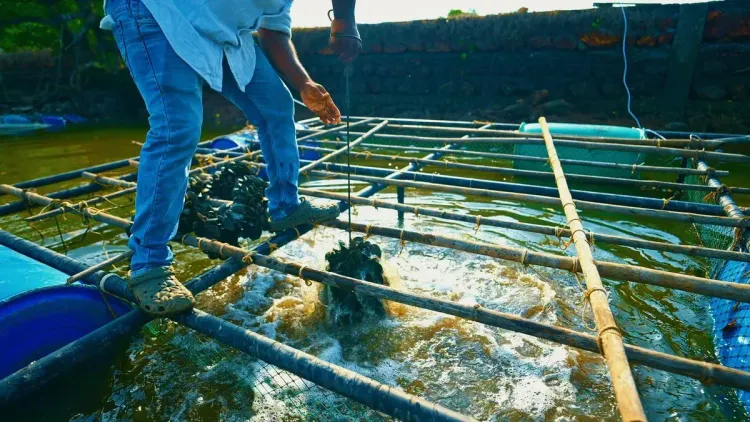
Vaibhav Phadte from Karmali, Goa is a beneficiary of the Pradhan Mantri Matsya Sampada Yojana who started mussel farming as a hobby.
Training in cage farming was provided by the Directorate of Fisheries, Goa , enabling Phadte to become self-employed.
The Pradhan Mantri Matsya Sampada Yojana was launched in May 2020 to modernise fisheries and boost aquaculture entrepreneurship across India.
CM Sawant linked the success story to the national goals of Swayampurnata , Viksit Goa , and Viksit Bharat 2047 .
The CM called Phadte's journey an inspiration for the Yuva Shakti of Goa to pursue self-employment in the fisheries sector.
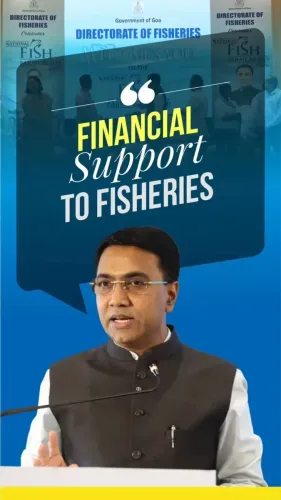
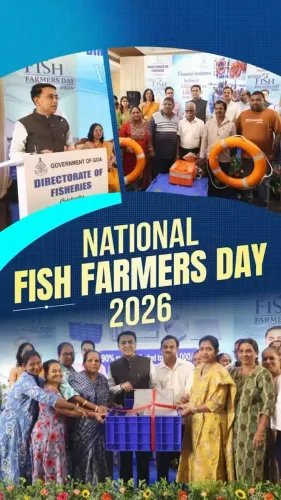
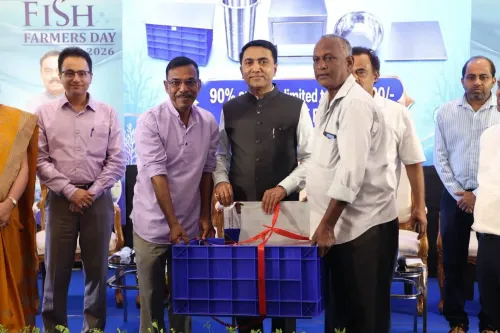
Goa Chief Minister Pramod Sawant on 10 July 2026, National Fish Farmers Day, spotlighted the entrepreneurial journey of Vaibhav Phadte from Karmali, a beneficiary of the Pradhan Mantri Matsya Sampada Yojana (PMMSY) who turned a hobby into a self-sustaining mussel farming enterprise.
Context
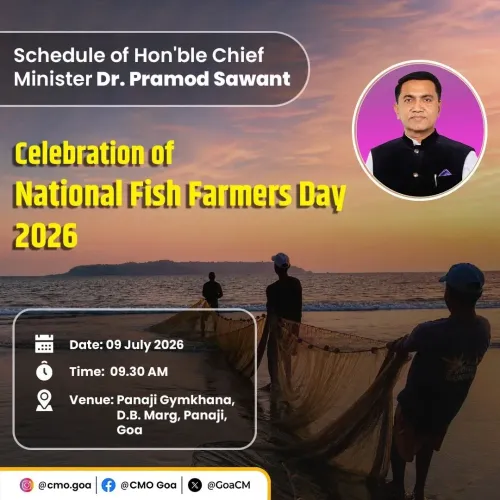
National Fish Farmers Day is observed every year on 10 July to recognise the contributions of fish farmers across India and to promote the fisheries sector. Chief Minister Sawant used the occasion to highlight a local success story, stating that Vaibhav 'began mussel farming in the canal near his home as a hobby' before scaling it into a livelihood.
Phadte received cage farming training from the Directorate of Fisheries, Goa, the state agency responsible for implementing central aquaculture schemes and providing technical support to farmers. The CM's post tagged the Directorate, signalling active institutional involvement in the beneficiary's progress.
Policy Backdrop
The Pradhan Mantri Matsya Sampada Yojana was launched in May 2020 as a central scheme aimed at modernising India's fisheries sector, doubling the incomes of fish farmers, and developing the full aquaculture value chain. The scheme provides financial assistance, training, and infrastructure support to entrepreneurs in coastal and inland fisheries.
Goa, as a coastal state, has been an active participant in PMMSY implementation. The Directorate of Fisheries, Goa has channelled scheme benefits toward cage farming and mussel cultivation — practices suited to the state's extensive canal and estuarine geography. Vaibhav Phadte's case is being presented as a model of how central funding and state-level training can combine to produce self-employed entrepreneurs.
CM Sawant framed the story within two larger national goals: Swayampurnata (self-reliance) and the Viksit Bharat vision — India's development blueprint targeting a fully developed economy by 2047. This framing aligns Goa's fisheries outreach with the broader Blue Economy push that successive central budgets have emphasised.
Stakeholders and Impact
The primary beneficiaries of PMMSY in Goa are coastal and inland fish farmers, many of whom previously relied on traditional, low-margin practices. Schemes like mussel and cage farming offer higher yields with lower capital requirements, making them accessible entry points for first-generation aquaculture entrepreneurs.
CM Sawant specifically addressed Goa's youth, calling Vaibhav's journey 'an inspiration for the Yuva Shakti [youth power] of Goa to embrace entrepreneurship.' The message targets young residents who may be weighing formal employment against self-employment in the state's growing aquaculture sector.
The Directorate of Fisheries, Goa, led by Nilkant Halarnkar (tagged in the post), plays a pivotal operational role — translating central scheme allocations into on-ground training programmes and monitoring beneficiary outcomes. Its continued support is cited by the CM as a key factor in Phadte's success.
What's Next
The spotlight on Phadte's story on National Fish Farmers Day is likely to be followed by state-level progress reporting on PMMSY implementation in Goa, including data on beneficiaries trained and enterprises established under the scheme. Similar beneficiary-highlight campaigns have been used by other coastal states to build public awareness and encourage new applicants.
Analysts watching Goa's fisheries sector will track whether the Directorate of Fisheries expands its cage and mussel farming training capacity in the coming months, and whether the state government increases its co-funding contribution under PMMSY to accelerate the Viksit Goa component of the national development vision.
Point of View
'Swayampurnata', and 'Viksit Bharat', the CM anchors a local fisheries story within the BJP's national development narrative, broadening its political resonance beyond the aquaculture community. The Karmali mussel farming case also signals Goa's intent to position its estuarine geography as an asset in India's Blue Economy strategy. Whether this translates into measurable expansion of PMMSY outreach in Goa will be the real test of the political messaging.
NationPress
10 Oct 2026
Frequently Asked Questions
What is the Pradhan Mantri Matsya Sampada Yojana?
The Pradhan Mantri Matsya Sampada Yojana (PMMSY) is a central government scheme launched in May 2020 to modernise India's fisheries sector, double fish farmers' incomes, and support aquaculture entrepreneurs through funding, training, and infrastructure.
Who is Vaibhav Phadte from Karmali?
Vaibhav Phadte is a fish farmer from Karmali, Goa, who started mussel farming as a hobby and, with cage farming training from the Directorate of Fisheries, Goa, and support under PMMSY, became a self-employed aquaculture entrepreneur.
When is National Fish Farmers Day observed?
National Fish Farmers Day is observed every year on 10 July to recognise the contributions of fish farmers across India and to promote the fisheries and aquaculture sector.
What is Viksit Bharat and how does it relate to fisheries?
Viksit Bharat is India's national vision for a fully developed economy by 2047, emphasising self-reliance and sustainable livelihoods. Goa CM Pramod Sawant linked the state's fisheries entrepreneurship push to this framework, positioning mussel farming success stories as contributions to the larger national goal.
What role does the Directorate of Fisheries Goa play in PMMSY?
The Directorate of Fisheries, Goa is the state agency responsible for implementing PMMSY at the ground level, providing cage farming training, technical support, and continued government assistance to aquaculture beneficiaries in the state.