CM Sawant Highlights India's Fish Production Doubling Since 2014
Synopsis
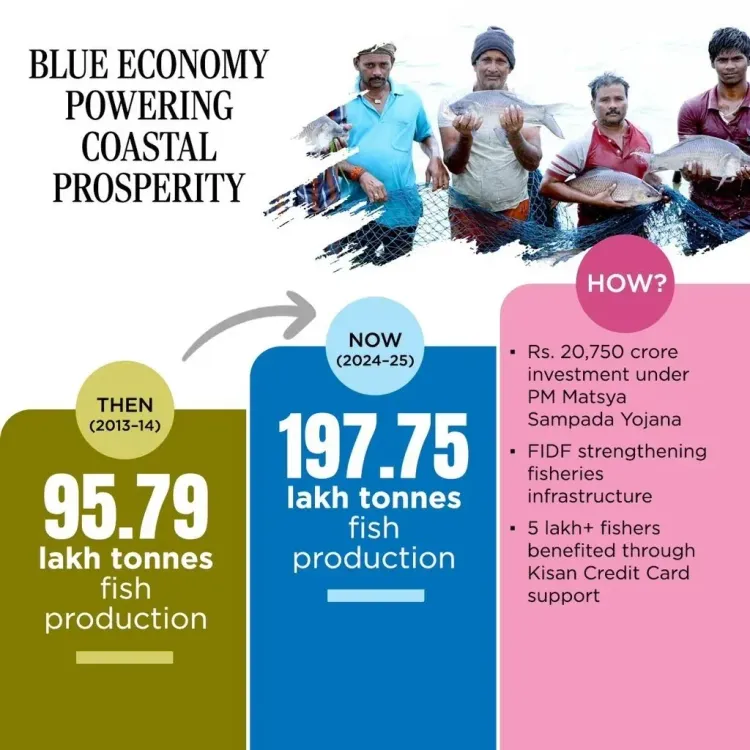
Goa Chief Minister Pramod Sawant has cited near-doubling of India's fish production — from 95.79 lakh tonnes in 2013-14 to 197.75 lakh tonnes in 2024-25 — as evidence of the BJP government's agrarian and blue economy gains, while highlighting Goa's fishing communities as direct beneficiaries.
Key Takeaways
Goa CM Pramod Sawant posted on June 11, 2026 under #12YearsOfKisanSamriddhi , framing fisheries growth as a BJP governance achievement.
National fish production reportedly rose from 95.79 lakh tonnes (2013-14) to 197.75 lakh tonnes (2024-25) , a near-doubling over a decade.
The Pradhan Mantri Matsya Sampada Yojana , approved in 2020 with an outlay of Rs 20,050 crore , is the flagship central scheme underpinning this growth.
The Blue Revolution programme , restructured in 2015-16 , laid the earlier policy groundwork for production and productivity gains.
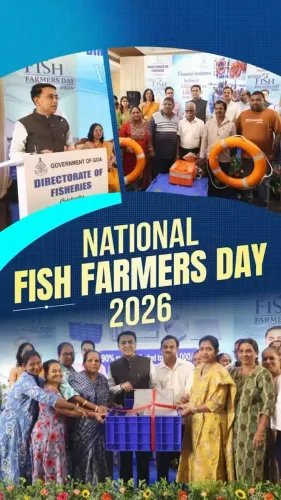
Sawant specifically highlighted Goa's traditional fishing communities as beneficiaries of the blue economy push.
The post is part of a coordinated BJP messaging campaign marking twelve years of central government agricultural and rural policy.
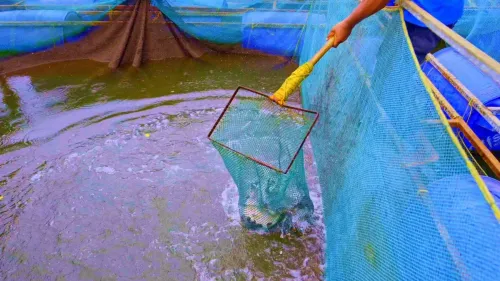
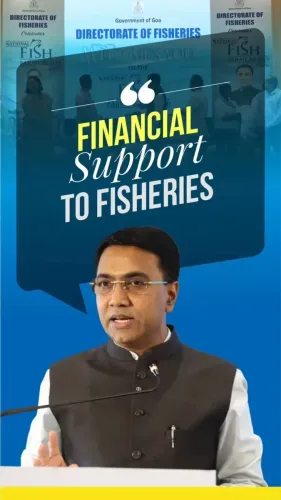
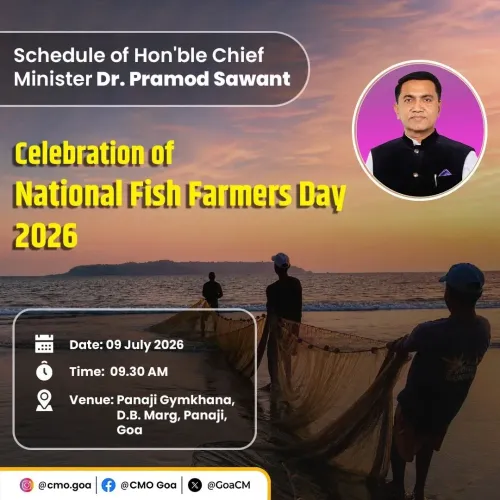
Goa Chief Minister Pramod Sawant on Thursday, June 11, 2026, highlighted India's fisheries sector as a major growth story under the BJP-led central government, citing a near-doubling of national fish production over the past decade and underscoring Goa's own role in empowering coastal fishing communities.
Context
Sawant's post, tagged under #12YearsOfKisanSamriddhi, states that national fish production rose from 95.79 lakh tonnes in 2013-14 to 197.75 lakh tonnes in 2024-25 — an increase of over 100 lakh tonnes in roughly a decade. The hashtag situates the data within a broader BJP narrative marking twelve years of agricultural and rural prosperity under the Narendra Modi government at the Centre. Sawant described the growth as 'another remarkable success story' for India's fisheries sector.
The Chief Minister also drew a direct line to Goa, stating that the fisheries sector 'continues to play a vital role in empowering our traditional fishing communities, boosting the blue economy, and contributing significantly to the State's economic growth.' The post reflects a coordinated national messaging effort by BJP-governed states amplifying central government milestones.
Policy Backdrop
The surge in national fish production has been supported by a series of central policy interventions. The Blue Revolution programme, restructured in 2015-16, was among the first major steps to increase fish production and productivity through targeted government support. It was followed by the flagship Pradhan Mantri Matsya Sampada Yojana (PMMSY), approved in 2020 with a total outlay of Rs 20,050 crore, aimed at modernising fisheries infrastructure and developing the full value chain from catch to export.
These schemes have sought to address gaps in cold-chain logistics, fishing harbour infrastructure, and post-harvest handling — longstanding bottlenecks that had constrained India's fish export competitiveness. The broader policy goal has been framed as expanding the blue economy, a priority that encompasses marine fisheries, aquaculture, and coastal livelihoods.
Stakeholders and Impact
Coastal and traditional fishing communities are the primary beneficiaries cited in Sawant's post. In Goa, fishing communities — particularly those engaged in artisanal and small-scale marine fishing along the Konkan coast — have historically been central to the state's cultural and economic identity, even as the tourism sector has grown to dominate headlines. State-level integration of central fisheries schemes has been aimed at modernising these communities' access to infrastructure, credit, and markets.
At the national level, the production figures, if borne out, would represent one of the most significant expansions in the sector's recorded history, with implications for food security, rural employment, and foreign exchange earnings from seafood exports. India is among the world's largest fish-producing and fish-exporting nations.
What's Next
Attention will now turn to the state-level rollout of fisheries infrastructure projects in Goa and to the periodic review of national fish production and export targets under the Pradhan Mantri Matsya Sampada Yojana. As the #12YearsOfKisanSamriddhi campaign continues, similar data-led posts from BJP chief ministers across coastal states are expected, building a cumulative picture of sectoral gains that the party intends to carry into future electoral cycles. The sustainability of production growth — particularly in the face of climate-linked pressures on marine ecosystems — will remain a key question for policymakers and fishing communities alike.
Point of View
He simultaneously claims credit for central policy while positioning himself as an advocate for a constituency that is culturally significant in the coastal state. The invocation of the blue economy also signals alignment with the Centre's broader maritime ambitions, which carry strategic as well as economic weight. The campaign's reliance on production volume as its primary metric, however, leaves questions of fisher income, sustainability, and export realisation largely unaddressed — gaps that opposition voices are likely to exploit.
NationPress
26 Oct 2026
Frequently Asked Questions
What is India's current fish production as per the government?
According to a post by Goa Chief Minister Pramod Sawant, India's fish production reached 197.75 lakh tonnes in 2024-25 , up from 95.79 lakh tonnes in 2013-14 .
What is the Pradhan Mantri Matsya Sampada Yojana?
The Pradhan Mantri Matsya Sampada Yojana (PMMSY) is a central government scheme approved in 2020 with an outlay of Rs 20,050 crore to modernise fisheries infrastructure, develop the value chain, and support fishing communities across India.
How has Goa's fisheries sector benefited from central schemes?
Goa CM Pramod Sawant states that the fisheries sector plays a vital role in empowering Goa's traditional fishing communities, boosting the blue economy, and contributing to the state's economic growth, with central schemes providing the policy and financial backbone.
What is the Blue Revolution programme in India?
The Blue Revolution programme was a central government initiative restructured in 2015-16 to increase fish production and productivity through targeted support, and it preceded the larger PMMSY scheme launched in 2020.
What does #12YearsOfKisanSamriddhi mean?
#12YearsOfKisanSamriddhi is a BJP campaign hashtag marking twelve years of the party-led central government's agricultural and rural welfare policies, under which fisheries growth figures are being highlighted by leaders including Goa CM Pramod Sawant.