CM Sawant Highlights Curtorim Farmer's ₹1.5 Lakh Monthly Income Under PMMSY
Synopsis
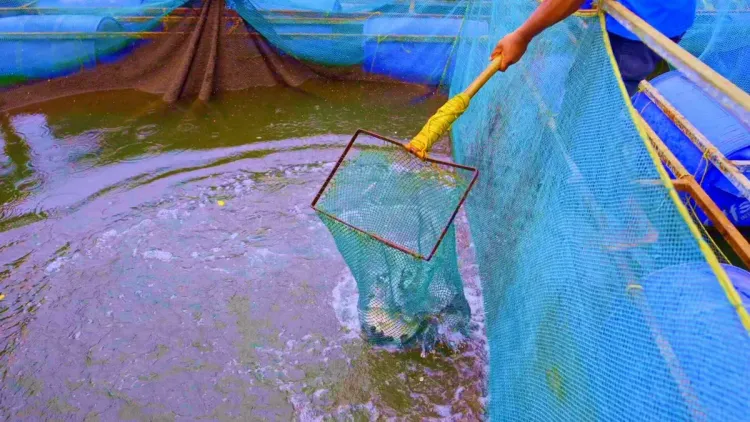
Goa Chief Minister Pramod Sawant has highlighted how Agnelo Luis and his wife from Curtorim built a cage fish farming unit under PMMSY, now earning over ₹1.5 lakh a month. The story is being held up as a model for the state's Swayampurna and Viksit Goa development vision.
Key Takeaways
Agnelo Luis and his wife from Curtorim, South Goa built a cage fish farming enterprise with support from PMMSY .
The farm generates an income of over ₹1.5 lakh per month , according to CM Pramod Sawant's post dated 20 July 2026 .
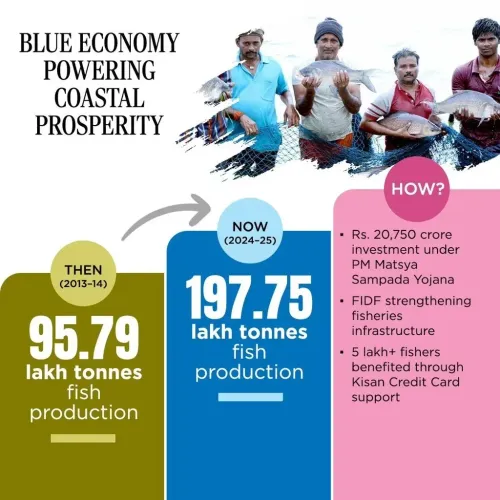
The Pradhan Mantri Matsya Sampada Yojana was launched in May 2020 with a Union Cabinet-approved outlay of ₹20,050 crore .
CM Sawant linked the success to Goa's Swayampurna self-reliant village programme and the Viksit Goa development blueprint.
The case illustrates a broader shift in coastal states from capture fisheries to controlled cage aquaculture aligned with national blue economy goals.
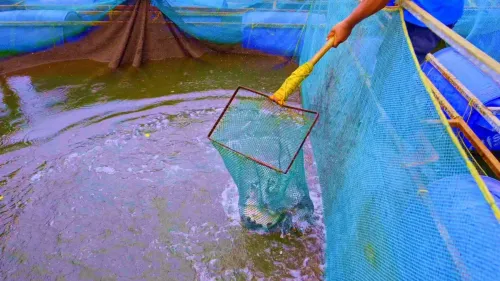
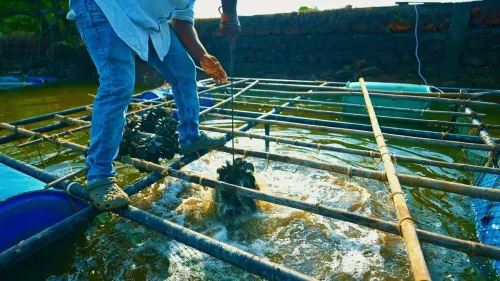
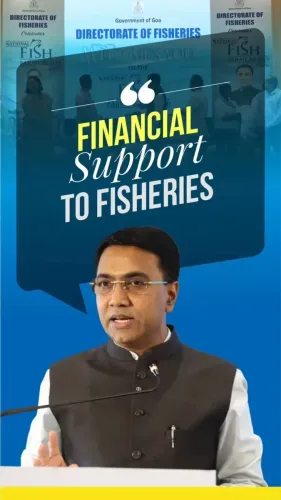
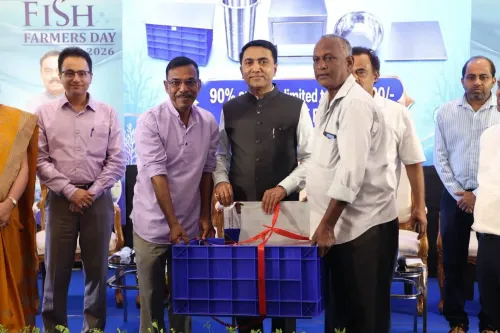
Goa Chief Minister Pramod Sawant on Monday, 20 July 2026 spotlighted the success of Agnelo Luis and his wife from Curtorim, a South Goa village, who built a cage fish farming enterprise under the Pradhan Mantri Matsya Sampada Yojana (PMMSY), generating over ₹1.5 lakh per month in income. The Chief Minister shared their story as an example of how central government scheme support is translating into tangible rural livelihoods in the state.
Context
In his post, CM Sawant described the Luis family's journey as 'an inspiring example of how entrepreneurship in the fisheries sector is creating a prosperous economy.' He linked their success to the dual vision of Swayampurna Goa — the state's self-reliant village programme — and a Viksit Goa, the broader development blueprint for the state. The post, accompanied by a video, frames the beneficiary story as a model for replication across Goa's coastal and riverine communities.
Policy Backdrop
The Pradhan Mantri Matsya Sampada Yojana was approved by the Union Cabinet in May 2020 with a total outlay of ₹20,050 crore, making it the largest investment scheme ever in India's fisheries sector. Its core mandate is to modernise aquaculture infrastructure, promote entrepreneurship among fishing communities, and shift production from traditional capture fisheries toward controlled, sustainable methods such as cage culture. Curtorim, situated in South Goa district, has seen growing aquaculture activity alongside its traditional agricultural base, making it a fitting site for such an intervention.
At the state level, the Swayampurna programme reinforces PMMSY's goals by incentivising villages to develop self-sustaining local enterprises. Together, the two schemes represent a convergence of central funding and state-level vision that Goa's government has been actively promoting in the fisheries sector.
Stakeholders and Impact
Cage fish farming requires upfront capital for net cages, fingerlings, and feed — costs that have historically kept small farmers out of the segment. Scheme-backed subsidies and technical support under PMMSY lower these barriers, enabling families like the Luis household to enter a higher-value production model. An income of over ₹1.5 lakh per month from a single farm unit positions cage culture as a commercially viable alternative to conventional fishing in the state.
Coastal entrepreneurs and aquaculture farmers across Goa stand to benefit if the model is scaled. The story also feeds into national blue economy goals, which aim to expand India's marine and freshwater production sustainably while generating rural employment along the coastline.
What's Next
Attention will now turn to state-level utilisation reports under PMMSY and whether Goa's budget allocations will expand cage culture clusters beyond Curtorim to other riverine and coastal villages. CM Sawant's public amplification of individual beneficiary stories is consistent with a broader BJP-led state government strategy of demonstrating on-the-ground convergence between central schemes and local development goals. If the Curtorim model is formalised into a cluster programme, it could serve as a template for other coastal states pursuing similar aquaculture transitions.
Point of View
The communication moves beyond policy abstraction into human-interest territory, which tends to resonate more broadly with rural audiences. The dual invocation of 'Swayampurna' and 'Viksit Goa' signals an attempt to brand local welfare outcomes within a larger ideological framework of self-reliance and development. Whether this translates into expanded cluster funding or remains a one-off highlight will be the real test of policy intent.
NationPress
20 Oct 2026
Frequently Asked Questions
What is the Pradhan Mantri Matsya Sampada Yojana?
The Pradhan Mantri Matsya Sampada Yojana (PMMSY) is a central government scheme approved in May 2020 with an outlay of ₹20,050 crore to modernise India's fisheries sector, promote aquaculture entrepreneurship, and increase fish production sustainably.
Who is Agnelo Luis and why is he in the news?
Agnelo Luis is a resident of Curtorim in South Goa who, along with his wife, set up a cage fish farming unit under PMMSY. Goa CM Pramod Sawant highlighted their story on 20 July 2026, noting the farm earns over ₹1.5 lakh per month.
What is cage fish farming and how does PMMSY support it?
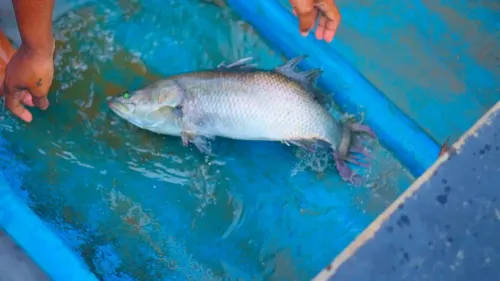
Cage fish farming involves rearing fish in net enclosures placed in rivers, lakes, or coastal waters, allowing controlled production. PMMSY provides subsidies and technical support to reduce entry costs for small entrepreneurs like those in Curtorim, Goa.
What is Swayampurna Goa?
Swayampurna is a Goa government programme aimed at making villages self-reliant by promoting sustainable local enterprises and livelihoods, complementing central schemes like PMMSY at the state level.
How much does the Curtorim cage fish farm earn per month?
According to Goa CM Pramod Sawant's post on 20 July 2026, the cage fish farming enterprise run by Agnelo Luis and his wife in Curtorim generates an income of over ₹1.5 lakh per month.