Pralhad Joshi Highlights India's Airport Growth Under Modi
Synopsis
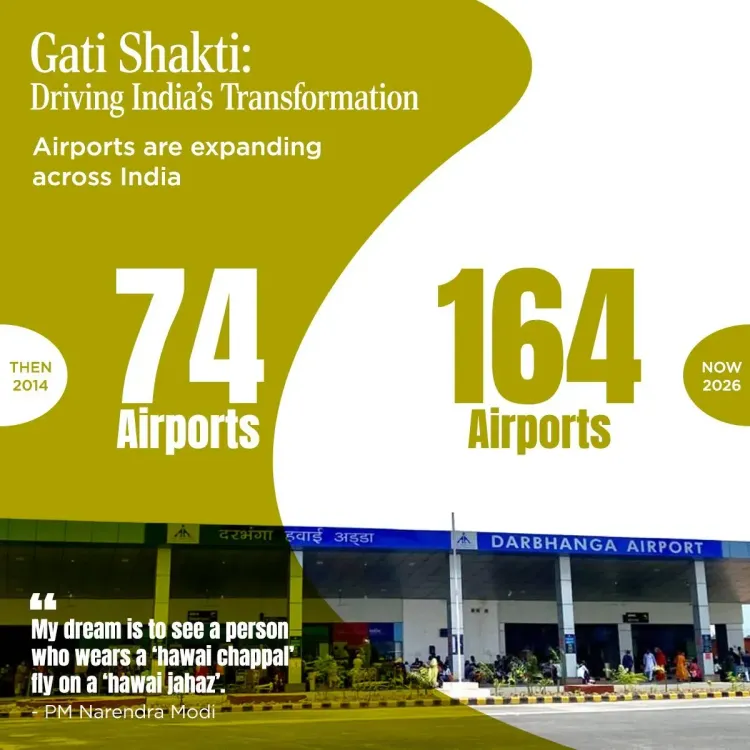
Union Minister Pralhad Joshi marks over twelve years of BJP rule by highlighting India's airport count rising from 74 in 2014 to 164 today, crediting PM Modi's regional connectivity push and the UDAN scheme for bringing air travel within reach of smaller cities.
Key Takeaways
India's operational airports have grown from 74 in 2014 to 164 as of mid-2026, according to Union Minister Pralhad Joshi .
The UDAN Regional Connectivity Scheme , launched in 2016 , provided viability gap funding to airlines on thin-margin routes linking smaller cities.
The National Civil Aviation Policy 2016 set the framework for airport development targets that the Airports Authority of India and private partners have since executed.
Tier-2 and tier-3 city passengers, regional airlines, and state governments are the primary stakeholders benefiting from expanded air access.
The milestone was flagged as part of the BJP's #12YearsOfNayaBharatNirman campaign marking over a decade of governance at the Centre.
Future focus areas include new UDAN bidding rounds and commissioning of approved greenfield airports.
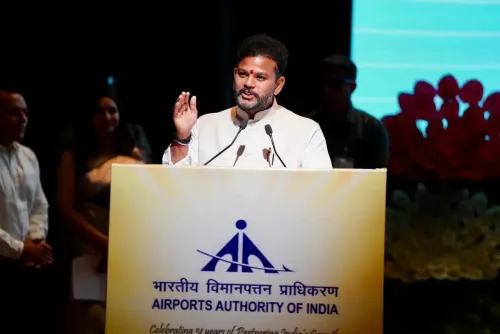
Union Consumer Affairs Minister Pralhad Joshi on Tuesday, June 16, 2026, highlighted India's aviation expansion under Prime Minister Narendra Modi, citing a near-doubling of operational airports — from 74 in 2014 to 164 today — as a marker of the decade-plus infrastructure push under the #12YearsOfNayaBharatNirman campaign.
Context
Joshi's post credits expanded regional connectivity and broader air-travel access as central outcomes of the Modi government's aviation policy. 'Enhanced regional connectivity and expanded access to air travel are bringing growth, opportunities, and aspirations closer to every corner of the nation,' he wrote, framing airport growth as an equity and development issue, not merely an infrastructure metric.
The remarks come as the BJP marks over twelve years of governance at the Centre, with ministers across portfolios amplifying milestones under the #12YearsOfNayaBharatNirman hashtag. Aviation figures prominently in this narrative given the visible transformation of smaller cities gaining air links for the first time.
Policy Backdrop
The expansion of operational airports is closely tied to the Regional Connectivity Scheme (UDAN), launched in 2016 by the Ministry of Civil Aviation. UDAN — an acronym for Ude Desh ka Aam Naagrik (Let the common citizen of the country fly) — provided viability gap funding to airlines operating on thin-margin routes connecting tier-2 and tier-3 cities.
The National Civil Aviation Policy of 2016 set explicit targets for airport development and regional connectivity, providing a framework that the Airports Authority of India (AAI) and private concessionaires have since executed through a mix of greenfield construction and brownfield upgrades. Public-private partnerships have been a key instrument, with major metro airports operated under long-term concession agreements while AAI handles a larger network of regional facilities.
The broader connectivity push mirrors parallel investments in national highways, railways, and ports — all positioned by the government as interlocking pillars of economic integration for smaller urban centres.
Stakeholders and Impact
The primary beneficiaries of the airport expansion are passengers in tier-2 and tier-3 cities who previously had no viable air access. New routes have reduced travel times and opened economic corridors, particularly for business travellers, medical tourism, and perishable cargo such as fresh produce and seafood from coastal and hilly regions.
The aviation industry — airlines, ground handlers, and airport operators — has also seen demand diversification beyond the metro trunk routes. Regional airlines and new entrants have used UDAN's viability gap funding to pilot operations on routes that would otherwise be commercially unviable, gradually building passenger bases in underserved markets.
State governments have been active partners as well, providing land, waiving taxes, and co-funding terminal development to attract scheduled operations to their cities — a dynamic that has accelerated the pace of airport commissioning across multiple states.
What's Next
Attention will now turn to subsequent rounds of UDAN bidding and the commissioning of greenfield airports already approved but pending operationalisation. Parliamentary and budget discussions on further viability gap funding allocations will be closely watched by regional carriers and state governments seeking to sustain the connectivity momentum.
With the government framing aviation growth as a democratic dividend — air travel reaching citizens who once considered it inaccessible — the political and policy pressure to sustain the airport count trajectory is likely to remain high heading into the next budget cycle.
Point of View
Using tangible infrastructure numbers to reinforce the BJP's governance narrative ahead of future electoral cycles. Aviation is a particularly potent symbol in this framing: the jump from 74 to 164 airports is a visible, countable metric that connects abstract policy to lived experience for passengers in smaller cities. The UDAN scheme, now a decade old, has become the government's flagship proof point that connectivity policy can be both economically rational and politically resonant. The sustained emphasis on regional air access also signals that tier-2 and tier-3 cities remain a core constituency the ruling party intends to court through infrastructure delivery.
NationPress
15 Sept 2026
Frequently Asked Questions
How many airports does India have in 2026?
Union Minister Pralhad Joshi stated on June 16, 2026, that India has 164 operational airports , up from 74 in 2014 when the Modi government took office.
What is the UDAN scheme and how has it helped smaller cities?
The UDAN (Ude Desh ka Aam Naagrik) Regional Connectivity Scheme , launched in 2016 , provides viability gap funding to airlines operating routes connecting tier-2 and tier-3 cities, making air travel commercially viable on thin-margin routes and opening new airports across the country.
Why did India's airport count increase so sharply after 2014?
The growth is attributed to the National Civil Aviation Policy 2016 , the UDAN scheme , public-private partnerships for airport construction and upgrades, and state government co-investment in regional airport development — all part of a broader infrastructure connectivity agenda under PM Narendra Modi .
What is #12YearsOfNayaBharatNirman?
#12YearsOfNayaBharatNirman is a BJP campaign hashtag used by ministers and party leaders to highlight governance milestones — including infrastructure, welfare, and economic achievements — marking over twelve years of the Modi government at the Centre.
Which body operates India's regional airports?
The Airports Authority of India (AAI) , a public sector undertaking under the Ministry of Civil Aviation, operates and develops the majority of India's airports, with select major airports run under private concession agreements.