Akhilesh Yadav calls Wangchuk, urges him to break fast
Synopsis
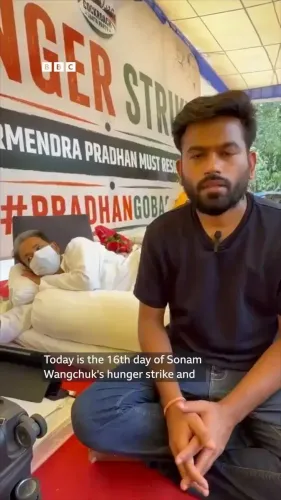
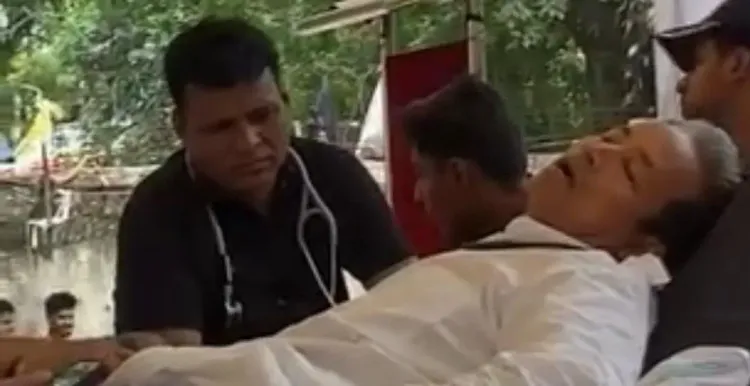
Samajwadi Party president Akhilesh Yadav called Ladakhi activist Sonam Wangchuk on 14 July 2026 to check on his health, urged him to break his fast, and declared SP's open support for his satyagraha, while calling on him to lead a nationwide movement against the BJP.
Key Takeaways
Akhilesh Yadav personally phoned Sonam Wangchuk on 14 July 2026 to enquire about his health during his ongoing fast.
Yadav appealed to Wangchuk to break his fast, recuperate, and return with renewed energy for a fresh agitation.
The Samajwadi Party declared its 'open support' for Wangchuk's satyagraha and his demands.
Yadav linked the NEET examination scandal to a reported temple theft, framing both as signs of moral and institutional decay under the BJP .
Yadav argued that global media attention on Wangchuk's fast is damaging India's democratic image internationally.
He urged Wangchuk to expand agitations into a nationwide movement for public solidarity against the ruling BJP .
Samajwadi Party president Akhilesh Yadav spoke with renowned Ladakhi activist Sonam Wangchuk by phone on Tuesday, 14 July 2026, enquiring about his health and appealing to him to end his fast, while declaring the SP's open support for Wangchuk's satyagraha (non-violent resistance).
Context
Yadav posted on X that he personally called Wangchuk to check on his wellbeing and urged him to break his fast. In his post, Yadav wrote: 'unke satyagrah ko hamara khula samarthan hai' — 'we extend our open support to his satyagraha.' He argued that Wangchuk's moral strength is urgently needed by the country and that appeals from across the world justify ending the fast, recuperating, and then relaunching a fresh movement with renewed energy.
Yadav further appealed to Wangchuk to expand ongoing agitations against what he described as the BJP — calling it 'negative, corrupt, dishonest, anti-democracy and communal' — across the entire country, and to become a unifying force for public solidarity.
Policy Backdrop
Sonam Wangchuk, founder of the Students' Educational and Cultural Movement of Ladakh (SECMOL), has been a prominent voice demanding that Ladakh be brought under the Sixth Schedule of the Constitution, which provides tribal safeguards, and that its statehood protections be restored following the abrogation of Article 370 in 2019. He undertook a high-profile hunger strike in 2024 centred on these demands, drawing national and international attention.
The Samajwadi Party has consistently opposed centralised education policies, including the National Eligibility cum Entrance Test (NEET) for undergraduate medical admissions, which was embroiled in widespread allegations of paper leaks and irregularities in 2024. Yadav linked the NEET examination scandal to what he called the exposure of a temple theft, describing both as 'a profound divine signal,' and drew a philosophical connection between faith, medicine and moral authority.
Stakeholders and Impact
Yadav's post directly addresses Ladakhi youth, medical aspirants, and the broader national opposition ecosystem. He stated that the aspirations of 'the entire youth power of the country, their parents, families and relatives' align with the request for Wangchuk to break his fast and conserve his strength for future struggles.
Yadav also raised a reputational dimension, arguing that global media concern for Wangchuk's health is damaging India's democratic image internationally under the current BJP-led central government. Regional opposition parties have frequently used civil-society agitations as platforms to highlight what they describe as erosion of federal autonomy, education integrity and democratic norms at the Centre.
What's Next
Attention will now focus on whether Wangchuk heeds the appeals from political leaders and civil society to end his fast, and what conditions, if any, he sets for doing so. Any formal response from the Ladakh administration or the Ministry of Home Affairs on the Sixth Schedule demands would be a significant development.
On the legislative front, parliamentary committee deliberations on NEET reform remain a live issue that the opposition — including the Samajwadi Party — is expected to press in upcoming sessions. Yadav's call for Wangchuk to lead a nationwide movement signals the SP's intent to weave together disparate agitations into a consolidated opposition front ahead of future electoral cycles.
Point of View
And it attempts to harness Wangchuk's considerable moral authority — built on his Ladakh statehood campaign and the Sixth Schedule demand — into a broader anti-BJP coalition. By weaving together the NEET scandal, the temple theft allegation and Wangchuk's fast into a single moral narrative, Yadav is constructing an argument that institutional decay is systemic under the current central government. The international media angle is particularly pointed: framing global concern for a fasting activist as a democratic credibility crisis for India is a well-worn opposition tactic, but one that gains traction when civil-society figures command genuine cross-partisan sympathy. Whether Wangchuk — who has carefully guarded his non-partisan image — chooses to accept the SP's political embrace will be the critical variable to watch.
NationPress
13 Oct 2026
Frequently Asked Questions
Why did Akhilesh Yadav call Sonam Wangchuk?
Akhilesh Yadav called Sonam Wangchuk on 14 July 2026 to enquire about his health during his fast and to personally appeal to him to break it, while also declaring the Samajwadi Party's open support for his satyagraha.
What is Sonam Wangchuk's fast about?
Sonam Wangchuk has been fasting to demand that Ladakh be brought under the Sixth Schedule of the Constitution, which provides tribal safeguards, and that statehood protections be restored following the abrogation of Article 370 in 2019.
What is the Sixth Schedule demand for Ladakh?
The Sixth Schedule of the Indian Constitution provides autonomous governance and tribal land protections to certain tribal areas. Ladakhi activists including Wangchuk have demanded Ladakh be included under it to protect the region's cultural identity and land rights after it became a Union Territory in 2019.
What did Akhilesh Yadav say about NEET in his post?
Yadav referenced the NEET examination scandal — which involved alleged paper leaks in 2024 — alongside a reported temple theft, describing both as 'a profound divine signal' reflecting moral and institutional failure, and drew a philosophical link between faith, medicine and public trust.
Does the Samajwadi Party support Sonam Wangchuk's movement?
Yes. Akhilesh Yadav explicitly stated in his 14 July 2026 post that the Samajwadi Party extends its 'open support' to Wangchuk's satyagraha and urged him to lead a nationwide movement for public solidarity.