Akhilesh Yadav demands fire audit of UP Assembly, BJP offices
Synopsis
Samajwadi Party president Akhilesh Yadav has demanded a fire safety audit of the Uttar Pradesh Assembly, the Principal Secretary's office, all government buildings and fire brigade stations, alleging that the BJP government uses fire safety rules to harass traders while violating them itself. He also sought public verification of BJP offices' legal status.
Key Takeaways
Akhilesh Yadav demanded a fire audit of the UP Legislative Assembly , the Principal Secretary's office and all government buildings.
He included every fire brigade station in the audit demand.
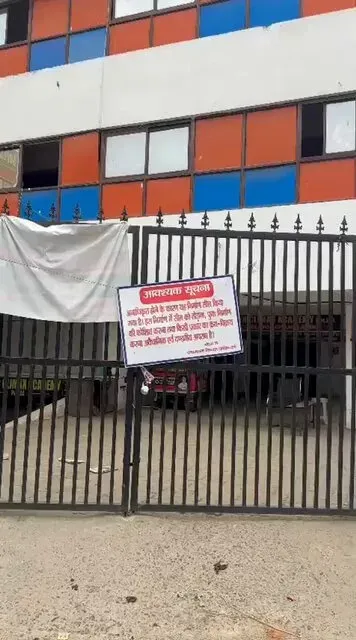
The SP chief accused the BJP government of using fire safety rules to 'blackmail' traders while violating them.
He sought a notice period for correction instead of immediate sealing of premises.
He called for public verification of BJP offices and allied outfits' legal status before legislators and independent media.
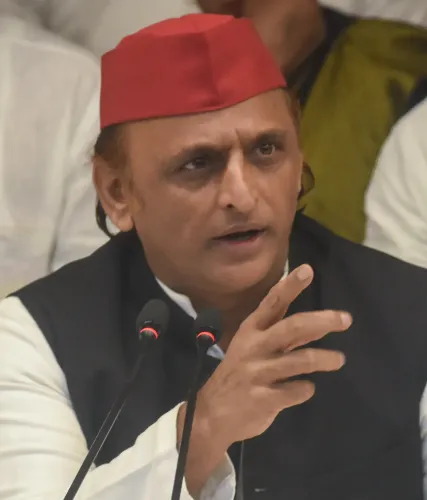
Samajwadi Party president Akhilesh Yadav on Wednesday, 3 June 2026, demanded a comprehensive fire safety audit of the Uttar Pradesh Legislative Assembly, the office of the Principal Secretary, every government office in the state and all fire brigade stations, alleging that the ruling Bharatiya Janata Party uses fire safety rules to 'blackmail' traders while flouting them itself. The former Uttar Pradesh Chief Minister and Lok Sabha MP posted his demand on X, calling for parallel inspections of BJP party offices and those of what he termed its 'unregistered associates' in the presence of public representatives and independent media.
Context
In the post, Akhilesh Yadav wrote: 'We strongly demand a fire audit of the UP Assembly, the Principal Secretary's office, every small and big government office, and every fire brigade station.' He alleged that the BJP government 'blackmails people's work, business and trade in the name of not following fire safety rules, and itself violates them.'
The Samajwadi Party chief argued that where lapses do exist, authorities should issue a notice with reasonable time for correction rather than ordering immediate sealing of premises. 'Ye anyay hai' ('This is injustice'), he wrote, framing summary closures as disproportionate enforcement against small establishments.
He further called for a public, on camera verification of the legal status of BJP offices and those of allied outfits, saying the exercise should be conducted before elected representatives and 'trustworthy, impartial media'. He closed with a sharp line, accusing the ruling party of being a patron of 'corruption, not commerce' — 'kameeshankhor BJP vyapar nahin, bhrashtachar ki himayati hai'.
Policy backdrop
Fire safety enforcement in Uttar Pradesh is governed by the state's building bye laws and fire services rules, with the Uttar Pradesh Fire Services empowered to inspect premises, issue no objection certificates and recommend action against violators. Successive state governments have ordered city wide audit drives after major urban fires, particularly in commercial buildings, coaching centres and hospitals.
Compliance, however, has historically been uneven. Audits and sealing drives tend to intensify after high casualty incidents and taper off later, a pattern that opposition leaders have repeatedly cited as evidence of selective enforcement targeted at small traders rather than systemic safety upgrades.
Stakeholders and impact
The demand directly touches three constituencies: business owners who say sudden sealing orders disrupt livelihoods, government departments whose own buildings are now under scrutiny in the opposition's framing, and fire brigade personnel whose stations Akhilesh Yadav has explicitly included in the audit demand.
By naming the Uttar Pradesh Legislative Assembly and the office of the Principal Secretary, the Samajwadi Party president has placed the apex of the state's administrative machinery on the same compliance footing as a roadside shop. The framing is designed to consolidate trader sentiment, a constituency that has historically swung between the BJP and regional parties in urban Uttar Pradesh.
The post also extends the audit logic to political real estate. A public examination of BJP offices and affiliated outfits' premises, conducted before cameras and legislators, would be unprecedented in scale and is unlikely to be accepted by the ruling establishment in the form demanded.
What's next
Attention will turn to whether the Uttar Pradesh government formally responds to the demand, whether any fire audit of state assembly and secretariat buildings is voluntarily ordered, and whether the issue is raised on the floor of the House in the next session. Local trader associations are likely to amplify the 'notice before sealing' line, which has clear electoral resonance in the state's mandi towns.
For the Samajwadi Party, the post fits a broader opposition arc of contesting the BJP on governance terrain — regulatory fairness, enforcement asymmetry and the cost of compliance for small businesses — rather than on ideology alone. How the ruling dispensation calibrates its enforcement drives in the coming weeks will signal whether the critique gains traction beyond social media.
Point of View
Mirroring a wider opposition strategy of contesting the BJP on regulatory fairness and the cost of compliance for small businesses. By demanding that the UP Assembly and Principal Secretary's office face the same fire audit as a corner shop, Akhilesh Yadav inverts the enforcement gaze and frames traders as victims of selective state power. The 'notice before sealing' demand is politically sharp because it converts a procedural grievance into a moral one. Whether this lands depends less on social media reach and more on whether trader associations in urban UP echo the framing.
NationPress
24 Oct 2026
Frequently Asked Questions
What has Akhilesh Yadav demanded from the UP government?
He has alleged that the BJP government in Uttar Pradesh uses fire safety rules to 'blackmail' traders and small businesses while itself violating those norms in government premises. He argues enforcement is asymmetric and disproportionately targets ordinary establishments.
What does Akhilesh Yadav want instead of sealing shops?
He wants authorities to issue a notice with reasonable time for correction wherever a lapse is found, rather than immediately sealing premises. He has described summary closures as injustice to small businesses.
Has the Uttar Pradesh government responded to the fire audit demand?
No formal response from the Uttar Pradesh government on conducting fire audits of its own offices has been recorded in connection with this post at the time of writing.
Who regulates fire safety compliance in Uttar Pradesh?
The Uttar Pradesh Fire Services, operating under state building bye laws and fire services rules, is responsible for inspections, no objection certificates and enforcement action against violators across government and private premises.