US lawmakers push Trump to press Xi on detained Americans, AI chips before summit
Synopsis
With Trump and Xi set to meet at the White House on 24 September, US lawmakers are piling on three simultaneous demands: free detained American academics held in China for over 600 days, lock China out of advanced AI chips, and negotiate a binding AI safety pact. The breadth of congressional pressure — bipartisan, spanning human rights, technology, and governance — reveals just how many unresolved fault lines will shadow the summit.
Key Takeaways
Bipartisan US senators and representatives introduced resolutions on 17 September 2026 demanding China release detained Americans Youlin Chen and Min Zin .
Youlin Chen has been held for more than 600 days without trial, denied a lawyer for the first 434 days ; Min Zin was detained at Kunming airport on 3 June 2026 .
Senate Democratic Leader Chuck Schumer urged Trump to make blocking Chinese access to advanced AI chips 'non-negotiable' before the Xi summit.
Representative Ro Khanna announced a 23 September hearing on a proposed US-China AI safety agreement , a day before the planned White House summit.
Scheduled hearing witnesses include Nobel laureate Geoffrey Hinton and retired US Air Force Lt.
Jack Shanahan ; OpenAI and Anthropic have not committed to testifying.
The White House , Chinese government , and AI companies named have not publicly responded to the congressional demands.
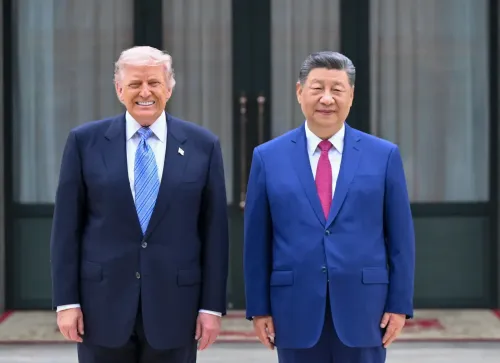
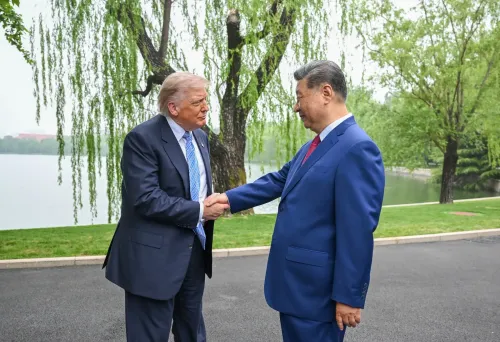
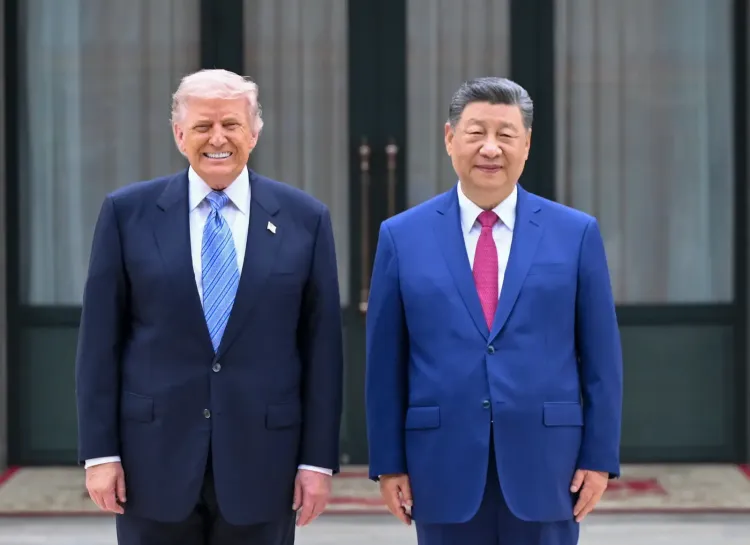
Bipartisan groups of US lawmakers have urged President Donald Trump to demand the release of Americans wrongfully detained in China and block Beijing's access to cutting-edge artificial intelligence chips, ahead of his scheduled face-to-face with Chinese President Xi Jinping at the White House next week. The twin pressures — on human rights and technology — converge as Washington and Beijing navigate one of their most consequential diplomatic moments in years.
Bipartisan Push to Free Detained Americans
On 17 September 2026, Senators Edward Markey and Ted Budd introduced a bipartisan resolution formally condemning what they described as China's repeated arbitrary or wrongful detention of American academics. Senators John Curtis and Adam Schiff co-sponsored the measure. Companion legislation was led in the House by Representatives Stephen Lynch and John Moolenaar.
The resolutions specifically name two cases: Youlin Chen, a US citizen who conducted seismological research with Chinese academics, arrested on 5 November 2024 and held for more than 600 days without trial or family access on espionage charges the sponsors describe as baseless — he was denied legal counsel for the first 434 days; and Min Zin, a US citizen heading a Myanmar-focused policy think tank, detained at Kunming Changshui International Airport on 3 June 2026 while travelling to an academic event at a university in Yunnan province.
'President Trump must use his upcoming meeting with President Xi to demand that China release every unlawfully detained American,' Representative Lynch said.
The Senate resolution urges the secretary of state to deploy all available diplomatic tools. It also calls for raising the China travel advisory from Level 2 to Level 3 — advising Americans to reconsider travel — and proposes reviewing the criteria for designating a country as a state sponsor of wrongful detention.
Schumer Draws a Line on AI Chips
Separately, Senate Democratic Leader Chuck Schumer took to the Senate floor to press Trump on technology security, urging him to block China's access to America's most advanced AI chips and manufacturing equipment before the Xi meeting.
'Before Trump meets with Xi Jinping next week, he needs to draw a line in the sand and say that blocking the Chinese Communist Party's access to our cutting-edge AI technology is non-negotiable,' Schumer said.
Schumer said a bipartisan group had introduced legislation through the National Defense Authorization Act to restrict chip sales, and accused Trump of obstructing those efforts. He also argued that technology export controls and domestic AI safety safeguards were compatible — not competing — policy goals.
Congress Eyes US-China AI Safety Pact
Representative Ro Khanna, the senior Democrat on the House select committee on China, struck a different but parallel chord, announcing a virtual hearing on a proposed US-China AI safety agreement. The hearing is scheduled for 23 September 2026 — one day before the leaders' planned White House meeting.
Khanna said the session would examine risks including loss of human control over AI systems and machines acting against human intentions. Scheduled witnesses include Nobel laureate Geoffrey Hinton and retired US Air Force Lt. Gen. Jack Shanahan. Khanna noted that OpenAI and Anthropic had not committed to testifying despite repeated requests.
Khanna also wrote to Chinese companies Moonshot AI, Alibaba, and DeepSeek, seeking commitments to a binding, enforceable, and verifiable agreement with American AI laboratories. 'We urgently need an agreement with China on basic inspections and safety standards,' he said.
What the White House and Beijing Have Said
The statements reviewed contained no responses from the White House, the Chinese government, or any of the AI companies contacted. The absence of public White House comment leaves open whether Trump intends to prioritise either the detention cases or the chip curbs in his discussions with Xi.
Stakes Heading Into the Summit
This comes amid an already fraught US-China relationship marked by tariff disputes, military posturing in the South China Sea, and intensifying competition in semiconductors and AI. Congressional pressure campaigns ahead of leader-level summits are not unusual, but the breadth of this one — spanning human rights, export controls, and AI governance simultaneously — signals how many unresolved fault lines remain. The 24 September White House meeting will be closely watched for any concrete deliverables on all three fronts.
Point of View
AI chip curbs, and AI safety governance — exposes a fundamental tension in Washington's China policy: there is no unified strategic hierarchy. Human rights advocates, tech hawks, and AI governance reformers are each using the Xi summit as a leverage moment, but they want incompatible things. Releasing detained academics requires goodwill; blocking AI chips is an act of economic containment; a binding AI safety pact requires Chinese cooperation. Trump cannot credibly pursue all three without one undermining another. The absence of any White House response to these demands is itself telling — it suggests the administration has yet to decide which of these it actually intends to prioritise when Xi walks through the door.
NationPress
18 Sept 2026
Frequently Asked Questions
Who are the Americans detained in China that US lawmakers want Trump to raise with Xi?
The two Americans named in the congressional resolution are Youlin Chen, a US citizen who conducted seismological research with Chinese academics and was arrested on 5 November 2024, and Min Zin, a US citizen heading a Myanmar-focused policy think tank who was detained at Kunming Changshui International Airport on 3 June 2026. Chen has been held for more than 600 days without trial on espionage charges the resolution's sponsors describe as baseless.
What is Chuck Schumer asking Trump to do on AI chips before the Xi meeting?
Senate Democratic Leader Chuck Schumer urged Trump to commit to blocking China's access to America's most advanced AI chips and manufacturing equipment as a non-negotiable condition before his meeting with Xi Jinping. Schumer said bipartisan legislation had already been introduced through the National Defense Authorization Act to restrict chip sales, and accused Trump of obstructing those legislative efforts.
What is the proposed US-China AI safety agreement being discussed in Congress?
Representative Ro Khanna has called for a binding, enforceable, and verifiable agreement between US and Chinese AI laboratories on basic inspections and safety standards. He announced a virtual congressional hearing on 23 September 2026 — one day before the Trump-Xi White House meeting — to examine AI risks including loss of human control over AI systems.
When is the Trump-Xi White House meeting scheduled?
The meeting between President Donald Trump and Chinese President Xi Jinping is scheduled for 24 September 2026 at the White House. Representative Ro Khanna's AI safety hearing is deliberately timed for 23 September, the day before, to apply pressure ahead of the summit.
Have the White House or China responded to the congressional demands?
As of the latest available statements, neither the White House nor the Chinese government has publicly responded to the congressional resolutions or demands. The AI companies contacted — OpenAI, Anthropic, Moonshot AI, Alibaba, and DeepSeek — have also not issued public responses; OpenAI and Anthropic have not committed to testifying at Khanna's hearing despite repeated requests.