US lawmakers urge Trump to push Xi on AI-free nuclear launches
Synopsis
Two US Democratic lawmakers are asking President Trump to use his upcoming meeting with Xi Jinping to extract a specific commitment: that China, like the US, will never allow AI to independently launch a nuclear weapon. With no binding international framework governing AI in nuclear systems, the lawmakers are pushing for personal presidential diplomacy to fill a dangerous gap.
Key Takeaways
Representative Ted Lieu and Senator Ed Markey wrote to President Donald Trump on 15 September 2025 urging him to raise AI nuclear safeguards with Xi Jinping .
The letter asks Trump to secure a Chinese commitment to the 'human-in-the-loop' principle for nuclear weapons launch decisions.
The US position is grounded in Section 1638 of the Fiscal Year 2025 National Defence Authorisation Act , co-authored by the two lawmakers.
The letter does not accuse China of having authorised AI to launch nuclear weapons independently.
No binding international framework currently governs AI use in nuclear command-and-control systems.
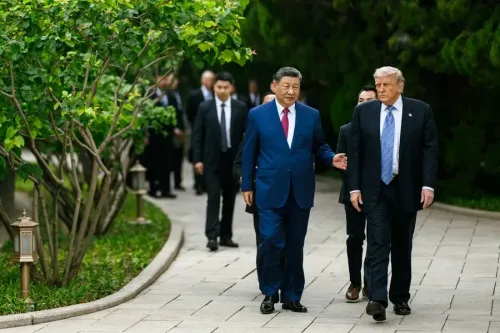
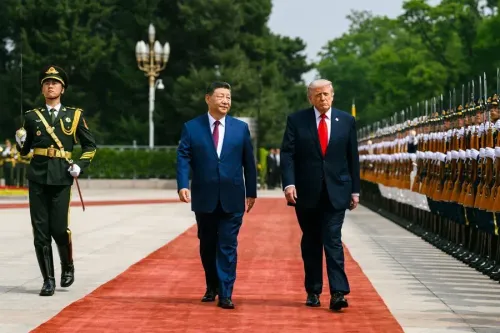
Two senior US lawmakers have written to President Donald Trump, urging him to press Chinese leader Xi Jinping to commit that humans — not artificial intelligence — must retain control over all nuclear weapons launch decisions. The letter, dated 15 September 2025, comes ahead of a planned Trump-Xi meeting next week and reflects growing bipartisan anxiety over AI's role in nuclear command-and-control systems.
The Core Demand
Representative Ted Lieu, a California Democrat, and Senator Ed Markey, a Massachusetts Democrat, co-authored the letter addressed to President Trump. Their central ask: obtain from Beijing a direct commitment to preserve what they describe as the 'human-in-the-loop' principle in the deployment of nuclear weapons.
'AI should never launch a nuclear weapon by itself,' the lawmakers wrote, framing the issue as both a strategic and existential imperative.
The US Legal Basis
Lieu and Markey cited Section 1638 of the Fiscal Year 2025 National Defence Authorisation Act as the foundation of existing US policy. According to their letter, the provision explicitly declares that AI must not compromise the integrity of nuclear safeguards or remove human decision-makers from the employment of nuclear weapons.
'The United States already requires that the use of AI should not compromise the integrity of nuclear safeguards or compromise the principle of maintaining a human-in-the-loop in the employment of nuclear weapons,' they wrote. Lieu's office noted that both lawmakers authored the provision themselves, making their appeal to Trump a direct extension of their own legislative record.
What They Are — and Are Not — Saying About China
Notably, the letter stops well short of accusing Beijing of having authorised AI to independently trigger a nuclear launch. It provides no details about China's existing nuclear command architecture or how AI may currently be integrated into it. The request is, in essence, a pre-emptive diplomatic push — seeking a Chinese commitment to a principle the US claims to already follow.
'We urge you to get General Secretary Xi to commit the People's Republic of China to the same principle that the United States already follows,' the two lawmakers wrote. 'Since the United States follows this basic principle, so should the PRC.'
The Risk They Want Trump to Address
The lawmakers framed direct presidential engagement as critical to preventing a nuclear disaster — whether triggered deliberately or by accident. 'Your direct engagement on this matter is critical to ensuring AI doesn't accidentally or intentionally cause a preventable nuclear disaster,' they wrote.
This comes amid a broader global debate over the militarisation of AI, with several defence analysts warning that autonomous systems in high-stakes domains introduce unpredictable escalation risks. The Trump-Xi meeting, if it proceeds, could offer a rare opening to establish even an informal understanding on AI and nuclear safety — a domain where no binding international framework currently exists.
What Happens Next
It remains unclear whether the White House will formally include AI nuclear safeguards on the agenda for the planned meeting. As of the publication of this report, neither the Trump administration nor Beijing had publicly responded to the lawmakers' request.
Point of View
No multilateral framework, and no arms-control regime currently addresses AI in nuclear command loops. Asking for a verbal presidential-level commitment is a start, but it is a remarkably thin line of defence against one of the most consequential risks in modern strategic competition. The deeper question mainstream coverage misses: if the US itself only has a legislative provision and no enforcement mechanism, how credible is the ask it is making of China?
NationPress
17 Sept 2026
Frequently Asked Questions
What are US lawmakers asking President Trump to do regarding AI and nuclear weapons?
Representatives Ted Lieu and Senator Ed Markey have asked President Trump to press Chinese leader Xi Jinping, during their upcoming meeting, to commit that humans will always remain in control of nuclear launch decisions and that AI will never be allowed to independently fire a nuclear weapon.
What is the 'human-in-the-loop' principle in nuclear weapons policy?
It is the principle that a human decision-maker must always be involved in any decision to use nuclear weapons. The US has codified this in Section 1638 of the Fiscal Year 2025 National Defence Authorisation Act, which prohibits AI from compromising nuclear safeguards or removing human control from launch decisions.
Are the lawmakers accusing China of using AI to control nuclear weapons?
No. The letter explicitly does not accuse Beijing of having authorised AI to independently launch nuclear weapons. It also provides no details about China's existing nuclear launch architecture. The request is pre-emptive — seeking a commitment to a principle, not responding to a confirmed threat.
When is the Trump-Xi meeting expected to take place?
According to the lawmakers' letter dated 15 September 2025, the meeting between President Trump and Chinese leader Xi Jinping is planned for the following week. No further details about the venue or agenda have been publicly confirmed.
Why does this issue matter now?
There is currently no binding international treaty or multilateral framework governing the use of AI in nuclear command-and-control systems. As AI capabilities advance rapidly, defence analysts warn that autonomous systems could introduce unpredictable escalation risks, making diplomatic engagement on this issue increasingly urgent.