Xi warns Trump on Taiwan as Beijing summit tackles trade, AI
Synopsis
Xi Jinping’s blunt Taiwan warning to Trump — ‘clashes and even conflicts’ if mishandled — was the sharpest moment of a Beijing summit that also produced claims of a 200-Boeing-aircraft deal, a joint AI guardrail pact and a rare US-China alignment on keeping Iran nuclear-free. The pageantry was elaborate; the strategic gaps remain wide.
Key Takeaways
Xi Jinping warned Donald Trump on 15 May that mishandling Taiwan could lead to “clashes and even conflicts” during closed-door talks at the Great Hall of the People, Beijing .
Trump claimed Xi agreed to purchase 200 Boeing aircraft and pledged not to supply military equipment to Iran.
US Trade Representative Jamieson Greer said China would buy “double-digit billion” dollars in US agricultural goods annually for three years ; tariff talks covering $30 billion in goods are underway.
Both sides agreed to establish protocols preventing advanced AI systems from reaching “non-state actors,” according to Treasury Secretary Scott Bessent .
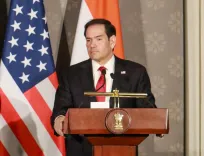
The American delegation included cabinet members Marco Rubio , Scott Bessent and Pete Hegseth , alongside executives Tim Cook , Jensen Huang and Elon Musk .
Trump did not publicly respond to Xi’s Taiwan remarks; the White House readout focused on trade and Iran.
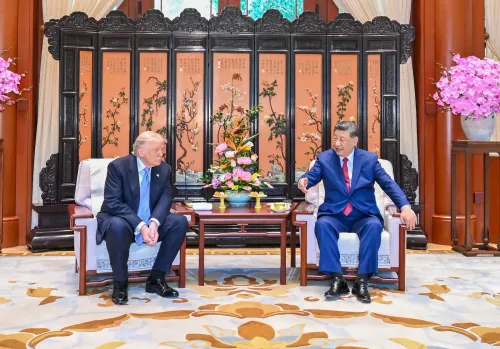
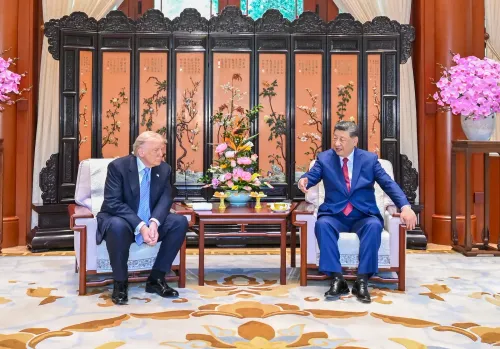
Chinese President Xi Jinping warned US President Donald Trump on 15 May that mishandling the Taiwan question could lead to “clashes and even conflicts,” as the two leaders held high-stakes talks at the Great Hall of the People in Beijing — Trump’s first visit to China in nearly nine years. The summit, aimed at stabilising ties between the world’s two largest economies, spanned trade, technology, artificial intelligence and Iran.
Xi’s Taiwan Warning
According to Chinese accounts cited by multiple international outlets, Xi delivered the caution during closed-door sessions. “The Taiwan question is the most important issue in China-US relations,” Xi reportedly told Trump. “If it is handled properly, the bilateral relationship will enjoy overall stability. Otherwise, the two countries will have clashes and even conflicts, putting the entire relationship in great jeopardy.”
Trump did not publicly respond to Xi’s Taiwan remarks. A White House readout instead foregrounded trade, investment and Iran-related outcomes, according to reports by The Wall Street Journal and The New York Times. Officials from both sides stated that the Strait of Hormuz “must remain open” and that Iran “can never have a nuclear weapon.”
Trade and Economic Deals
Trade dominated much of the substantive agenda. US Trade Representative Jamieson Greer said China was expected to purchase “double-digit billion” dollars worth of American agricultural goods annually over the next three years, according to The New York Times. China also renewed export licences for some American beef suppliers, and discussions were reportedly underway for a “Board of Trade” covering tariff reductions on roughly $30 billion in goods.
Trump separately claimed Xi had agreed to buy 200 Boeing aircraft and pledged not to supply military equipment to Iran, according to CNN and The New York Times. Chinese officials framed the talks around “strategic stability” and managing competition, while the White House emphasised market access and trade rebalancing, according to The Wall Street Journal.
AI Cooperation and Tech Guardrails
Treasury Secretary Scott Bessent said Washington and Beijing would establish protocols to ensure advanced AI systems do not fall into the hands of “non-state actors,” according to CNN and The New York Times. The agreement marks a rare area of convergence between two powers that have otherwise sharpened their rivalry over semiconductor access and emerging technologies.
Pageantry and the Business Delegation
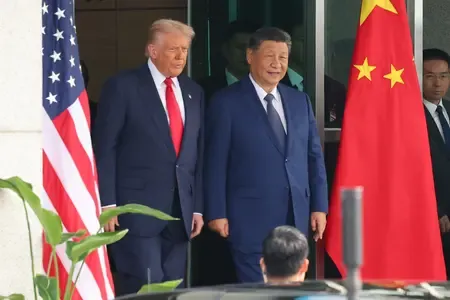
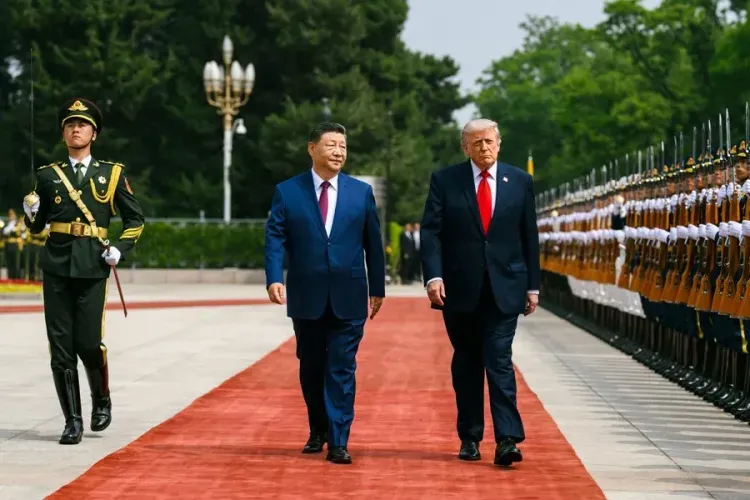
The summit blended symbolism with strategic bargaining. Xi extended a red-carpet welcome featuring a 21-gun salute, military bands and schoolchildren waving Chinese and American flags outside the Great Hall of the People, according to The Wall Street Journal. Trump later described the reception as “an honor like few have ever seen before.”
The American delegation was notably broad. Senior officials including Secretary of State Marco Rubio, Treasury Secretary Scott Bessent and Defence Secretary Pete Hegseth were joined by top corporate executives — Apple chief Tim Cook, Nvidia CEO Jensen Huang, Tesla’s Elon Musk and Mastercard executive Michael Miebach, according to The Wall Street Journal. Their presence signalled that economic deal-making was as central to the trip as diplomatic signalling.
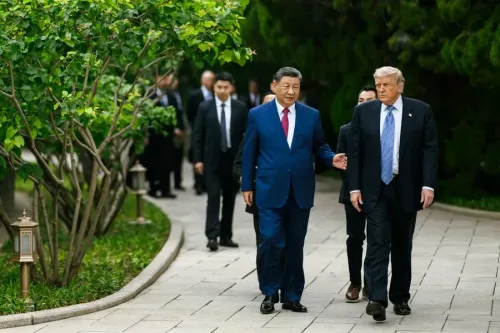
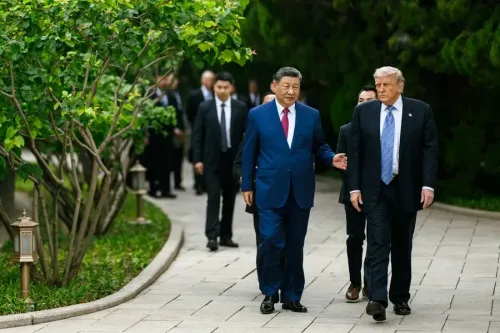
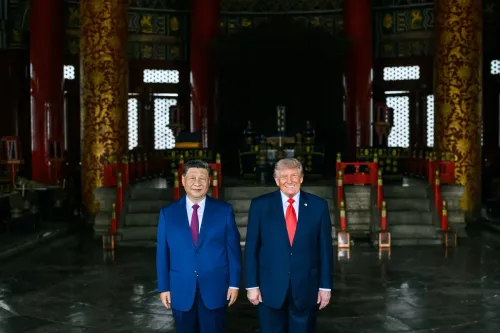
Trump and Xi also toured Beijing’s historic Temple of Heaven before attending a state banquet at the Golden Hall, where Xi said his “China Dream” and Trump’s effort to “make America great again” “can go hand in hand.” The remark, however choreographed, underscored both leaders’ interest in projecting a managed rivalry rather than open confrontation — at least for now.
What Comes Next
The depth of any agreements will be tested in implementation. Tariff reductions, Boeing orders and AI protocols all require follow-through from bureaucracies on both sides that have spent years building adversarial postures. The Taiwan warning, meanwhile, remains unaddressed in any public US response — a deliberate ambiguity that critics argue leaves the most consequential fault line unresolved.
Point of View
Washington signals that economic deliverables are being prioritised over strategic clarity — a pattern that has historically emboldened rather than deterred Chinese assertiveness. The presence of Musk, Cook and Huang alongside cabinet secretaries blurs the line between diplomacy and deal-brokering in ways that complicate any coherent China policy. And the AI protocol, while welcome, is vague enough to be unenforceable without a verification mechanism neither side has yet proposed.
NationPress
19 Sept 2026
Frequently Asked Questions
What did Xi Jinping tell Trump about Taiwan at the Beijing summit?
Xi warned Trump that mishandling Taiwan could lead to ‘clashes and even conflicts,’ calling it the most important issue in China-US relations. The warning was delivered during closed-door talks at the Great Hall of the People on 15 May, according to Chinese accounts cited by multiple international outlets.
What trade deals were announced at the Trump-Xi summit?
Trump claimed Xi agreed to purchase 200 Boeing aircraft and pledged not to supply military equipment to Iran. US Trade Representative Jamieson Greer said China would buy double-digit billions in American agricultural goods annually for three years, and tariff reduction talks covering roughly $30 billion in goods are reportedly underway.
What was agreed on artificial intelligence at the Beijing summit?
Treasury Secretary Scott Bessent said the US and China would establish protocols to prevent advanced AI systems from falling into the hands of non-state actors. No further details on verification or enforcement mechanisms were publicly disclosed.
Who was part of the US delegation to Beijing?
The delegation included Secretary of State Marco Rubio, Treasury Secretary Scott Bessent and Defence Secretary Pete Hegseth. Corporate executives Apple’s Tim Cook, Nvidia’s Jensen Huang, Tesla’s Elon Musk and Mastercard’s Michael Miebach also accompanied Trump, according to The Wall Street Journal.
Why is the Trump-Xi summit significant?
It was Trump’s first visit to China in nearly nine years and the highest-level direct engagement between the two powers amid ongoing tensions over trade, technology and Taiwan. The summit sought to stabilise a relationship that underpins global economic and security dynamics, though the gap on Taiwan remains publicly unaddressed.