Trump-Xi talks cover Taiwan, AI, trade and nuclear arms
Synopsis
Trump’s post-summit remarks on Air Force One were unusually candid — covering Taiwan’s independence red lines, mutual cyber espionage, a 200-plus Boeing aircraft deal, AI safety cooperation, and trilateral nuclear talks. The breadth of the agenda signals that Washington and Beijing are quietly managing a far wider strategic conversation than their public rivalry suggests.
Key Takeaways
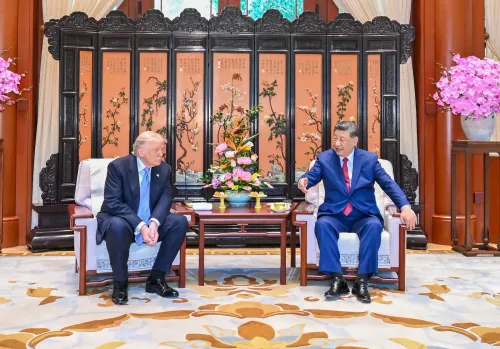
President Trump described his talks with President Xi Jinping as “very historic,” covering Taiwan , AI, trade, cyber operations, and nuclear arms.
Xi strongly opposed Taiwanese independence, warning it would trigger a “very strong confrontation.” Trump declined to confirm whether the US would militarily defend Taiwan and said a decision on future arms sales would come “over the next fairly short period of time.” Both sides discussed AI safety “guardrails” and managing risks from advanced AI in biological, nuclear, and cyber domains.
Trump announced a deal for China to purchase more than 200 Boeing aircraft , potentially expandable to 750 planes , including General Electric engines.
Trump said Xi agreed that Iran must not be allowed to acquire nuclear weapons, and both leaders raised the concept of trilateral denuclearisation with Russia.
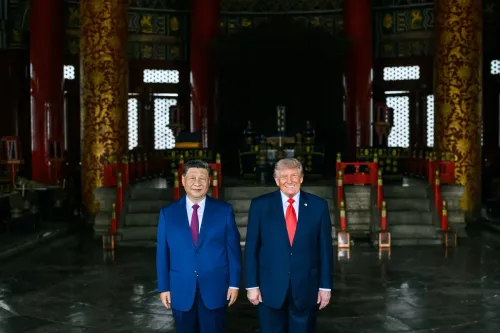
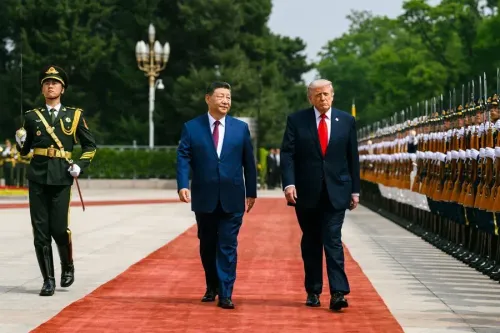
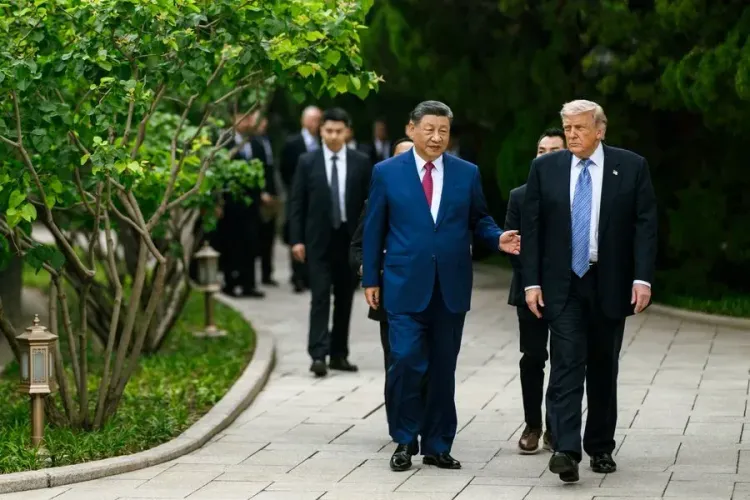
US President Donald Trump on 16 May revealed that he held wide-ranging discussions with Chinese President Xi Jinping spanning Taiwan, artificial intelligence, Iran, trade, cyber operations, and nuclear arms reduction — describing the engagement as “very historic” and signalling a potential easing of tensions between the world’s two largest economies.
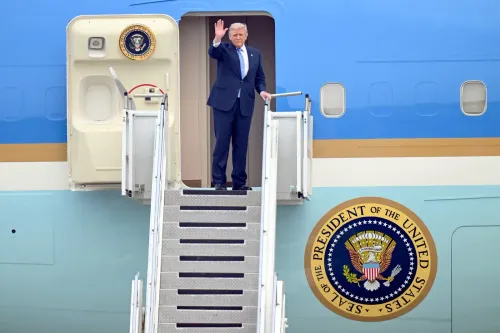
Trump made the remarks to reporters aboard Air Force One while travelling to Anchorage, Alaska, repeatedly praising Xi and saying the two leaders had developed “a very good understanding” on several major geopolitical issues.
Taiwan at the Centre of Talks
The Taiwan question reportedly dominated much of the conversation. According to Trump, Xi expressed firm opposition to any move toward Taiwanese independence, warning that such a development would trigger a serious confrontation.
“President Xi and I talked a lot about Taiwan,” Trump said. “On Taiwan, he does not want to see a fight for independence because that would be a very strong confrontation.”
Xi also directly raised concerns about US arms sales to the island and asked whether Washington would militarily defend Taiwan in the event of a conflict. Trump said he declined to answer that question directly. “He asked me if I’d defend them. I said, I don’t talk about that,” the President told reporters. Trump added that a decision on future arms sales to Taiwan would be made “over the next fairly short period of time.”
AI Guardrails and Cyber Espionage
The two leaders also discussed cooperation on artificial intelligence safeguards. Trump indicated that both sides explored the possibility of working together to manage risks tied to biological, nuclear, and cyber threats arising from advanced AI systems.
“We talked about possibly working together for guardrails,” Trump said. “AI is fantastic. So many things can happen in terms of health and medicine and operations, everything, the military.”
On cyber operations, Trump acknowledged mutual espionage between the two nations in notably candid terms. “We spy like hell on them, too,” he said when responding to questions about Chinese espionage activities in the United States.
Trade Deal and Boeing Aircraft
On the trade front, Trump announced what he described as a major agreement involving China purchasing more than 200 Boeing aircraft, with a possible expansion to 750 planes. He also noted that the deal included purchases linked to General Electric aircraft engines. The announcement comes against the backdrop of ongoing US-China trade friction and follows recent tariff negotiations between the two governments.
Nuclear Arms and Iran
Trump said the leaders raised the concept of nuclear arms reduction involving China, Russia, and the United States. “We brought it up, the denuclearization,” Trump said. “The concept of that is something that would be very good.”
On Iran, Trump said Xi agreed that Tehran should not be permitted to acquire nuclear weapons. “He feels strongly they can’t have a nuclear weapon,” Trump said. The convergence on Iran is notable given China’s historically cautious stance on Western-led pressure campaigns against Tehran.
Taken together, the disclosures suggest a potentially broader strategic engagement between Washington and Beijing, even as the two powers continue to compete across trade, technology, military influence, and the Indo-Pacific. Taiwan remains the most sensitive flashpoint in the relationship, and Trump’s deliberate ambiguity on arms sales and military defence commitments is likely to draw close scrutiny from both allies and adversaries.
Point of View
Mutual espionage acknowledgement, AI guardrail cooperation, a Boeing mega-deal, and trilateral nuclear talks — is extraordinary for an off-the-cuff Air Force One briefing. Yet the candour cuts both ways: Trump’s refusal to reaffirm a US military commitment to Taiwan, combined with his pending decision on arms sales, will unsettle allies in Taipei and Tokyo more than it reassures them. The Boeing deal, if verified, gives Beijing a commercial win it can point to domestically. And the AI guardrails conversation, however preliminary, marks a rare area of declared mutual interest — one that could either anchor future diplomacy or become a bargaining chip in the next trade round. The real question is whether “very historic” translates into durable institutional frameworks, or whether it remains a mood captured at altitude.
NationPress
21 Sept 2026
Frequently Asked Questions
What did Trump and Xi discuss in their latest talks?
According to Trump, the two leaders held extensive discussions covering Taiwan’s independence, AI safety guardrails, a major Boeing aircraft deal, cyber espionage, nuclear arms reduction, and Iran’s nuclear ambitions. Trump described the talks as “very historic.”
What did Xi Jinping say about Taiwan?
Xi reportedly told Trump that China strongly opposes any move toward Taiwanese independence, warning it would lead to a serious confrontation. Xi also raised concerns about US arms sales to Taiwan and asked whether Washington would defend the island militarily.
Will the US continue selling arms to Taiwan?
Trump said he would make a determination on future arms sales to Taiwan “over the next fairly short period of time,” without committing to a specific outcome. He also declined to answer Xi’s direct question about whether the US would militarily defend Taiwan.
What is the Boeing aircraft deal with China?
Trump announced that China agreed to purchase more than 200 Boeing aircraft, with a possible expansion to 750 planes. The deal also reportedly involves General Electric aircraft engines. It was presented as a significant trade outcome from the summit.
Did the US and China agree on AI cooperation?
Both sides discussed the possibility of working together on AI ‘guardrails’ to manage risks in biological, nuclear, and cyber domains. Trump described AI as ‘fantastic’ but acknowledged the need to manage its risks, though no formal agreement was announced.