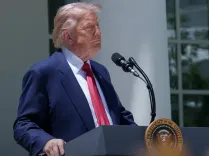
Trump-Xi Beijing summit: Trade, Iran war, Taiwan top agenda
Synopsis
Trump's first China visit since 2017 is not a diplomatic courtesy call — it is a high-pressure negotiation with four live fault lines: a trade truce that needs renewing, a Middle East war blocking a critical oil lane, Taiwan's contested status, and an AI arms race with no guardrails. How much Xi concedes on farm purchases and Iran could define Trump's economic narrative heading into the November midterms.
Key Takeaways
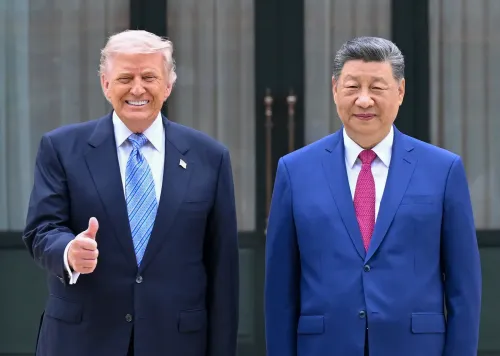
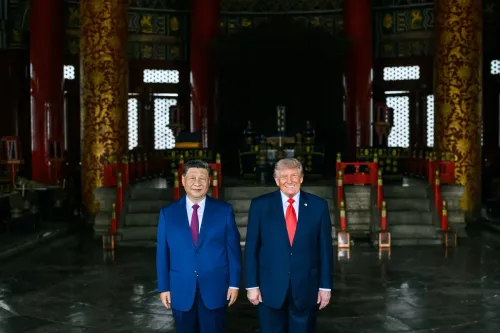
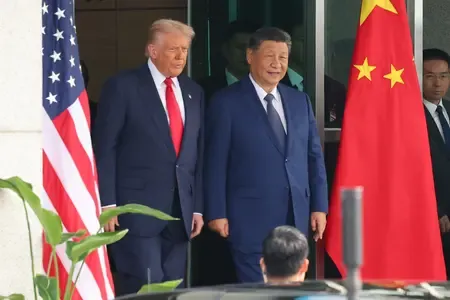
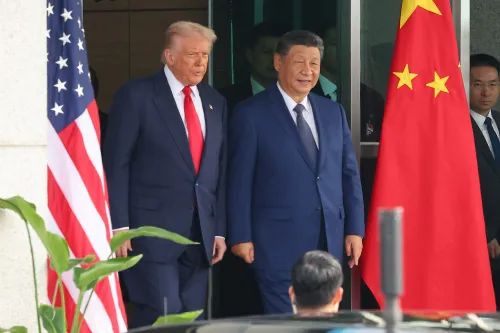
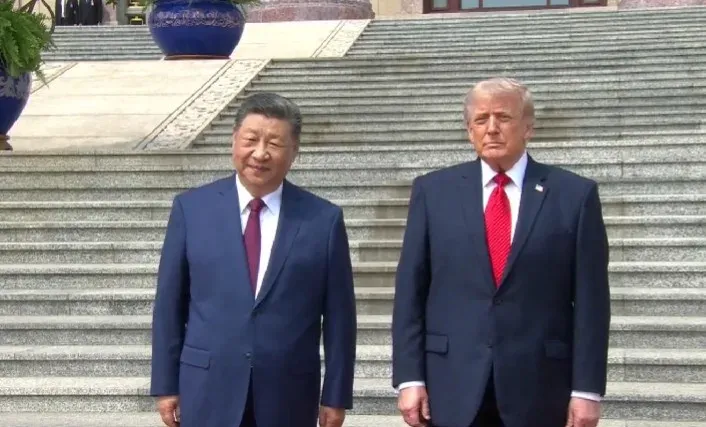
US President Donald Trump and Chinese President Xi Jinping held summit talks at the Great Hall of the People, Beijing on 14 May .
Key agenda items include trade , the US-Israeli war on Iran , the Strait of Hormuz , Taiwan 's security, and AI competition.
Trump is seeking Chinese commitments to buy more US farm products , Boeing aircraft , and components — ahead of November midterm elections .
The visit is Trump's first to China since November 2017 and follows a one-year trade truce struck at the APEC Busan summit .
Further Trump-Xi meetings are expected at APEC Shenzhen in November and G20 Florida in December .
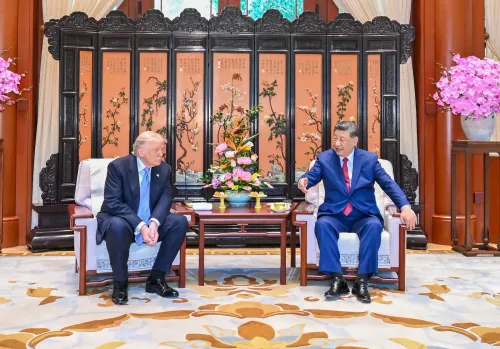
US President Donald Trump and Chinese President Xi Jinping opened high-stakes summit talks at the Great Hall of the People in Beijing on Thursday, 14 May, with trade imbalances, the ongoing US-Israeli war on Iran, Taiwan's security, and technological rivalry expected to dominate the agenda. The meeting marks Trump's first visit to China since November 2017.
Ceremonial Welcome and Opening Remarks
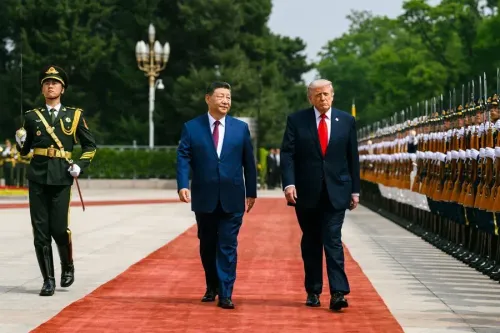
Before the formal talks began, Trump received a full ceremonial welcome — a handshake with Xi, national anthems performed by a military band, an inspection of the honour guard, and greetings from young children waving US and Chinese flags. In his opening remarks, Trump set a conciliatory tone. 'It's an honour to be with you. It's an honour to be your friend, and the relationship between China and the USA is going to be better than ever before,' he said.
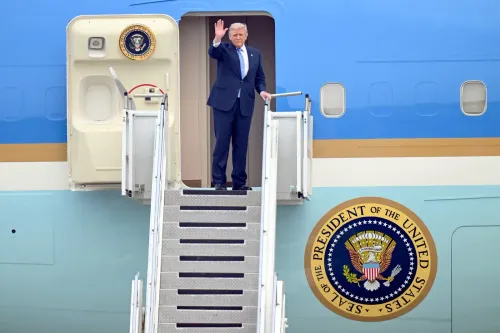
Trump had arrived in the Chinese capital on Wednesday evening for a three-day visit, his first bilateral trip to Beijing in nearly eight years.
Trade at the Centre of Talks
Trade is widely seen as the primary driver of Trump's Beijing visit, coming ahead of US midterm elections slated for November. Trump is reportedly seeking concrete Chinese commitments to increase purchases of US farm products — including soybeans and beef — as well as Boeing aircraft and related components.
The two leaders last met in person in Busan, South Korea, on the sidelines of the Asia-Pacific Economic Cooperation (APEC) summit, where they agreed on a one-year trade truce aimed at lowering existing tariffs and suspending further restrictions, including China's curbs on rare earth elements. This week's summit seeks to build on — or potentially extend — that arrangement.
Iran War and the Strait of Hormuz
The Middle East conflict looms large over the summit. Trump is seeking an exit from the months-long war with Iran and, critically, wants to secure the reopening of the Strait of Hormuz — a vital shipping corridor for oil, fertiliser, and other key commodities. Peace talks between the United States and Iran are currently at an impasse.
China has its own urgent stake in the matter. Disruptions to Strait of Hormuz shipping directly threaten China's energy supplies. While Beijing has moved to diversify its energy sources and maintains large oil stockpiles, the prolonged conflict poses longer-term economic risks for the world's second-largest economy, making it a shared — if differently motivated — concern for both sides.
Taiwan, AI, and North Korea
The security of Taiwan — the self-governing democracy that China regards as part of its territory — is expected to feature prominently, as is the two nations' intensifying competition in artificial intelligence and broader technology sectors.
Some observers noted that North Korea could also come up, given Trump's stated desire to resume diplomacy with North Korean leader Kim Jong-un. China maintains considerable influence over Pyongyang through sustained diplomatic and economic ties, giving it potential leverage as a broker.
Schedule and What Comes Next
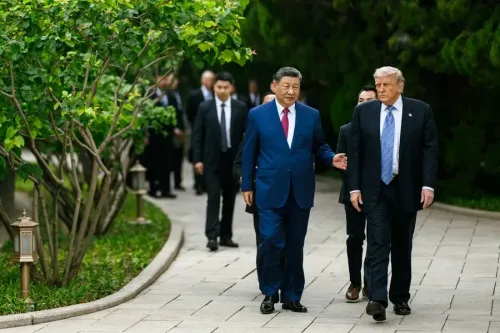
Following the summit, the two leaders are scheduled to visit the Temple of Heaven park — a historic imperial complex — and attend a state banquet. On Friday, they will hold a working tea session and luncheon before Trump departs for home.
This week's meeting is the first in a series of anticipated bilateral engagements this year, with further meetings possible on the margins of the APEC summit in Shenzhen in November and the G20 gathering in Florida in December. Whether the Beijing summit produces binding agreements or remains a framework for continued dialogue will shape the trajectory of US-China relations for the rest of the year.
Point of View
But the underlying dynamics are transactional on both sides. Trump needs deliverables — farm purchases, a Hormuz off-ramp — that he can sell to domestic audiences before November. Xi needs stability on tariffs and a quiet Taiwan front while China's economy absorbs longer-term headwinds. The one-year trade truce struck in Busan bought time; what Beijing produces this week will reveal whether either leader has the domestic room to make genuine concessions. The Iran dimension is the wild card: China's energy vulnerability gives it real incentive to push for de-escalation, but being seen as doing Washington's bidding in the Middle East carries its own political costs for Xi at home.
NationPress
22 Sept 2026
Frequently Asked Questions
What is the Trump-Xi Beijing summit about?
The summit, held on 14 May in Beijing, covers trade commitments, the US-Israeli war on Iran and the closure of the Strait of Hormuz, Taiwan's security, and technological competition including artificial intelligence. It is Trump's first visit to China since November 2017.
What trade outcomes is Trump seeking from China?
Trump is reportedly seeking firm Chinese commitments to increase purchases of US farm products such as soybeans and beef, as well as Boeing aircraft and related components. The talks build on a one-year trade truce agreed at the APEC summit in Busan, which suspended further tariff escalation and China's curbs on rare earth exports.
Why is the Iran war on the summit agenda?
The US-Israeli war on Iran has blocked the Strait of Hormuz, a vital shipping lane for oil and commodities, and peace talks are currently at an impasse. Both the US and China have economic reasons to seek de-escalation — Trump wants an exit from the conflict, while China fears long-term disruption to its energy supplies.
What is China's stake in the Strait of Hormuz conflict?
China relies on the Strait of Hormuz for a significant portion of its energy imports. While Beijing has diversified energy sources and holds large oil stockpiles, prolonged disruption poses longer-term economic risks for the world's second-largest economy.
Will Trump and Xi meet again after Beijing?
Yes. The Beijing summit is the first in a planned series of bilateral engagements this year. Further meetings are anticipated on the sidelines of the APEC summit in Shenzhen in November and the G20 gathering in Florida in December.