Trump-Xi White House summit: Taiwan, AI and Iran on the table beyond trade truce
Synopsis
Trump and Xi are meeting at the White House with the trade truce freshly extended to January — but the harder tests are elsewhere. Taiwan's status, US controls on AI chips, and Iran's blockaded oil routes are all on the table at a summit that could define the US-China relationship for the next year.
Key Takeaways
Donald Trump and Xi Jinping are holding a White House summit on 24 September 2026 — Xi's second visit to Washington as China's leader.
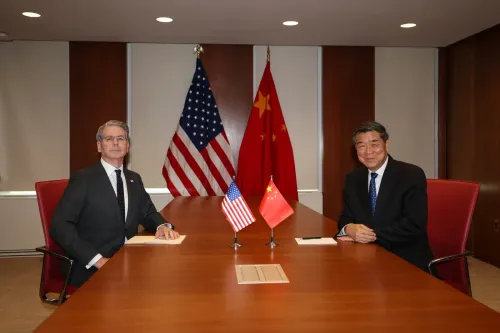
The US-China trade truce has been extended by two months to 10 January , after a last-minute deal between Scott Bessent and He Lifeng .
China wants Washington to halt expanding controls on advanced chips, computing capacity and AI models ; both sides agreed to formalise AI talks ahead of the APEC summit in Shenzhen in November.
Taiwan remains the most sensitive issue; People's Daily warned mishandling it could lead to 'collision and even conflict.' Washington hopes Beijing will use its economic influence to press Tehran ; a US naval blockade has reportedly disrupted Iranian oil shipments through the Strait of Hormuz .
Trump may also raise the cases of Min Zin and Chen Youlin , US citizens designated as wrongfully detained by the State Department.
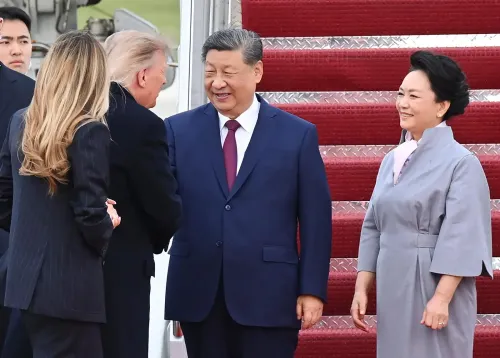
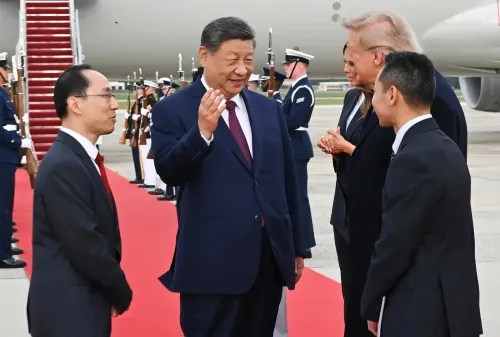
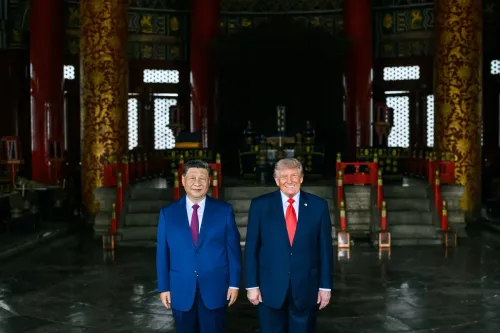
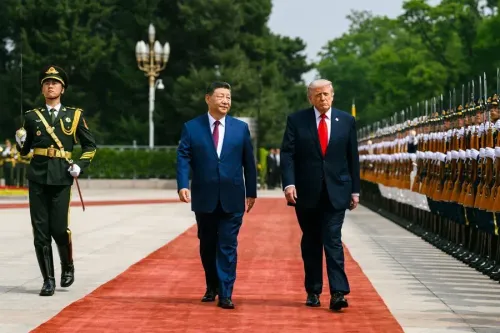
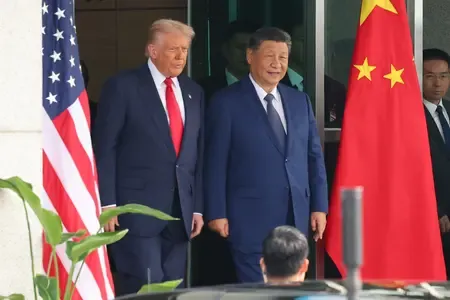
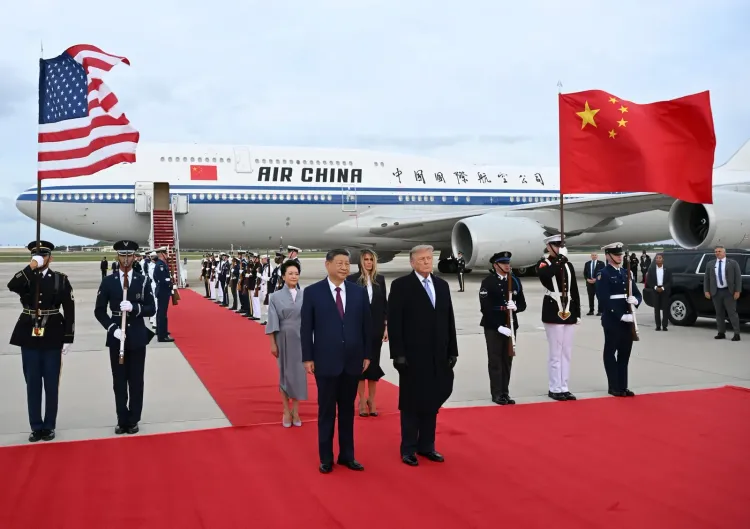
US President Donald Trump and Chinese President Xi Jinping are set to hold a high-stakes White House meeting on 24 September 2026, with the immediate pressure of a trade deadline eased after a last-minute two-month extension — but with Taiwan, Artificial Intelligence, and Iran all firmly on the agenda. It is Xi's second visit to Washington as China's leader; his first was a state visit in 2015 under then-President Barack Obama.
Xi's Conciliatory Opening
Arriving in the United States, Xi struck a notably measured tone. 'The two countries should be partners, not adversaries,' he said in a statement. 'The two sides should move towards each other and work together to build a stable relationship — one where co-operation is the mainstain, competition is kept within proper limits, differences are managed and peace can be expected,' he added. The language signals Beijing's preference for managed rivalry over open confrontation, even as substantive flashpoints persist.
Trade Truce Extended — but Disputes Linger
The trade file remains the most immediate test. During the 2025 escalation, Washington imposed tariffs as high as 145% on Chinese goods; Beijing responded with levies of up to 125%. Subsequent negotiations brought those rates down. At their Busan, South Korea summit last October, Trump and Xi agreed to a truce that further reduced a US tariff linked to fentanyl and deferred new restrictions on both sides for one year — an agreement originally set to expire on 10 November.
Following an unscheduled meeting between Chinese Vice Premier He Lifeng and US Treasury Secretary Scott Bessent on Wednesday night, Bessent announced the truce would be extended by two months to 10 January. The extension buys negotiators more time but leaves the broader structural dispute unresolved. This is the third such reprieve in the ongoing trade standoff, and critics argue the pattern of rolling extensions delays rather than resolves underlying disagreements.
AI Chips and Tech Controls Front and Centre
Artificial intelligence is expected to feature more prominently in this summit than in their May meeting in Beijing. China is pressing Washington to roll back expanding controls on advanced chips, computing capacity, and AI models. Beijing's argument is that US restrictions have ballooned beyond a narrow set of critical technologies to effectively cover entire sectors — a charge that US officials have not publicly disputed.
Notably, Vice Premier He and Treasury Secretary Bessent agreed over the weekend to formalise talks on AI governance, explore a communications channel for managing serious incidents, and schedule a follow-up meeting in November in Shenzhen, on the sidelines of the APEC summit. Analysts say formalising such a channel is a significant confidence-building step, given the near-total breakdown in military-to-military communication in previous years.
Taiwan: The Most Sensitive File
Taiwan remains the most volatile item on the agenda. The Communist Party newspaper People's Daily warned in an editorial that mishandling the Taiwan issue could push the two countries toward 'collision and even conflict', describing Taiwanese independence movements as a 'common enemy.'
China has been pressing the United States to halt arms sales to Taiwan. The Trump administration reportedly paused a proposed sale following the May Beijing summit. Trump himself has described arms sales to Taiwan as a 'very good negotiating chip' with China — a framing that has drawn concern from US allies in the Indo-Pacific who view arms sales as a security commitment, not leverage.
Iran, Detained Citizens and What Comes Next
The war involving Iran is another likely subject of discussion. Washington is hoping Beijing — a major buyer of Iranian oil — will use its economic leverage to press Tehran. A US naval blockade has reportedly disrupted Iranian oil shipments through the Strait of Hormuz to China. Xi has publicly called for a permanent ceasefire, renewed nuclear talks, and the reopening of the strait.
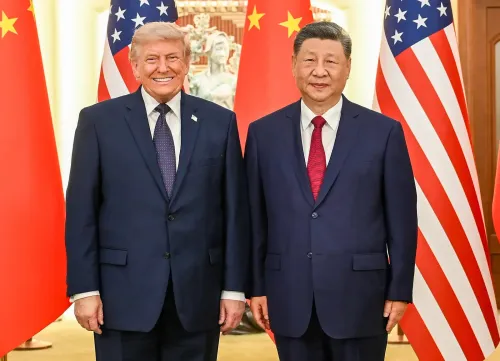
Trump may also seek the release of Min Zin and Chen Youlin, both US citizens designated as wrongfully detained by the State Department. The two leaders have now met face-to-face seven times prior to this visit — five during Trump's first term at Mar-a-Lago, Beijing, Hamburg, Buenos Aires, and Osaka, and twice more at Busan last October and Beijing this May. The frequency of contact underscores how much the bilateral relationship demands sustained summit-level management.
With the truce clock reset to January, the coming weeks will test whether diplomatic momentum can translate into durable agreements on the issues that matter most: technology sovereignty, Taiwan's security, and Iran's nuclear ambitions.
Point of View
But it is better read as a managed delay — the third such reprieve in a dispute that neither side has the appetite to fully resolve. The more consequential story is the AI front: US chip controls have quietly expanded from a targeted technology policy into what Beijing calls sector-wide restrictions, and the summit's ability to draw a credible line here will matter far more than tariff timelines. On Taiwan, Trump's own framing of arms sales as a 'negotiating chip' is a structural vulnerability — it signals to Beijing that a core US security commitment has a price, which risks emboldening precisely the pressures it is meant to deter.
NationPress
24 Sept 2026
Frequently Asked Questions
What is the Trump-Xi White House meeting about?
The summit on 24 September 2026 covers a wide agenda including the US-China trade truce, American controls on advanced AI chips, the Taiwan arms sales dispute, and Washington's request that Beijing pressure Iran. It is Xi Jinping's second visit to Washington as China's leader.
Why was the US-China trade truce extended?
The truce, originally set to expire on 10 November, was extended by two months to 10 January after Treasury Secretary Scott Bessent and Chinese Vice Premier He Lifeng held an unscheduled meeting on Wednesday night. The extension gives negotiators more time but does not resolve the underlying trade dispute.
What is China's position on US AI chip controls?
China is pressing Washington to stop expanding restrictions on advanced chips, computing capacity, and AI models, arguing that the controls now cover entire sectors rather than a small number of critical technologies. Both sides agreed to formalise AI-related talks ahead of the APEC summit in Shenzhen in November.
Why is Taiwan a flashpoint at this summit?
China has been pushing the US to halt arms sales to Taiwan, which the Trump administration reportedly paused after the May Beijing summit. Trump has described such sales as a 'very good negotiating chip' with China, a framing Beijing has taken note of and US allies in the region have viewed with concern.
How many times have Trump and Xi met before this summit?
The two leaders have met face-to-face seven times prior to this White House visit — five during Trump's first term at Mar-a-Lago, Beijing, Hamburg, Buenos Aires, and Osaka — and twice more in Busan in October and Beijing in May of the current term.