Trump-Xi Beijing summit 2025: Cooperation signals, Taiwan fault lines remain
Synopsis
Trump and Xi met at Zhongnanhai — the same venue where Nixon and Mao reset the world order in 1972 — and left without a single structural breakthrough. Warm words, Boeing jet orders, and an Iran side-deal can't paper over the Taiwan standoff, an unresolved trade truce, and a Chinese nuclear buildup the US has no treaty to constrain.
Key Takeaways
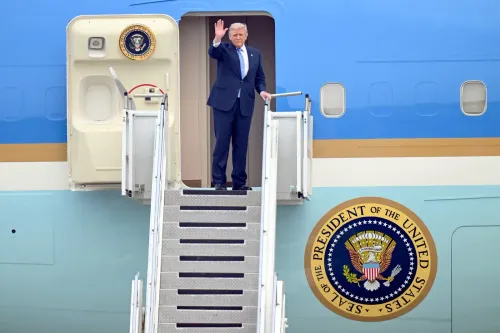
Trump and Xi Jinping held a summit at Zhongnanhai, Beijing on Thursday , pledging cooperation but producing no major breakthroughs.
Xi warned that mishandling the Taiwan question could lead to 'clashes' and 'even conflicts' between the two countries.
Both sides agreed Iran must not acquire nuclear weapons and the Strait of Hormuz must remain open — but China signalled it will continue buying Iranian oil.
China reportedly committed to purchasing US soybeans, oil, LNG, and 200 Boeing jets , though no formal trade framework was announced.
The temporary trade truce — due to expire later this year — was not addressed; US trade investigations into China remain ongoing.
China's nuclear stockpile is on track to exceed 1,000 warheads by 2030 , per a 2025 Pentagon report ; no arms control talks were confirmed.
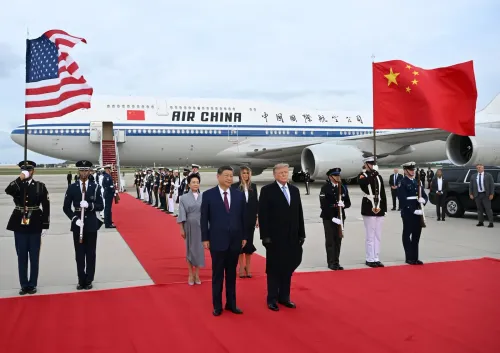
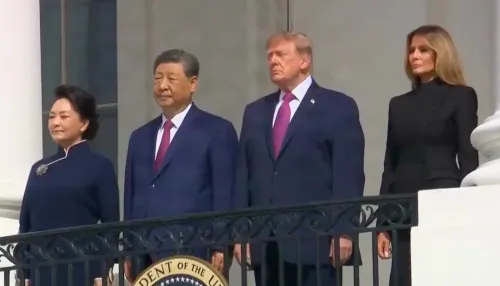
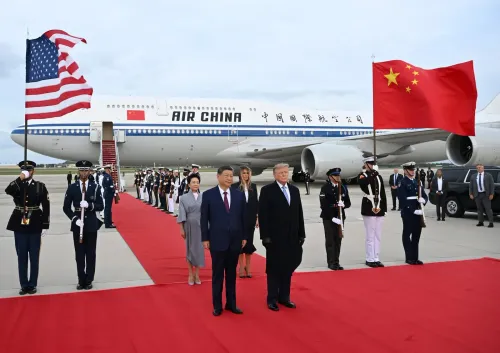
US President Donald Trump and Chinese President Xi Jinping held a high-stakes summit in Beijing this week, exchanging warm words and pledging cooperation — yet the meeting produced no major breakthroughs on the deep structural fault lines dividing Washington and Beijing, from Taiwan to nuclear arsenals to trade architecture.
Key Developments at the Summit
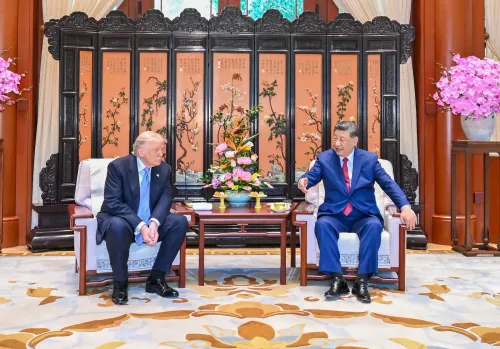
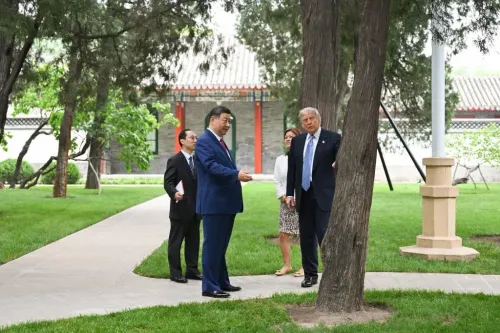
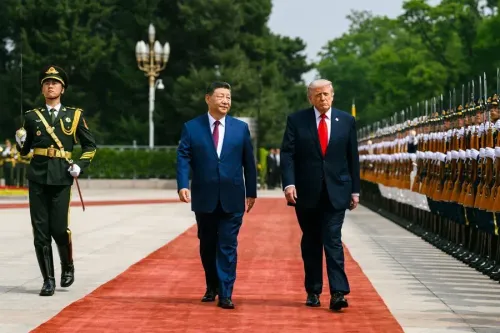
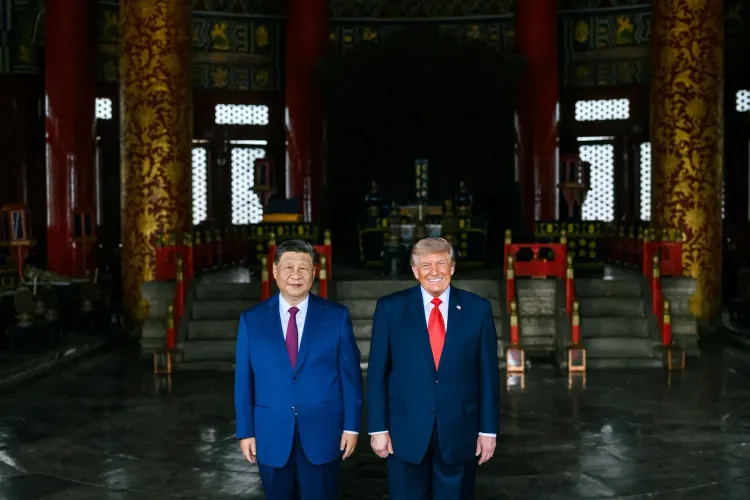
The two leaders met on Thursday at Zhongnanhai, the central complex of China's top leadership situated near the Forbidden City — the same venue where then US President Richard Nixon met then Chinese leader Mao Zedong in 1972 to lay the groundwork for Sino-US detente. The symbolic choice of venue underscored both sides' intent to project a spirit of managed engagement.
'When there were difficulties, we worked it out. I would call you, and you would call me,' Trump said at the opening of talks. 'Whenever we had a problem, we worked it out very quickly, and we are going to have a fantastic future together.'
Xi responded with an appeal for partnership over rivalry. 'China and the United States both stand to gain from cooperation and lose from confrontation,' he said through an interpreter. 'We should help each other succeed and prosper together, and find the right way for major countries to get along well with each other in the new era.'
Taiwan: The Unresolved Core
Despite the cooperative atmosphere, Taiwan — the self-governing democracy that Beijing claims as its own territory — cast a long shadow over the proceedings. Xi reportedly warned during Thursday's summit that mismanagement of the Taiwan question could lead to 'clashes' and 'even conflicts,' according to Xinhua News Agency.
Secretary of State Marco Rubio, who also serves as Trump's top National Security Advisor, said in a Fox News interview that 'it is not in China's interest or anyone's interest for there to be any sort of forced change in the status quo' regarding Taiwan. 'I think stability there is very important,' Rubio added.
Notably, speculation had circulated ahead of the Beijing trip that the Trump administration might shift US policy language from 'not supporting' Taiwan independence to actively 'opposing' it — a significant diplomatic step that did not materialise.
Iran: Common Ground, Diverging Interests
On Iran, the two sides found partial alignment. Both governments agreed that Iran must never acquire a nuclear weapon and that the Strait of Hormuz — a critical shipping corridor for oil, fertilisers, and other commodities — must remain open, according to a White House official. Trump also said Xi offered to help broker an end to the conflict with Iran and keep the strait accessible.
'We feel very similar on Iran,' Trump said during the Zhongnanhai meeting.
However, a clear divergence emerged on Chinese purchases of Iranian oil. Trump confirmed in the Fox News interview that Xi told him China intended to continue buying Iranian crude — directly at odds with the Trump administration's pressure campaign to cut Tehran's revenue streams.
Trade: Commitments Without Architecture
On trade, Trump described 'fantastic' deals that are 'great for both countries,' though he offered no formal detail. He told Fox News that China committed to purchasing US soybeans, oil, liquefied natural gas, and 200 Boeing jets.
Crucially, there was no announcement on the fate of the temporary trade truce struck at the Trump-Xi summit in South Korea in late October, which is set to expire later this year. That truce had lowered existing tariffs and suspended further restrictions, including China's export curbs on rare earth elements. The Trump administration is simultaneously conducting trade investigations into China and other countries that could result in new tariffs — a tension the Beijing summit left unresolved.
Nuclear Buildup and North Korea
China's accelerating nuclear expansion was expected to feature in discussions, but neither side confirmed whether it was formally raised. A 2025 Pentagon report on China's military developments assessed that China's nuclear warhead stockpile remained in the low 600s in 2024 and is on track to exceed 1,000 warheads by 2030. Trump has expressed interest in a new arms control framework that includes China, following the expiry of the New START treaty between the US and Russia in February.
On North Korea, China's state media said the two leaders discussed 'key regional and international issues, including those concerning the Korean Peninsula,' though specifics were not disclosed. Trump has repeatedly signalled a desire to re-engage with North Korean leader Kim Jong-un since beginning his second term.
The clearest takeaway from the Beijing summit may be its least dramatic one: both leaders remain in active dialogue and plan to meet several more times this year, including during Xi's anticipated reciprocal visit to Washington in September. The relationship is managed — but its deepest fault lines remain unresolved.
Point of View
Not a trade architecture; a shared Iran statement, not a shared Iran policy; and no movement on Taiwan, where the risk of miscalculation remains the highest it has been in decades. The most consequential absence was any progress on arms control: China is building toward 1,000 nuclear warheads with no treaty framework in sight, and the US has no leverage mechanism beyond summitry itself. If the September Washington visit follows the same pattern, the world's most consequential bilateral relationship will have accumulated a lot of meetings and very few agreements.
NationPress
5 Oct 2026
Frequently Asked Questions
What was agreed at the Trump-Xi Beijing summit?
The two leaders agreed that Iran must never acquire a nuclear weapon and that the Strait of Hormuz must remain open. China also reportedly committed to purchasing US soybeans, oil, LNG, and 200 Boeing jets. No formal agreements were reached on Taiwan, trade truce renewal, or nuclear arms control.
What did Xi Jinping say about Taiwan at the summit?
Xi warned that mismanagement of the Taiwan question could lead to 'clashes' and 'even conflicts' between the US and China. Secretary of State Marco Rubio responded that stability in Taiwan is 'very important' and that a forced change in the status quo is not in anyone's interest.
Will the US-China trade truce be extended?
No announcement was made on extending the temporary trade truce, which is set to expire later in 2025. The truce, agreed at a summit in South Korea in late October, lowered tariffs and suspended restrictions including China's rare earth export curbs. The Trump administration's ongoing trade investigations into China add further uncertainty.
What is the significance of the Zhongnanhai summit venue?
Zhongnanhai is the central complex of China's top leadership, located near the Forbidden City in Beijing. It is the same venue where President Richard Nixon met Mao Zedong in 1972 to establish Sino-US diplomatic relations, making it a symbolically charged choice for the Trump-Xi meeting.
When is Xi Jinping expected to visit Washington?
Xi Jinping is anticipated to make a reciprocal visit to Washington in September 2025, according to reports. Both leaders indicated they plan to meet several more times this year, signalling that high-level dialogue will continue despite the absence of major breakthroughs in Beijing.