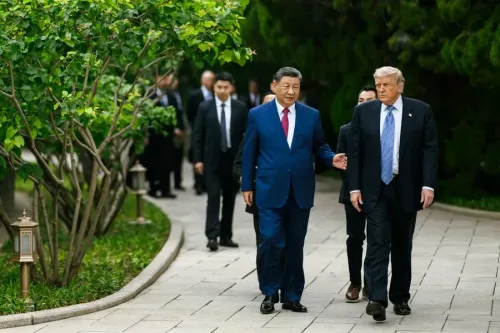
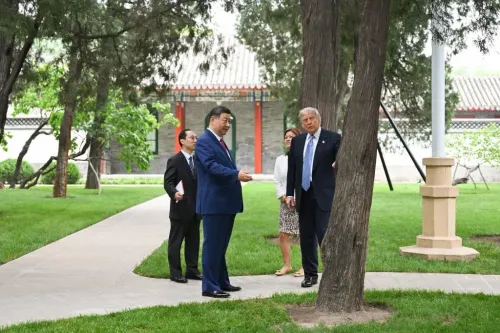
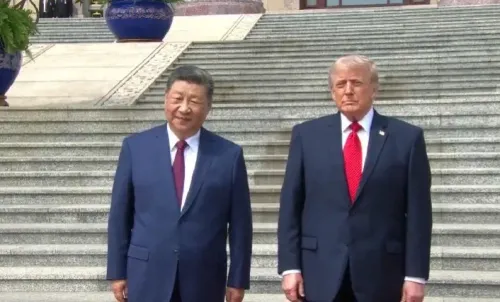
Trump hails Xi ties, eyes trade and Iran ahead of China summit
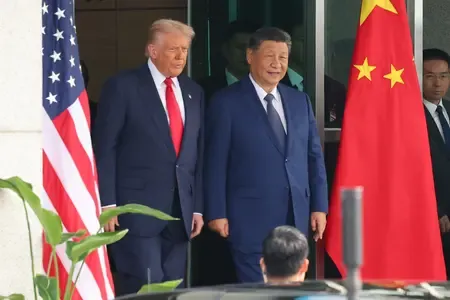
Synopsis
Donald Trump is heading to China projecting warmth toward Xi Jinping — but beneath the personal chemistry lies a relationship defined by trade wars, tech rivalry, and Taiwan tensions. With Iran now also on the table and a reciprocal Xi visit to the US reportedly planned, this summit carries more strategic weight than Trump's upbeat pre-departure remarks suggest.
Key Takeaways
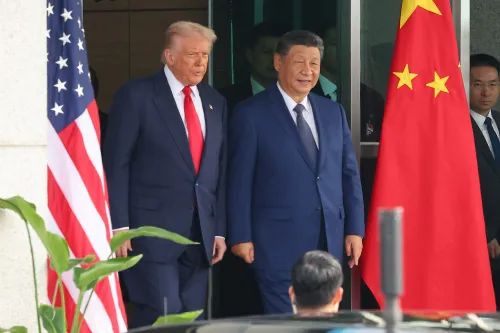
President Donald Trump departed the White House on 13 May for a visit to China , expressing confidence in a "great meeting" with Xi Jinping .
Trade is expected to dominate summit discussions, with Trump saying it would be the primary focus.
Xi Jinping is reportedly expected to visit the United States later this year, in a potential reciprocal diplomatic milestone.
Trump suggested Xi could help facilitate a deal on Iran , while asserting the US remained militarily in control of the situation.
The visit comes amid ongoing disputes over Taiwan , technology, and Indo-Pacific military influence, even as both sides maintain high-level engagement.
India is closely watching the summit's outcomes for implications on regional stability and Indo-Pacific security.
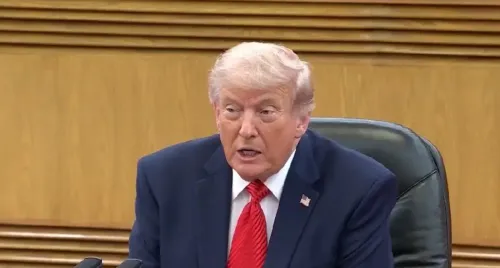
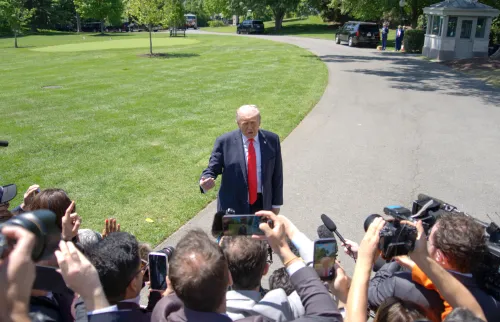
US President Donald Trump on 13 May expressed confidence in a "great meeting" with Chinese President Xi Jinping during his upcoming visit to China, projecting stability in US-China relations even as global tensions over Iran, trade, and energy security continue to simmer. Trump made the remarks to reporters before boarding Marine One as he departed the White House for the China trip.
Trump's Praise for Xi and Bilateral Ties
Speaking in characteristically effusive terms, Trump described his personal rapport with Xi as a cornerstone of the bilateral relationship. "My relationship with President Xi is a fantastic one," Trump said. "We've always gotten along and we're doing very well with China and working with China's been very good."
He framed the two countries as the world's dominant powers, noting that the sheer scale of their economic and strategic interdependence made sustained dialogue essential. "I think more than anything else since we have massive relationships with China, we're the two superpowers," Trump said. "We have a lot of things to discuss."
Trade at the Centre of Summit Agenda
Trump indicated that trade would dominate the summit discussions, reflecting ongoing efforts by both sides to manage a relationship that has been defined in recent years by tariff disputes, technology restrictions, and supply chain decoupling. "I would say more than anything else will be trades," he said.
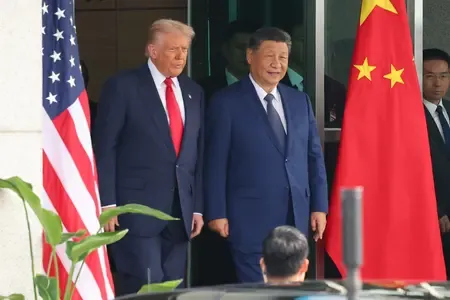
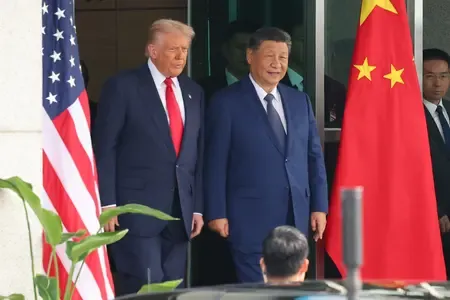
He also confirmed that Xi Jinping is expected to visit the United States later this year. "President Xi will be coming here toward the end of the year," Trump said. "That'll be exciting too." The reciprocal visit, if confirmed, would mark a significant diplomatic milestone given the fraught state of ties over much of the past decade.
Iran: Xi as Potential Facilitator
Trump suggested that Xi could play a role in addressing the Iran crisis, while simultaneously insisting that Washington did not require outside assistance. "Whatever he can do to help with it," Trump said when asked whether Xi could contribute to a deal with Tehran. In the same breath, he adopted a more hawkish tone on Iran itself: "They're defeated militarily and they'll either do the right thing or we'll finish the job."
The dual messaging — seeking Xi's facilitation while asserting US military dominance — reflects the complex balancing act Washington is navigating as it simultaneously manages its rivalry with Beijing and its confrontation with Tehran.
Backdrop: A Relationship Under Structural Strain
The visit comes at a sensitive juncture in US-China relations, which have been shaped by sustained disputes over trade, technology, Taiwan, semiconductor supply chains, and military influence across the Indo-Pacific region. Despite sharp underlying differences, both Washington and Beijing have maintained high-level diplomatic engagement to prevent further deterioration.
Notably, India is closely monitoring the evolving dynamic, given its direct implications for regional stability, trade routes, and Indo-Pacific security architecture. Any shift in the US-China equilibrium carries downstream consequences for New Delhi's strategic calculus.
What to Watch Next
The outcome of the summit — particularly any joint statements on trade frameworks or Iran — will be closely parsed by allies and rivals alike. With Xi's return visit to the US reportedly pencilled in for later this year, the diplomatic calendar suggests both sides are invested in sustaining the engagement, even if structural tensions remain unresolved.
Point of View
Or whether it is another round of managed optics between two powers that fundamentally distrust each other. The mention of Xi visiting the US later this year is the most consequential detail in Trump's remarks, and the least examined. If that visit materialises, it would signal that both sides are choosing managed competition over confrontation — a choice with significant consequences for every country caught between them, including India.
NationPress
24 Sept 2026
Frequently Asked Questions
Why is Donald Trump visiting China?
Trump is visiting China for a summit with President Xi Jinping focused primarily on trade and long-term strategic ties. The trip comes amid ongoing global tensions over Iran, technology, and Indo-Pacific security.
What will Trump and Xi Jinping discuss at the summit?
Trade is expected to be the dominant agenda item, according to Trump's own remarks. The two leaders are also likely to discuss Iran, where Trump suggested Xi could play a facilitating role, as well as broader US-China strategic relations.
Is Xi Jinping visiting the United States?
Trump confirmed that Xi Jinping is expected to visit the United States later in 2025. 'President Xi will be coming here toward the end of the year,' Trump said, describing the prospective visit as 'exciting.'
How does Iran factor into the US-China summit?
Trump indicated that Xi could potentially help broker or facilitate progress on the Iran situation, while also asserting that the US was militarily dominant and did not require outside support. The dual stance reflects Washington's complex position on Iran.
Why does the US-China summit matter for India?
India is closely monitoring the summit because shifts in the US-China relationship directly affect Indo-Pacific security, regional trade routes, and India's own strategic positioning between the two superpowers.