CM Fadnavis Meets Narkhed Locals on Drought, Water and Fodder
Synopsis
Maharashtra CM Devendra Fadnavis visited Lohri Savanga in Narkhed taluka, Nagpur on 8 November 2026, meeting local representatives to urgently address drought-driven shortages of drinking water, cattle fodder, and water conservation in Vidarbha.
Key Takeaways
CM Devendra Fadnavis visited Lohri Savanga, Narkhed taluka, Nagpur on 8 November 2026 .
Discussions focused on three drought-linked problems: drinking water , animal fodder , and water conservation .
Fadnavis stressed 'urgent solutions' and cooperation for village development.
Nagpur district is part of Vidarbha , a region with a long record of recurrent drought and agrarian distress.
The visit echoes the ethos of his earlier Jalyukt Shivar Abhiyan (launched 2015), which targeted drought-free villages through watershed works.
Implementation of water tankers, fodder camps, and conservation works in Narkhed will determine the visit's real impact.
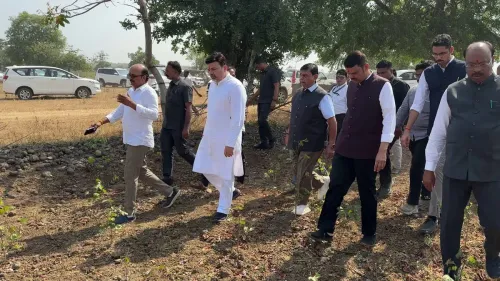
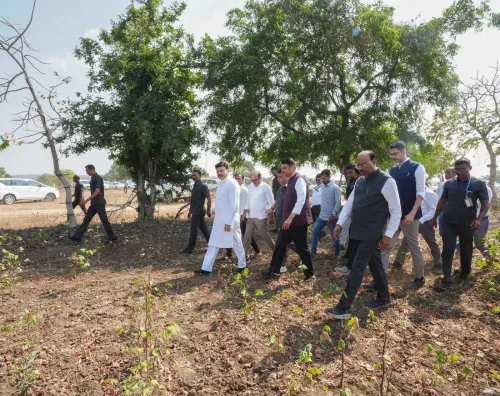
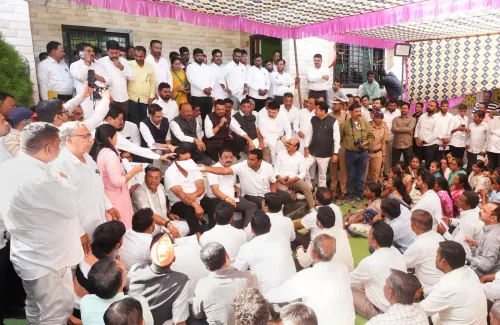
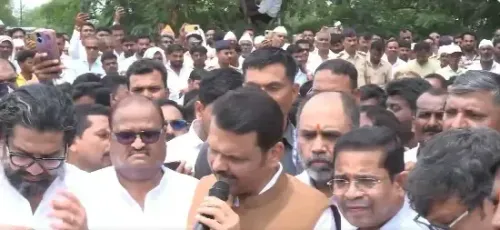
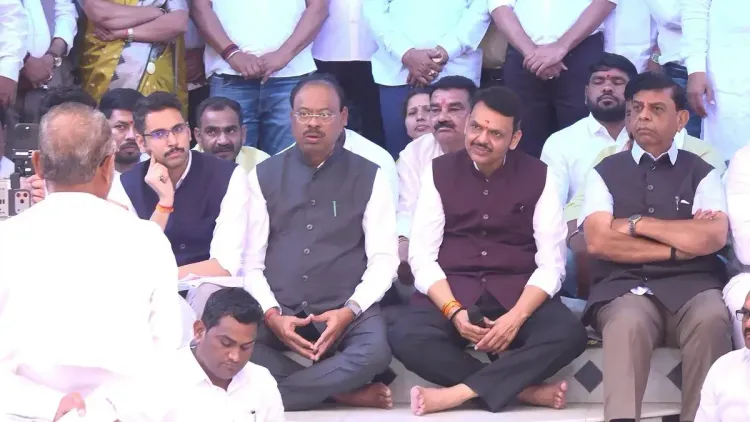
Drought is not an abstraction in Narkhed taluka, Nagpur district — it is a dry well, a hungry animal, and a village waiting for answers. On Sunday, 8 November 2026, Maharashtra Chief Minister Devendra Fadnavis travelled to Lohri Savanga village in Narkhed to sit down with local elected representatives, turning attention squarely on the pressing triad of drinking water, animal fodder, and water conservation.
Posting on X in Marathi, Fadnavis wrote: 'नागपुरातील नरखेड तालुक्यातील लोहारी सावंगा येथे स्थानिक लोकप्रतिनिधींशी आज संवाद साधला' — 'Today I interacted with local elected representatives at Lohri Savanga in Narkhed taluka, Nagpur. Against the backdrop of drought, we discussed the issues of drinking water, fodder for livestock and water conservation. The focus was on finding urgent solutions to these problems and extending all necessary cooperation for village development.'Vidarbha's Familiar Drought Burden
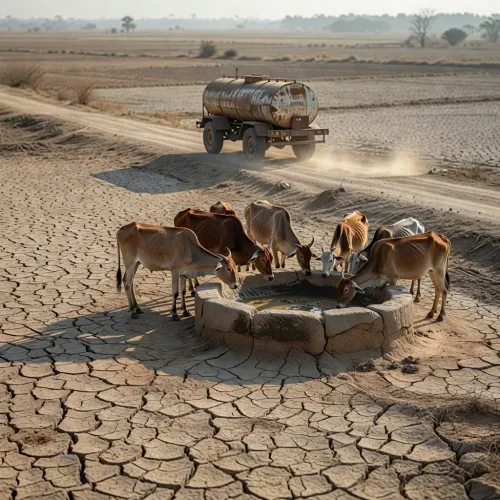
Nagpur district sits in the heart of the Vidarbha region — eastern Maharashtra's agricultural belt that has long been synonymous with recurrent drought, cotton cultivation, and deep agrarian stress. When rains fall short, the cascade is swift: drinking water sources dry up, fodder for livestock disappears, and the economic floor of small farming households gives way. Narkhed taluka has been among the taluka-level geographies that bear the first and heaviest hit in a deficient monsoon year.Jalyukt Shivar and the Water-Conservation Playbook
Fadnavis is not new to this terrain — literally or politically. During his first term as Chief Minister (2014–2019), his government launched the Jalyukt Shivar Abhiyan, an ambitious watershed-development programme aimed at creating drought-free villages by deepening streams, building check dams and undertaking large-scale soil-and-water conservation works across Maharashtra. The Sunday visit to Lohri Savanga carries the imprint of that same philosophy: direct, ground-level engagement rather than relief announced from a secretariat desk.Three Problems, One Urgent Mandate
The conversation in Narkhed circled three distinct but interlocked challenges. Drinking water is the most acute — when wells and tanker routes fail, entire villages face a daily crisis. Cattle fodder is the second pressure point; livestock is both a livelihood asset and a family's nutritional backstop, and fodder camps have historically been the state's emergency tool when pastures fail. Water conservation is the structural fix — the long game that determines whether the same villages return to crisis next season or begin to hold moisture in the land. Fadnavis's emphasis on 'urgent solutions' signals an intent to move on all three fronts simultaneously.What Narkhed Waits to See
A field visit by a sitting Chief Minister generates visibility. What converts it into relief is implementation — the actual deployment of water tankers, the opening of fodder depots, the sanctioning of watershed works in Narkhed's villages. Vidarbha has seen many such visits; it has also seen follow-through vary considerably depending on the season, the budget cycle, and the political calendar. Drought declarations at the district or taluka level, which unlock state relief funds, and the pace of Jalyukt Shivar-style works in Nagpur district will be the real test of Sunday's dialogue.The hashtag #DiwaliWithFarmers anchors the visit in a symbolic moment — a Chief Minister spending the festive season not in a city function but in a parched village. That image will only hold if the pipelines, the fodder camps, and the check dams follow.
Point of View
A region whose agrarian vote has historically been decisive for the BJP's fortunes in eastern Maharashtra. The three-point agenda (drinking water, fodder, water conservation) mirrors the emergency-to-structural arc his government attempted through Jalyukt Shivar in 2015–19, suggesting a continuity of policy framing if not yet of verified outcomes. Whether the visit translates into drought declarations, budget releases, or accelerated watershed works will determine if it registers as substantive rural intervention or symbolic optics. For Vidarbha's farmers, the difference between the two has rarely been more consequential.
NationPress
8 Nov 2026
Frequently Asked Questions
Why did CM Fadnavis visit Narkhed taluka in Nagpur?
CM Devendra Fadnavis visited Lohri Savanga in Narkhed taluka on 8 November 2026 to meet local elected representatives and discuss urgent drought-related issues including drinking water supply, cattle fodder shortages, and water conservation measures for the region's villages.
What is Jalyukt Shivar Abhiyan and how is it relevant?
Jalyukt Shivar Abhiyan is a watershed development programme launched in 2015 by the Fadnavis government to create drought-free villages through check dams, stream deepening, and water conservation works. The themes of Fadnavis's Narkhed visit — water scarcity and conservation — align directly with that programme's objectives.
Which districts in Maharashtra face drought regularly?
Districts in Vidarbha (including Nagpur, Wardha, Yavatmal, Amravati) and Marathwada face recurrent drought due to erratic monsoons, dependence on rain-fed cotton cultivation, and limited irrigation infrastructure.
What relief measures does Maharashtra provide during drought?
Maharashtra's standard drought relief toolkit includes deployment of water tankers for drinking water, opening of government fodder camps for livestock, ex gratia payments to affected farmers, and sanction of watershed works under schemes like Jalyukt Shivar Abhiyan.
What does the hashtag DiwaliWithFarmers signify?
The hashtag #DiwaliWithFarmers signals that CM Fadnavis chose the Diwali festive period to engage directly with drought-hit farming communities in rural Nagpur rather than attending urban celebrations, framing the outreach as a symbolic and political statement of solidarity with farmers.