Trump, Xi hail 'great strides' as China visit ends; two more summits set
Synopsis
Xi Jinping's three-day Washington visit ended with both leaders declaring 'great strides,' two more summits locked in — APEC in China and the G20 in the US — and Iran surfacing as an undisclosed agenda item. The 'strategic stability' framing is the most explicit shared language the two sides have agreed on in years, and it sets the tone for what could be the most consequential bilateral relationship management since the 2017 Mar-a-Lago meetings.
Key Takeaways
Xi Jinping concluded a three-day Washington visit on 25 September 2026 , meeting President Donald Trump at the White House.
Both leaders declared 'great strides,' with Xi framing the goal as a relationship of 'strategic stability based on respect, fairness and reciprocity.' Two additional summits confirmed: APEC (in China) and G20 (in the United States) before year-end.
Trump flagged concrete gains for US farmers as a key outcome, without providing specifics.
Iran was confirmed to have featured in Trump-Xi discussions, a significant geopolitical signal.
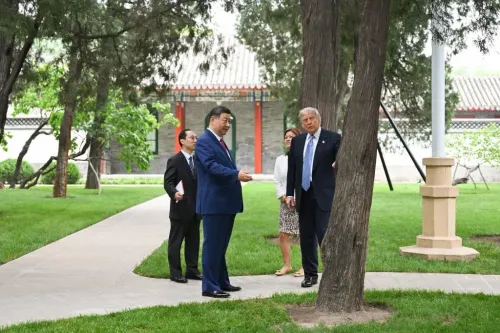
The visit concluded with a joint tour of the National Archives by both presidential couples.
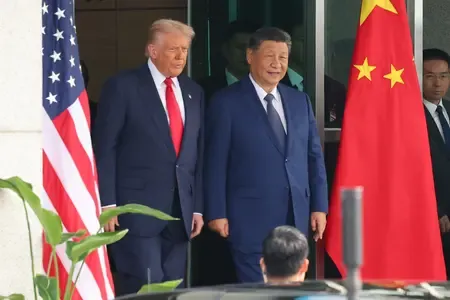
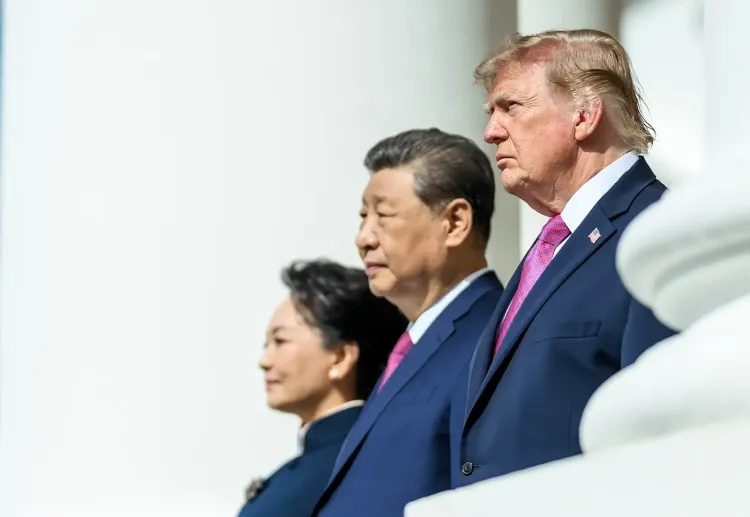
US President Donald Trump and Chinese President Xi Jinping wrapped up Xi's three-day Washington visit on Friday, 25 September 2026, declaring significant progress in bilateral ties and announcing two additional summits before year-end. The closing moments at the White House struck a notably warm tone, with both leaders framing the relationship around a vision Xi described as 'strategic stability' built on 'respect, fairness and reciprocity.'
A Relationship 'Charting a New Course'
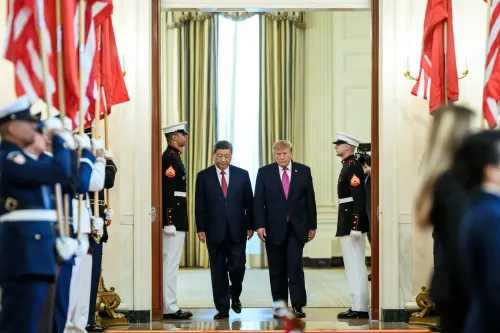
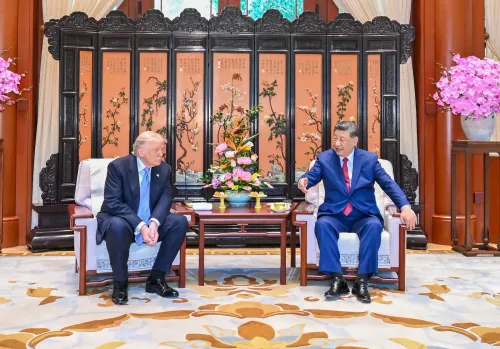
Speaking over tea at the White House before a joint visit to the National Archives, Trump declared the meetings a success. 'We've had a tremendous visit from two spectacular people, and we really enjoyed it, and I think we've made tremendous strides. We've made great strides, very positive for both countries,' he said.
Xi, speaking through an interpreter, offered a more philosophical framing: 'The president and I are like two people that are charting the course for the great ship of China-US relations.' He noted that the groundwork laid during Trump's visit to China in May — when both leaders reportedly agreed on the concept of a 'constructive' relationship — had now been given 'new substance.'
Two More Summits Confirmed for 2026
Xi disclosed that the two presidents are expected to meet at least twice more before the end of the year. 'Firstly, the APEC meeting in China and then the G20 summit in the United States,' Xi said, extending a personal invitation to Trump and First Lady Melania Trump to visit China. Trump accepted: 'We will. And we'll be speaking a lot.'
The confirmation of back-to-back multilateral sideline meetings — at APEC and the G20 — signals that both sides intend to institutionalise the diplomatic momentum from this visit, rather than treat it as a one-off reset.
Agriculture, Iran and Founding Documents
Trump repeatedly flagged gains for American farmers as a concrete outcome of the talks. 'I think our farmers are going to be very happy; a lot of very positive things happened,' he told reporters. He did not provide specifics on agricultural agreements, but the repeated reference suggests trade access for US farm produce was a substantive agenda item.
Trump also confirmed that Iran featured in his discussions with Xi — a notable disclosure given China's energy ties with Tehran and the broader US effort to build multilateral pressure on Iran. 'We did,' Trump said when asked directly whether Iran had come up.
The two presidential couples concluded the visit with a tour of the National Archives, viewing the Declaration of Independence, the US Constitution, and the Bill of Rights. Trump used the occasion to contrast the two nations' historical timelines. 'Ours goes 250 years. Which is great, and we're proud of. Theirs goes 6,000 years. So there's a little difference between 6,000 and 250. But we're very proud of our 250,' he said.
Context and What It Means for India
The visit comes amid a broader recalibration of US-China ties following years of trade-war escalation, technology restrictions, and geopolitical friction over Taiwan and the South China Sea. A stabilised US-China relationship has significant downstream implications for India, which has navigated its own complex balancing act between Washington and Beijing. Any formal agricultural or trade concession to China could affect Indian export competitiveness in sectors where both countries compete for US market access.
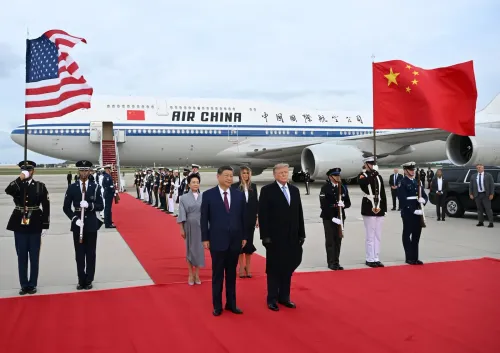
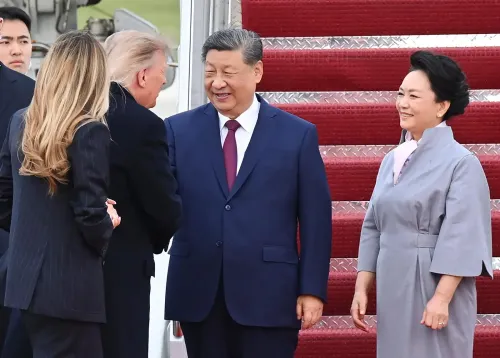
Xi's departure from Joint Base Andrews formally closed a visit that both sides appeared determined to frame as a turning point. Whether the 'strategic stability' framing survives contact with persistent structural tensions — over technology, Taiwan, and trade deficits — remains to be seen.
Point of View
Technology export controls, and trade deficits that neither side addressed publicly. The agricultural reference by Trump is worth watching: if it signals a fresh concession on soybean or grain access, it could displace competing exporters, including India and Brazil. The Iran disclosure is the most substantively important detail in an otherwise choreographed closing act — China's willingness to even discuss Tehran with Washington suggests Beijing sees value in the relationship's stabilisation above its Iranian energy partnerships, at least at the margins. Two more summits before year-end means this reset has institutional momentum, but institutional momentum and structural resolution are not the same thing.
NationPress
26 Sept 2026
Frequently Asked Questions
What was the outcome of Xi Jinping's three-day visit to Washington?
Both leaders declared significant progress in US-China ties and agreed to meet twice more before year-end — at the APEC summit in China and the G20 summit in the United States. Xi described the agreed framework as a 'constructive relationship of strategic stability based on respect, fairness and reciprocity.'
What is the 'strategic stability' framework Trump and Xi agreed on?
It is a shared diplomatic framing, first agreed upon during Trump's visit to China in May, describing the desired character of US-China relations. Xi said the Washington visit added 'new substance' to it, emphasising respect, fairness, and reciprocity as its pillars.
Where and when are the next Trump-Xi summits expected?
Xi confirmed two meetings are planned before the end of 2026 — first at the APEC summit hosted in China, and then at the G20 summit in the United States. Trump accepted Xi's personal invitation to visit China.
Did Iran come up in Trump and Xi's discussions?
Yes. Trump confirmed that Iran featured in his talks with Xi, though no details were disclosed publicly. The acknowledgement is significant given China's energy relationship with Tehran and ongoing US efforts to build multilateral pressure on Iran.
What did Trump say were the concrete outcomes for the United States?
Trump repeatedly cited gains for American farmers as a key result of the visit, saying 'I think our farmers are going to be very happy; a lot of very positive things happened.' He did not specify the nature of any agricultural agreements reached.