Trump-Xi Washington summit steadies ties but leaves rivalry intact
Synopsis
Trump rolled out B-1 bombers and a White House dinner for Xi Jinping — but the grandest US-China summit in over a decade produced a tariff truce extension and a vocabulary for coexistence, not a settlement. Semiconductors stayed off the table, Taiwan was untouched, and the structural rivalry remains. The achievement was keeping the rivalry manageable, not resolving it.
Key Takeaways
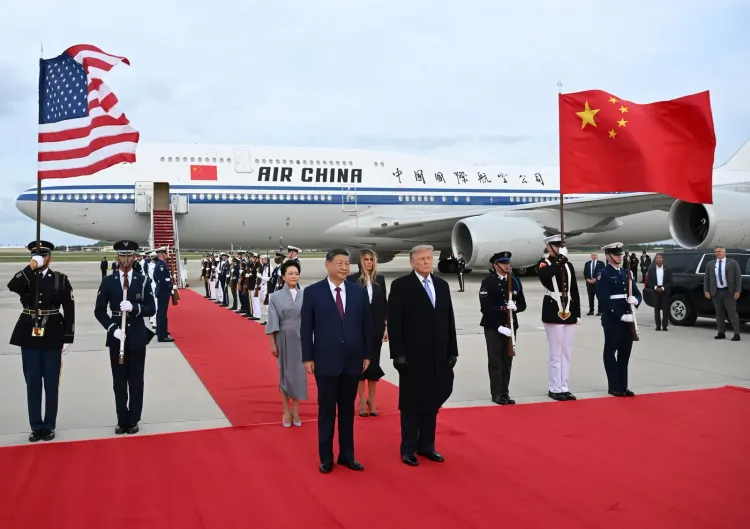
Donald Trump and Xi Jinping held a high-ceremony summit in Washington on 25 September 2026 — Xi's first visit to Washington in over a decade.
A tariff truce was extended from November to 10 January , keeping select US tariffs suspended in exchange for Chinese rare-earth mineral supplies.
Semiconductor export controls were reportedly not on the agenda, leaving Washington's strongest leverage point unused.
No binding agreement was reached on artificial intelligence , Taiwan , Iran , or human rights.
India has a direct stake in US-China stability given its border dispute with Beijing, Quad membership, and supply chain dependencies.
The summit restored ceremony and high-level contact but produced a framework for managing rivalry — not ending it.
Donald Trump and Xi Jinping met in Washington on 25 September 2026 for a high-ceremony summit that restored high-level dialogue and extended a key tariff truce — but stopped well short of resolving the structural competition between the world's two largest powers. The day produced a framework for managing rivalry, not ending it.
The Spectacle of Arrival
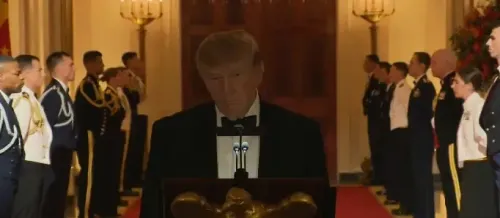
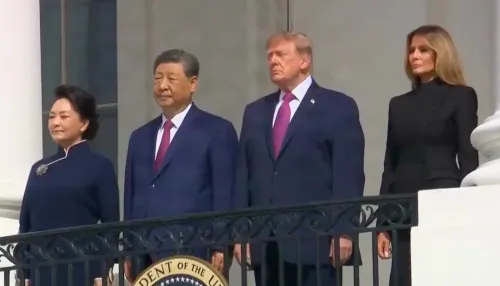
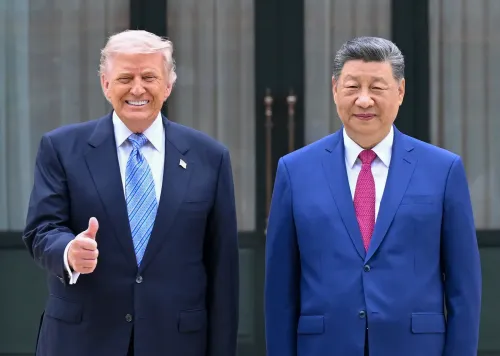
Trump personally received Xi at Joint Base Andrews, an unusual courtesy for a visiting head of state. A red carpet, US service members, and a flyover by two B-1 bombers gave the arrival both grandeur and an unmistakable projection of American military power. The following morning brought a formal White House welcome, where Trump described their relationship as a 'truly great friendship' built on 'mutual respect and the vital interests of our people.'
Xi responded in the language of guardrails, calling for candid dialogue, expanded government-to-government contact, and regular military communication. 'China and the United States must hold the line of no conflict and no confrontation between us,' Xi said — a sentence that, more than any ceremonial flourish, captured the summit's essential logic.
Trade: A Truce Extended, Not Resolved
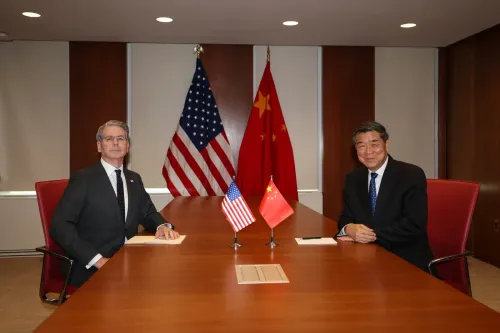
The clearest immediate outcome was on trade. Treasury Secretary Scott Bessent announced that a tariff truce, originally due to expire in November, had been extended until 10 January. The arrangement keeps certain US tariffs suspended while China continues supplying rare-earth minerals critical to American manufacturers.
The extension buys time. It is not the comprehensive economic bargain both governments say they seek. Notably, semiconductor export controls — widely regarded as Washington's strongest source of leverage — were reportedly not on the agenda, according to The Wall Street Journal. Agriculture and lower-technology trade offered easier ground for agreement.
AI, Taiwan and the Gaps That Remain
On artificial intelligence, Xi said the two countries had 'the capability and responsibility to develop and manage AI for good' and ensure its development remained under human control. US officials reportedly discussed an incident-notification channel — effectively an AI hotline. No binding AI agreement or verification system was announced.
The gap between tone and substance extended to Taiwan, Iran, and human rights. Public remarks produced no new formula on Taiwan, no clear Chinese commitment regarding Iran, and no announced progress on detained Americans or political prisoners. These remain areas of sharp divergence, untouched by the day's carefully managed civility.
Political Optics: What Each Side Took Away
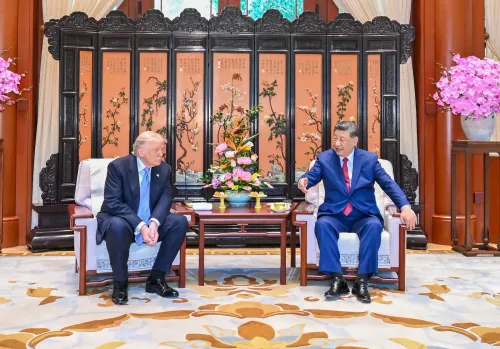
For Trump, the summit showcased his signature preference for leader-to-leader diplomacy over institutional channels. For Xi, the full state honours demonstrated that Washington was prepared to receive China as a peer — despite deep strategic distrust. The Washington Post described the airport reception as a rare gesture; The New York Times reported criticism that Trump extended unusually deferential treatment to Xi.
As the two presidents met, Melania Trump and Peng Liyuan visited the Smithsonian's National Museum of Asian Art, extending the day's carefully choreographed cultural diplomacy. The state dinner that followed filled the room with American technology executives. Trump presented Xi with a bald-eagle sculpture and toasted 'a future of harmony, peace, and success.' Xi said their talks had produced 'common understanding on many issues' but did not identify a single major new agreement.
India's Stake and What Comes Next
India has a direct stake in the trajectory of US-China relations. New Delhi's unresolved border dispute with Beijing, its participation in the Quad, and its dependence on global technology, energy, and mineral supply chains make the course of this bilateral relationship consequential for both India's security and its economy.
This was Xi's second formal state visit to the United States and his first trip to Washington in more than a decade. The two leaders have now met seven times previously, including in Florida, Germany, Argentina, Japan, South Korea, and Beijing. What changed in Washington was not the competition — it was the two governments' joint commitment to keeping that competition from becoming uncontrollable.
Point of View
Signalling that neither side is ready for the confrontation that a genuine technology decoupling would require. The tariff truce extension to January merely defers the harder bargain. Xi's framing of 'healthy competition kept within bounds' and Trump's 'great friendship' rhetoric are not convergence — they are parallel performances for domestic audiences. The risk is that the ceremony of coexistence substitutes for the hard institutional work of managing flashpoints on Taiwan, AI incidents, and military miscalculation. India should read the summit as a stabilisation signal, not a realignment — Washington and Beijing are managing their rivalry, not resolving it, and New Delhi's strategic autonomy remains its most valuable asset in navigating the space between them.
NationPress
25 Sept 2026
Frequently Asked Questions
What was achieved at the Trump-Xi Washington summit on 25 September 2026?
The summit extended a US-China tariff truce from November to 10 January and restored high-level bilateral dialogue, but produced no major new agreements on technology, Taiwan, Iran, or human rights. Both leaders committed to keeping their rivalry from escalating into open conflict.
What is the US-China tariff truce and why was it extended?
The tariff truce suspends certain US tariffs on Chinese goods in exchange for China maintaining supplies of rare-earth minerals needed by American manufacturers. Treasury Secretary Scott Bessent announced its extension to 10 January, buying time for a broader economic deal that has yet to materialise.
Why were semiconductor export controls not discussed at the summit?
According to The Wall Street Journal, semiconductor export controls were not on the agenda — a significant omission given that chip restrictions are widely seen as Washington's strongest source of leverage over China. The exclusion suggests both sides preferred easier ground, such as agriculture and lower-technology trade, to avoid a confrontational impasse.
What did Trump and Xi say about artificial intelligence?
Xi said the two countries had 'the capability and responsibility to develop and manage AI for good' and keep it under human control. US officials reportedly discussed an AI incident-notification channel, but no binding agreement or verification mechanism was announced at the summit.
Why does the Trump-Xi summit matter for India?
India has a direct stake in US-China stability because of its unresolved border dispute with Beijing, its participation in the Quad security grouping, and its dependence on global technology, energy, and mineral supply chains. A more predictable — even if still competitive — US-China relationship reduces the risk of a crisis that could force New Delhi into a binary choice between the two powers.