CM Fadnavis Allows Borewells to Keep Trees Alive in Maharashtra
Synopsis
The Chief Minister's Office of Maharashtra announced on 9 November 2026 that borewell digging will be permitted to keep trees alive, a targeted groundwater relaxation timed to Diwali that Chief Minister Devendra Fadnavis framed as farmer outreach amid the state's chronic water-scarcity challenge.
Key Takeaways
Maharashtra CMO announced borewell permissions specifically to sustain tree cover, not for broad irrigation.
CM Devendra Fadnavis framed the move under the #DiwaliWithFarmers hashtag, signalling a festival-season farmer-outreach thrust.
Maharashtra has regulated borewell digging since the 1990s to curb groundwater depletion in drought-prone districts.
An official Government Resolution detailing district scope, depth limits, and duration is awaited before the permission becomes operational.
Groundwater monitoring agencies will track whether the relaxation triggers a wider surge in borewell registrations beyond its stated conservation purpose.
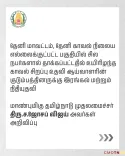
In a move timed to Diwali's spirit of renewal, the Chief Minister's Office of Maharashtra announced on Monday, 9 November 2026 that borewell digging will be permitted specifically to keep trees alive — a targeted environmental concession that places Chief Minister Devendra Fadnavis at the intersection of farmer welfare and conservation.
The post reads: 'झाडे जगविण्यासाठी विंधन विहिरींना मुभा' — 'Borewells permitted to keep trees alive' — a compact announcement that carries significant weight in a state where groundwater and tree cover are perennial flashpoints.Why borewell rules matter in Maharashtra
Maharashtra has regulated borewell digging since the 1990s, as successive governments grappled with groundwater depletion across drought-prone districts in Vidarbha, Marathwada, and parts of Western Maharashtra. The restrictions were designed to prevent unchecked extraction from pushing water tables further into deficit. That regulatory history makes any relaxation — even a targeted one — a significant policy signal.
The state has consistently alternated between tightening borewell controls and granting selective permissions when agriculture or plantations face acute stress. A permission framed explicitly around keeping trees alive threads that needle: it channels water access toward greenery rather than broad agricultural extraction, giving the announcement an environmental cover that pure irrigation permissions lack.
The Diwali-farmer connection and Fadnavis's pattern
Festival-season announcements combining farmer outreach with environmental messaging have become a recognisable cadence under Devendra Fadnavis, who has repeatedly used rural infrastructure decisions to consolidate his base in agrarian Maharashtra. The hashtag #DiwaliWithFarmers appended to the post makes the political framing explicit — this is relief delivered with ceremony.
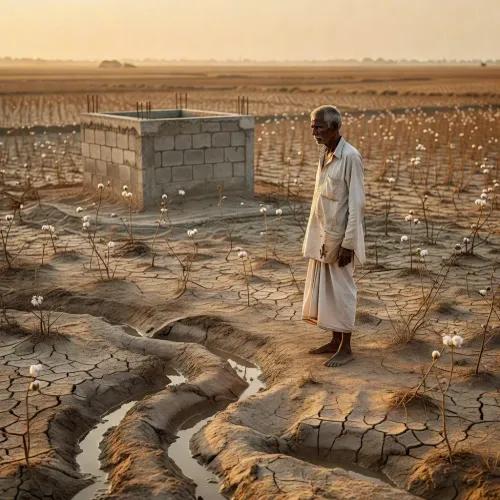
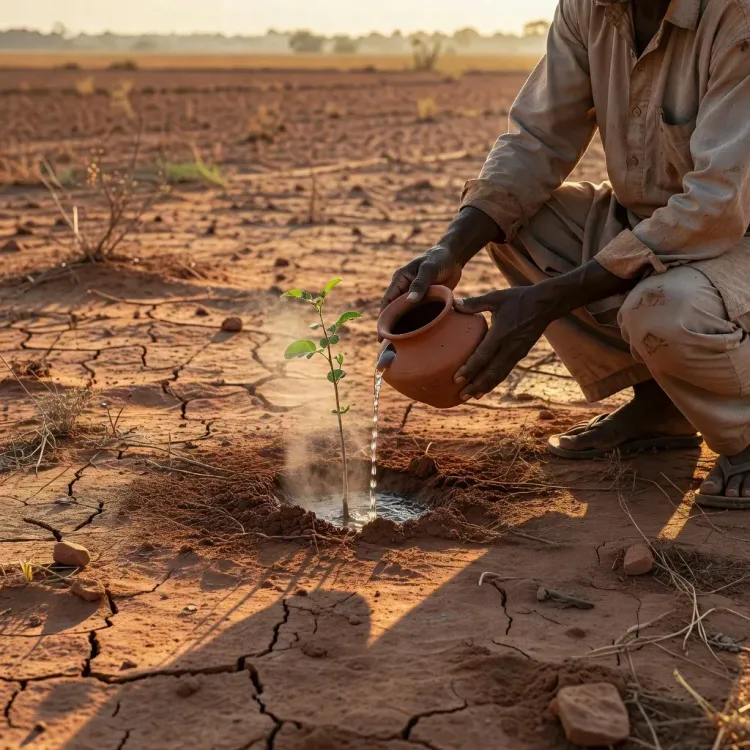
For farmers who have planted trees as part of agroforestry schemes or social forestry drives, the inability to sink a borewell during dry months can mean losing an entire plantation investment. A targeted permission for tree-sustaining borewells addresses that specific anxiety without throwing open unrestricted groundwater access to all users.
What officials and observers will now track
The critical next step is the official Government Resolution (GR) that will define which districts qualify, what depth limits apply, and how long the permission window remains open. Without those parameters, the announcement functions as a signal rather than an operational order. Groundwater monitoring agencies and district water conservation offices will be watching whether the relaxation triggers a surge in new borewell registrations — the data point that will determine whether the policy delivers on its conservation framing or widens into broader extraction.
Maharashtra's water table data has shown a mixed picture over recent years, with some districts recovering under conservation schemes while others continue to trend downward. How this permission is scoped and enforced will decide which column it ultimately falls into — genuine tree-saving measure, or a festival-season window that quietly serves a wider constituency.
Point of View
Fadnavis insulates the move from environmental criticism while still delivering a tangible Diwali gift to rural constituencies. The real test, however, lies in implementation — without a detailed GR, the distinction between 'tree-saving borewells' and general agricultural extraction is impossible to enforce. If the government resolution arrives with weak guardrails, this risks becoming another instance of a well-intentioned environmental carve-out gradually widening under field-level pressure.
NationPress
9 Nov 2026
Frequently Asked Questions
Why has Maharashtra allowed borewells to keep trees alive?
The Maharashtra government, led by CM Devendra Fadnavis, permitted borewell digging specifically to prevent trees — particularly in agroforestry and plantation settings — from dying during dry months when surface water is unavailable.
Will this borewell permission apply to all farmers in Maharashtra?
The announcement is framed as a targeted concession for tree sustenance, not blanket irrigation access. The specific districts, depth limits, and duration will be detailed in an official Government Resolution yet to be issued.
Does Maharashtra normally restrict borewell digging?
Yes. Maharashtra has regulated borewell drilling since the 1990s to curb groundwater depletion in drought-prone districts across Vidarbha, Marathwada, and parts of Western Maharashtra.
What is the significance of this announcement being made during Diwali?
Festival-timed farmer relief announcements are a recurring political pattern in Maharashtra. The hashtag '#DiwaliWithFarmers' on the post makes the outreach intent explicit — the government is pairing a policy concession with the symbolism of the festive season.
What should we watch for after this borewell permission announcement?
The key document to track is the official Government Resolution that will define eligibility criteria, permissible borewell depth, and the time window. Groundwater monitoring reports from affected districts will also indicate whether the relaxation stays targeted or widens.