Trump-Xi White House meet: Warm words, hard questions still unanswered
Synopsis
Trump and Xi delivered warm words at the White House — but the summit's most revealing moment was what neither leader said. Taiwan went unmentioned in public despite Xi calling it the 'most important issue' in May. No new terms on tariffs, semiconductors, or AI were offered. The meeting managed the rivalry; it did not resolve it.
Key Takeaways
Donald Trump and Xi Jinping met at the White House on 24 September 2026 , exchanging public pledges of dialogue and cooperation.
Xi invited 100,000 young Americans to visit China over five years and called for regular military communication.
Taiwan was not mentioned in the public welcoming remarks, despite Xi describing it as the most important US-China issue as recently as May 2026 .
No new terms were announced on tariffs , technology export restrictions, or AI cooperation frameworks.
Xi stated: 'China and the United States must hold the line of no conflict and no confrontation between us,' but provided no timetable for military dialogue.
A May 2026 bilateral agreement establishing trade and investment boards remains the most concrete recent framework between the two countries.
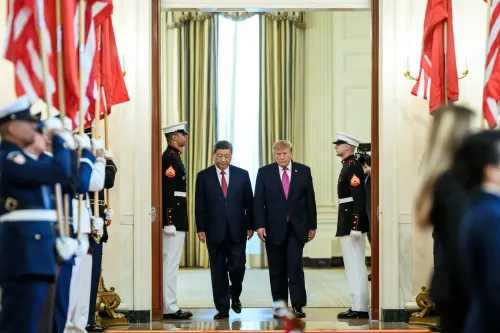
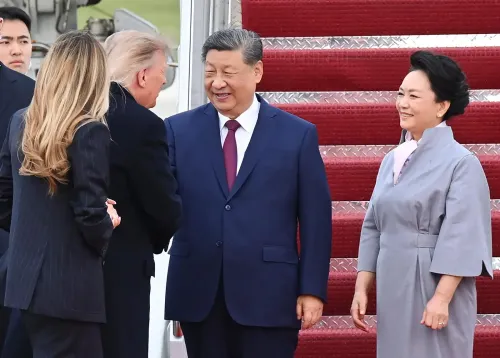
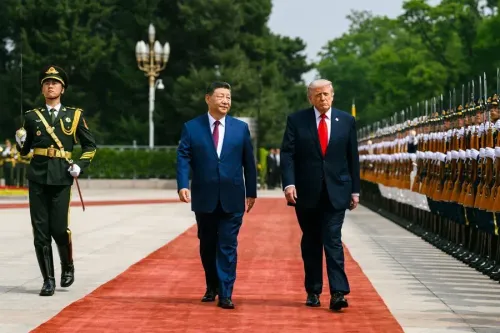
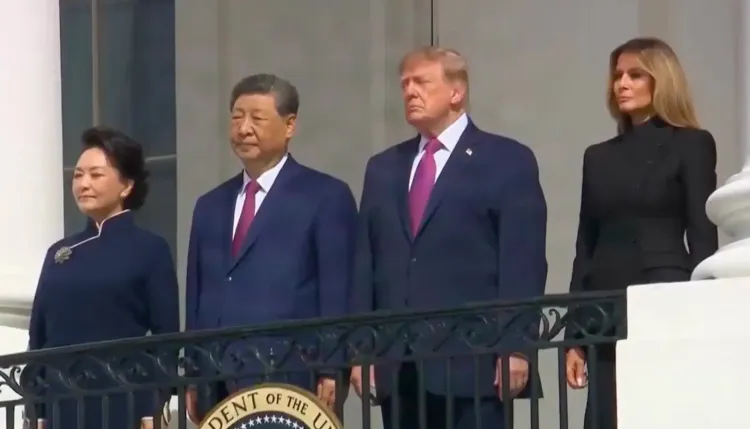
US President Donald Trump and Chinese President Xi Jinping exchanged warm public remarks about friendship and bilateral cooperation at the White House on Thursday, 24 September 2026, yet their welcoming speeches left the most consequential disputes between the world's two largest economies unresolved. The summit offered a framework for managing — not ending — the US-China rivalry.
What the Leaders Said
Trump praised the personal chemistry between the two leaders and said the visit would address trade, security, and technology. Xi called for sustained dialogue, fair treatment of Chinese companies operating in the United States, and regular communication between the two countries' militaries. In a notable gesture, Xi announced an invitation for 100,000 young Americans to visit China over the next five years.
The pledges represent incremental confidence-building steps. Analysts note, however, that neither leader outlined what concessions their side was prepared to make in exchange for deeper cooperation.
The Taiwan Silence
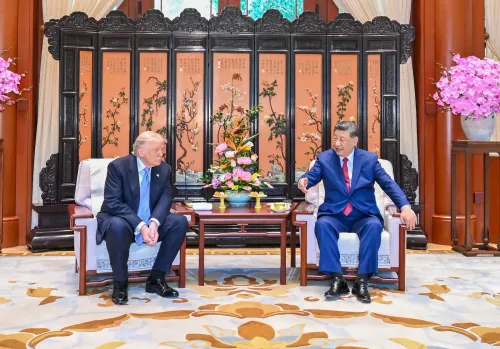
Perhaps the most telling omission in the public ceremony was Taiwan. Neither leader referenced the island in their welcoming remarks, despite Xi having described it as 'the most important issue in US-China relations' during their Beijing talks in May 2026. The absence from the public stage does not mean the issue was absent from private discussions — it almost certainly featured prominently behind closed doors.
Trade and Technology: The Gaps Remain
On trade, Trump pointed to the prospect of greater Chinese market access for American farmers and ranchers. Xi, in turn, welcomed US businesses to China while asking for equitable treatment of Chinese firms on American soil. Critically, neither side put forward new terms on tariffs, cross-border investment, or the export restrictions that govern advanced technology — the very issues at the core of the bilateral economic dispute.
Technology illustrated the same divergence. Trump indicated the two leaders would discuss 'superintelligence', while Xi urged that artificial intelligence be developed for the public good and kept under human control. Neither explained how they might reconcile potential collaboration in AI with each country's national security concerns about the technology and the advanced semiconductors required to build it. US export rules on those chips remain in force.
Military Risk Reduction
On defence matters, Xi offered the clearest risk-reduction proposal of the day. 'China and the United States must hold the line of no conflict and no confrontation between us,' he said. He called for regular military dialogue and improved crisis communication channels. No timetable or structural details for a new arrangement were provided, however.
This comes amid a broader context: the US national security strategy explicitly frames the relationship as a 'continuing strategic competition' while calling for peace and stability across the Taiwan Strait — a dual framing that allows specific areas of cooperation to coexist with systemic rivalry.
What the May Agreement Established
The White House noted that a bilateral agreement reached in May 2026 created joint boards for trade and investment and addressed agricultural access and rare-earth supply chains. Those structures provide a concrete baseline against which any new announcements from this summit can be measured. The fundamental divide, however — over security, technology access, and Taiwan — remains intact.
Whether Thursday's meeting translates into durable progress or another round of managed tension will depend on the details that follow the ceremony.
Point of View
Xi to stabilise an economy under export pressure — but neither has moved on the issues that actually define the rivalry: Taiwan's status, semiconductor export controls, and the terms of tech competition. The Taiwan silence is not reassuring; it is a deferral of the conversation both sides know is unavoidable. Xi's 100,000-students invitation is a soft-power gesture, not a concession. Until one side makes a verifiable offer on tariffs or technology restrictions, these summits risk becoming rituals of managed tension dressed up as diplomacy.
NationPress
25 Sept 2026
Frequently Asked Questions
What was agreed at the Trump-Xi White House summit on 24 September 2026?
No major new agreements were publicly announced at the summit. Both leaders pledged continued dialogue on trade, technology, and military matters, and Xi invited 100,000 young Americans to visit China over five years. The most concrete existing framework remains the May 2026 bilateral agreement that established joint boards for trade, investment, agricultural access, and rare earths.
Why was Taiwan not mentioned at the White House summit?
Neither Trump nor Xi referenced Taiwan in their public welcoming remarks, despite Xi having called it 'the most important issue in US-China relations' during their Beijing meeting in May 2026. Analysts note the omission from public ceremony does not mean it was absent from private talks — it is widely expected to have featured in closed-door discussions.
What did Trump and Xi say about AI and technology?
Trump said the leaders would discuss 'superintelligence', while Xi called for AI to be developed for the public good and kept under human control. Neither leader explained how the two countries might balance potential AI cooperation with their competing national security concerns, and US export rules on advanced semiconductors to China remain in effect.
What did Xi Jinping propose on military matters?
Xi called for regular military dialogue and better crisis communication, stating that the two countries 'must hold the line of no conflict and no confrontation.' No timetable or structural details for a new military communication arrangement were provided.
How does this summit fit into the broader US-China relationship?
The US national security strategy describes the relationship as a 'continuing strategic competition' while also calling for peace and stability across the Taiwan Strait. Experts distinguish between slowing a crisis — which measured dialogue can achieve — and ending the underlying rivalry, which would require concrete decisions on security, technology, and trade that neither president made publicly on Thursday.