Trump-Xi Beijing summit opens new phase in US-China ties
Synopsis
China's deputy ambassador called the Trump-Xi Beijing summit 'historic and successful' — and the details back up the claim to a degree. Tariff cuts on $30 billion in goods each way, a 200-Boeing deal, 50,000 American students invited to China, and Xi now set to visit the US this autumn: the deliverables are real, even if Taiwan and tech restrictions remain untouched.
Key Takeaways
China's Deputy Ambassador Qui Wenxing described the Trump-Xi Beijing summit as 'historic and successful' on Wednesday, 28 May .
Both sides discussed reciprocal tariff reductions on goods valued at $30 billion or more on each side .
China agreed to purchase 200 Boeing aircraft , with scope for more purchases subject to conditions.
President Xi Jinping has accepted an invitation to visit the United States this autumn ; dates not yet finalised.
Xi's initiative invites 50,000 American students to study or travel in China over five years.
Tensions over Taiwan , technology restrictions, and Indo-Pacific strategic competition remain unresolved.
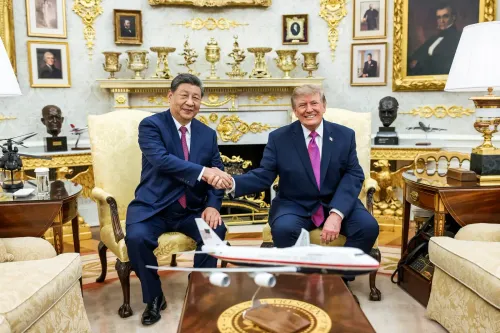
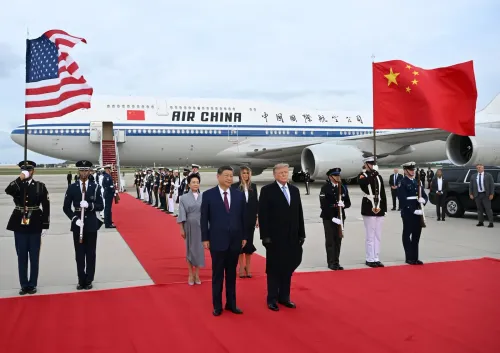
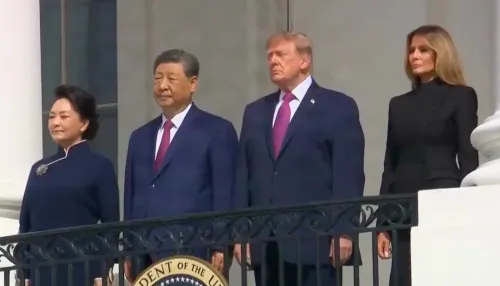
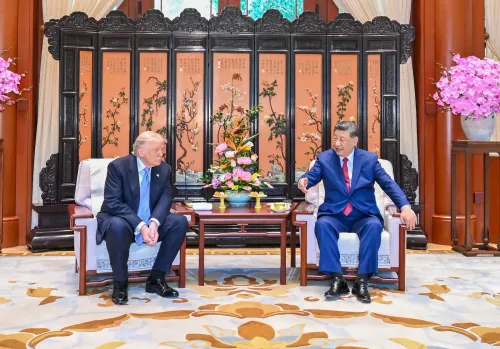
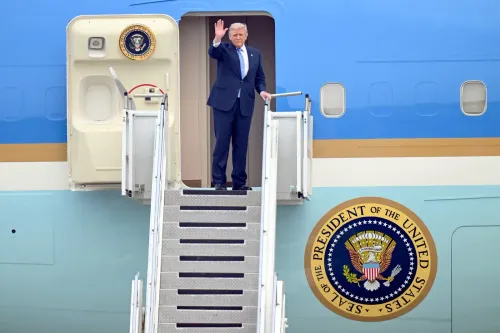
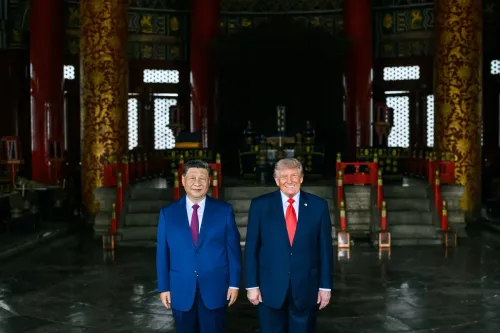
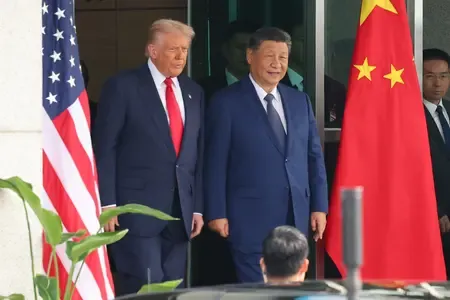
China has declared that President Donald Trump's visit to Beijing earlier this month marked a turning point in US-China relations, with both sides reaching understandings on tariff reductions, trade mechanisms, and educational exchanges — even as structural tensions over Taiwan, technology restrictions, and strategic competition in the Indo-Pacific continue to simmer.
Summit Described as 'Historic and Successful'
China's Deputy Ambassador to the United States, Qui Wenxing, on Wednesday described the recent summit between Trump and Chinese President Xi Jinping as 'historic and successful.' Speaking to a group of reporters, Qui said Beijing viewed the meeting as 'a significant step towards the establishment of the right path of getting along between China and the US in the new era.'
He framed the summit around three governing themes: 'mutual respect', 'strategic stability', and 'win-win results.' 'China and the US are two great nations,' Qui said. 'President Xi and President Trump actually, they respect each other and have maintained close communications.'
Key Economic Understandings Reached
Qui pushed back against criticism that the summit had failed to yield concrete outcomes, listing several tangible agreements. These included discussions on reciprocal tariff reductions covering products valued at '30 billion US dollars or even more on each side,' according to Qui.
Both governments also agreed to establish intergovernmental trade and investment councils and to work on resolving non-tariff barriers, market access issues, and supply chain concerns involving rare earth minerals and critical materials. Notably, China agreed to purchase 200 Boeing aircraft, with Qui indicating 'potential for Chinese companies to buy more if conditions are right.'
Xi Accepts Invitation to Visit US This Autumn
On diplomatic momentum, Qui confirmed that President Xi Jinping had accepted Trump's invitation to visit the United States this autumn, though specific dates have not yet been finalised. Both governments also agreed to support each other in hosting upcoming international summits, including APEC and the G20.
On educational exchanges, Qui highlighted Xi's initiative to invite 50,000 American students to study or travel in China over five years — a gesture Beijing is positioning as a confidence-building measure.
Strategic Framing: Not a Zero-Sum Relationship
Qui said China opposed viewing bilateral ties through a 'zero-sum game' lens and called for differences to be managed 'in a constructive manner.' He added that Beijing believed 'achieving the great rejuvenation of the Chinese nation and making America greater again can go hand in hand' — a formulation that directly echoes Trump's own political branding.
'We believe that cooperation is the mainstay,' Qui said. 'Of course, there is competition in the field of economic and trade areas, but we cannot define this relationship with competition.' He stressed that both sides must 'avoid any conflict and confrontation,' warning that such an outcome would 'produce consequences no one can bear.'
Persistent Fault Lines
The summit, however, did not resolve the deeper structural disputes between Washington and Beijing. Tensions over Taiwan, US technology export restrictions, and broader strategic rivalry in the Indo-Pacific remain live fault lines. This comes amid a broader pattern of high-level engagement alternating with sharp friction — a dynamic that has defined US-China relations through multiple administrations.
Despite those disputes, both governments have recently signalled interest in maintaining high-level contact and preventing further deterioration. Whether the understandings reached in Beijing translate into durable policy shifts will become clearer when Xi visits Washington later this year.
Point of View
A Boeing deal, and an educational exchange programme are confidence-building measures, not structural settlements. The unresolved issues — Taiwan, semiconductor export controls, Indo-Pacific posture — are precisely the ones that determine whether this relationship stabilises or escalates. Xi accepting Trump's invitation to visit Washington this autumn is the more consequential headline: it keeps the channel open and raises the cost of a sudden deterioration. But the pattern of US-China relations over the past decade is one of summits producing warmth and working groups producing stalemate. The test of this 'new phase' is whether the intergovernmental trade councils and rare-earth supply chain talks yield verifiable outcomes before the next flashpoint arrives.
NationPress
11 Oct 2026
Frequently Asked Questions
What did the Trump-Xi Beijing summit produce?
The summit produced several economic understandings, including reciprocal tariff reduction discussions covering goods worth $30 billion or more on each side, an agreement for China to purchase 200 Boeing aircraft, and plans to establish intergovernmental trade and investment councils. Both sides also agreed to work on non-tariff barriers, market access, and rare earth supply chain concerns.
Has Xi Jinping accepted an invitation to visit the United States?
Yes. China's Deputy Ambassador Qui Wenxing confirmed that President Xi Jinping has accepted President Trump's invitation to visit the United States this autumn, though specific dates have not yet been finalised.
What is China's 50,000 students initiative?
President Xi Jinping announced an initiative to invite 50,000 American students to study or travel in China over five years. Beijing is positioning this as a people-to-people confidence-building measure alongside the broader diplomatic engagement.
Do tensions between the US and China persist despite the summit?
Yes. Despite the positive framing from Beijing, structural disputes over Taiwan, US technology export restrictions, and strategic competition in the Indo-Pacific remain unresolved. Both governments have signalled interest in maintaining high-level engagement to prevent further deterioration, but the underlying fault lines are intact.
How did China characterise the overall state of US-China relations?
Deputy Ambassador Qui Wenxing said China views the relationship as one where 'cooperation is the mainstay' and opposed a 'zero-sum game' framing. He said both sides had agreed to pursue 'a constructive China-US relationship of strategic stability' that would guide bilateral ties 'over the next three years and beyond.'