Could Xi's Vision Align with Trump's 'Make America Great Again'?
Synopsis
In an unexpected alignment, Xi Jinping claims that China's growth complements Trump's 'Make America Great Again' agenda. This meeting, crucial for both nations, may pave the way for easing trade tensions. Can these two leaders find common ground to benefit their economies? Discover the implications of their discussions.
Key Takeaways
Xi Jinping emphasizes alignment with Trump's economic agenda.
Potential for trade agreements to ease tensions.
Meeting marks a significant moment for China-US relations .
Trade issues and tariffs remain critical points of discussion.
Security concerns add complexity to diplomatic efforts.
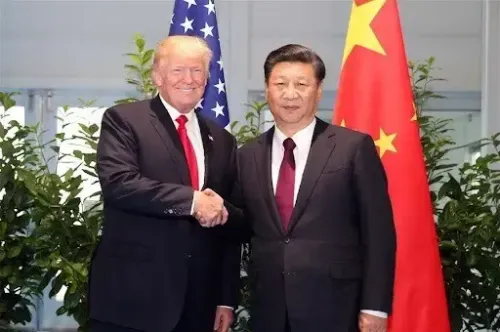
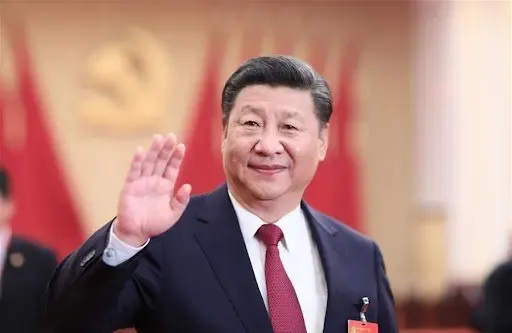
Busan, Oct 30 (NationPress) The Chinese President Xi Jinping stated on Thursday that the progress and rejuvenation of China is closely linked to US President Donald Trump's initiative to 'Make America Great Again.'
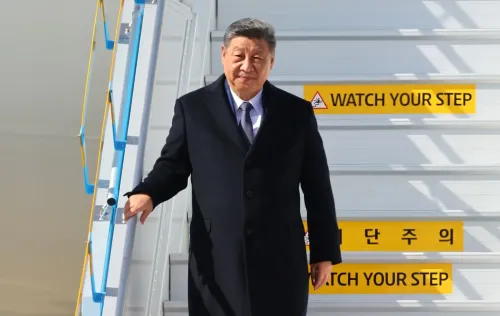
These comments were made during a meeting with Trump upon Xi's arrival in Busan for the 32nd APEC Economic Leaders' Meeting in Gyeongju and a state visit to South Korea.
Xi expressed that both nations have the potential to support each other's success and mutual prosperity.
"China and the United States ought to be allies and friends. This is what history has demonstrated and what reality necessitates," he remarked.
He further conveyed his willingness to collaborate with Trump to establish a solid foundation for China-US relations and foster a conducive environment for the advancement of both nations, as reported by Xinhua.
Earlier, Trump and Xi convened for a crucial summit, closely monitored for indications of a slowdown in their escalating trade dispute characterized by reciprocal tariffs.
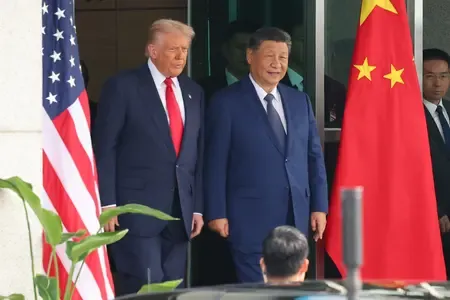
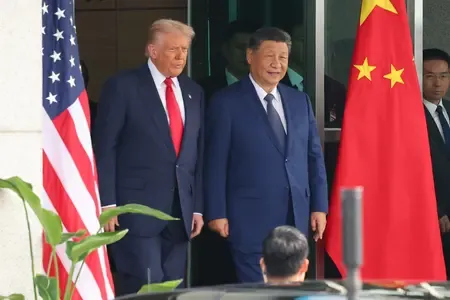
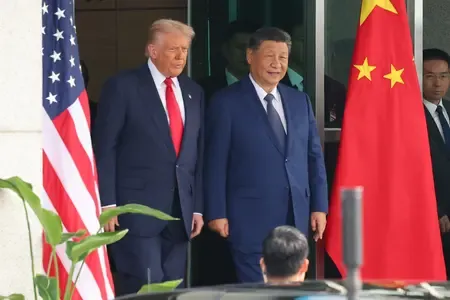
This marked their first meeting since 2019 at Naraemaru, a reception hall at an Air Force base in southeastern Busan, shortly after Xi's arrival for a three-day state visit.
Trump arrived at the venue ahead of schedule after leaving the nearby city of Gyeongju, where the APEC events are taking place this week.
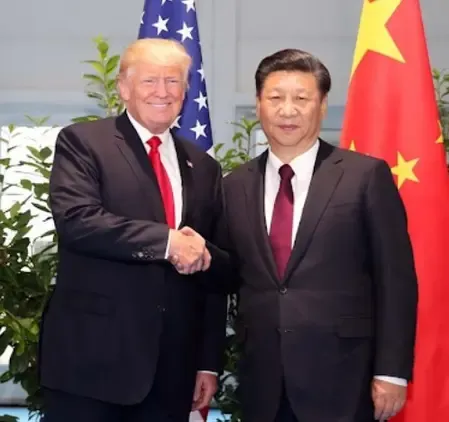
"We anticipate a highly productive meeting," Trump commented as the leaders posed for photos before their discussions. "However, he is a very formidable negotiator. That might be problematic," he joked.
Trump mentioned that the two nations might finalize a trade agreement.
During the Trump-Xi summit, a key deal is on the table that would see China defer implementing stricter export controls on rare earth materials for a year, in return for the US rescinding its plan to impose an additional 100 percent tariff on Chinese products starting November 1.
A preliminary framework for such an agreement was reportedly established by officials from both sides over the weekend.
The two largest economies also have additional trade challenges to address. China ceased purchasing soybeans from the US this year, negatively impacting American farmers, a crucial voter demographic for Trump. The US has also used tariffs to pressure China to halt the export of fentanyl.
Trump indicated on Wednesday that he would reduce the existing fentanyl-related tariffs, currently set at 20 percent, in exchange for Beijing's commitment to limit the export of chemicals used in fentanyl production.
The trade conflict between these superpowers has led to US tariffs on Chinese goods surging to 145 percent in April, while Chinese tariffs on US products increased to 125 percent.
Following a truce in high-level trade discussions in May, these taxes have been reduced to 50 percent on Chinese goods and 10 percent on US goods.
Trump has consistently expressed optimism regarding his forthcoming summit with Xi.
"I am eagerly anticipating my meeting with President Xi of China," he posted on Truth Social on Thursday.
"It is set to occur in just a few hours!"
While few analysts expect the summit to conclude the trade war, any agreement that alleviates the uncertainty surrounding their punitive actions could represent a significant initial step.
Security concerns also play a substantial role in the US-China rivalry, as Beijing seems to be demonstrating its military strength in the region.
Point of View
It's crucial to recognize the complexities of the Xi-Trump dialogue. While optimism surrounds this summit, the underlying trade issues and security concerns highlight the ongoing challenges. Our approach remains focused on fostering understanding and collaboration between nations to ensure a stable global economy.
NationPress
26 Sept 2026
Frequently Asked Questions
What was discussed during the Xi-Trump meeting?
The meeting focused on aligning China's development with Trump's economic vision, addressing trade tensions, and exploring potential agreements on tariffs and exports.
How might the Xi-Trump summit impact global trade?
Any agreements reached could signal a reduction in trade tensions, providing more stability in global markets and influencing international trade policies.
What are the implications of the trade war?
The trade war has led to increased tariffs, affecting businesses and consumers in both countries, with potential long-term impacts on global supply chains.
What is the significance of the APEC meeting?
The APEC meeting serves as a platform for leaders to discuss economic cooperation and address regional trade issues, making it crucial for fostering international relations.
What challenges do the US and China face in their relations?
The two nations face challenges including trade imbalances, tariffs, and security concerns, all of which complicate their diplomatic relations.