CM Vijay leads Tamil Nadu drug-free mass pledge drive

Synopsis
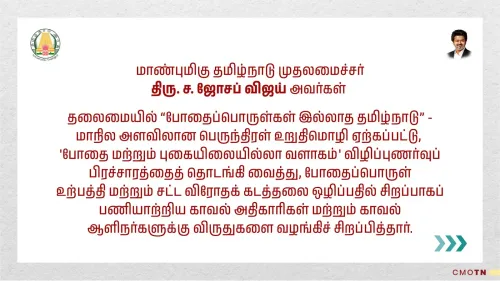
Chief Minister C. Joseph Vijay led a state-level mass pledge for a Drug-Free Tamil Nadu on August 11, 2026, launching a 'Drug and Tobacco-Free Campus' awareness campaign and honouring police officers for anti-narcotics and anti-trafficking work.
Key Takeaways
Joseph Vijay presided over a state-wide mass pledge for a drug-free Tamil Nadu on August 11, 2026 .
The event formally launched the 'Drug and Tobacco-Free Campus' awareness campaign targeting schools and colleges.
Police officers and constabulary who excelled in anti-drug production and illegal trafficking operations received state awards.
The initiative combines demand-side prevention (campus awareness) with supply-side enforcement recognition.
Tamil Nadu's drive aligns with India's national narcotics control framework while addressing local youth substance abuse concerns.
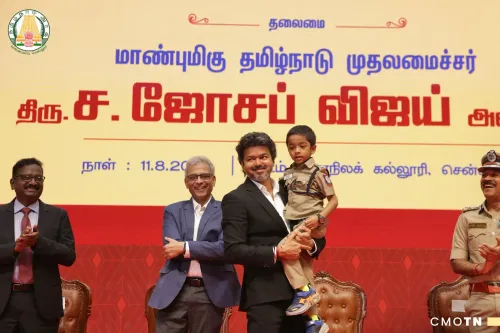
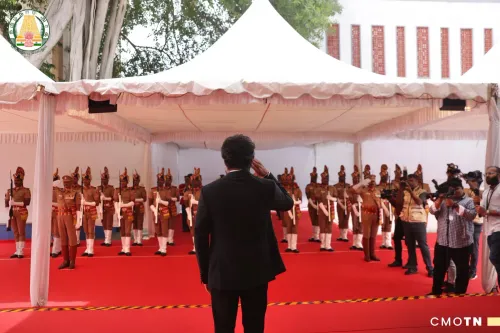
A state-wide promise echoed across Tamil Nadu on Tuesday, August 11, 2026, as Chief Minister C. Joseph Vijay led a mass pledge ceremony under the banner of 'Pothaiporul Illatha Tamil Nadu' — a Drug-Free Tamil Nadu — marking one of the most visible public mobilisations against substance abuse the state has seen in recent years. The Chief Minister's Office of Tamil Nadu announced the event, which combined a solemn collective oath with the launch of a 'Drug and Tobacco-Free Campus' awareness campaign and formal recognition of police personnel who have distinguished themselves in narcotics enforcement.
The pledge, the campaign, and what they signal
At the heart of the event was a state-level mass pledge — a format Indian governments have long used to anchor public health drives in civic identity and shared responsibility. Participants committed to a Tamil Nadu free of narcotics, with the ceremony serving as the formal launch of the 'Drug and Tobacco-Free Campus' initiative aimed squarely at educational institutions across the state. The campaign targets the environments where young people spend the bulk of their waking hours, reflecting a growing policy consensus that schools and colleges are both the frontline of the drug problem and the most effective venue for prevention.
Police honours for anti-trafficking work
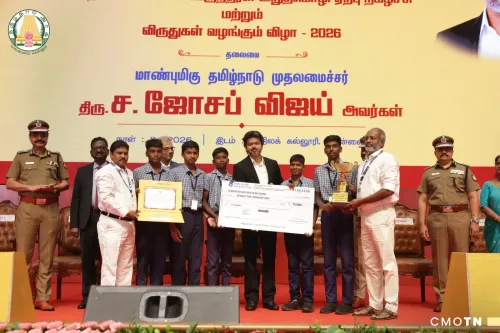
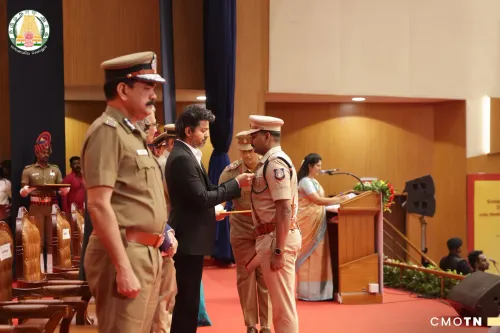
Tamil Nadu Police officers and constabulary who excelled in combating drug production and illegal trafficking received awards directly from CM Vijay at the event. The public recognition serves a dual purpose: rewarding frontline enforcement work and signalling to the broader force — and to trafficking networks — that the state intends to press harder on supply-side interdiction. Indian states have increasingly paired awareness campaigns with enforcement incentives, understanding that demand-reduction messaging alone cannot dismantle supply chains.
Where Tamil Nadu's anti-drug push fits the national picture
Tamil Nadu's initiative sits within a broader national pattern of state governments aligning local anti-narcotics drives with India's central narcotics control framework, while tailoring campaigns to specific local pressures — in Tamil Nadu's case, concerns around youth substance abuse and the movement of contraband through coastal routes. The campus-focused awareness campaign is particularly pointed: students and educational institutions are named as primary stakeholders, suggesting the government views early intervention as central to its strategy. Whether the campaign translates into measurable outcomes will depend on the follow-through — enforcement statistics, curriculum integration, and sustained community engagement — all of which the state government has yet to detail publicly.
A mass pledge is a beginning, not an answer. The harder work starts the morning after.
Point of View
Photogenic civic participation. The real test, however, is institutional follow-through; Tamil Nadu's coastal geography and documented trafficking pressures mean the state needs sustained enforcement data and curriculum integration, not just a well-attended launch event, to demonstrate genuine policy traction.
NationPress
11 Aug 2026
Frequently Asked Questions
What is the 'Drug-Free Tamil Nadu' pledge event?
It is a state-level mass pledge ceremony led by Chief Minister C. Joseph Vijay on August 11, 2026, where citizens collectively committed to a Tamil Nadu free of narcotics, paired with the launch of a campus awareness campaign and police awards for anti-drug work.
What is the 'Drug and Tobacco-Free Campus' campaign in Tamil Nadu?
It is an awareness initiative launched by the Tamil Nadu government targeting schools and colleges, aimed at preventing drug and tobacco use among students by making educational campuses substance-free zones.
Why did CM Vijay give awards to Tamil Nadu Police at this event?
The awards recognised police officers and constabulary who performed exceptionally in combating drug production and illegal narcotics trafficking, using public recognition to incentivise continued enforcement efforts.
How does Tamil Nadu's anti-drug drive relate to national policy?
The initiative aligns with India's central narcotics control framework, following a broader pattern of Indian states combining mass awareness pledges with enforcement action to address local substance abuse challenges.
Who are the main targets of Tamil Nadu's drug awareness campaign?
Students and educational institutions are the primary focus, with the 'Drug and Tobacco-Free Campus' campaign designed to intervene early and prevent substance abuse among young people.