Tamil Nadu CM Vijay leads state-wide anti-drug pledge drive
Synopsis
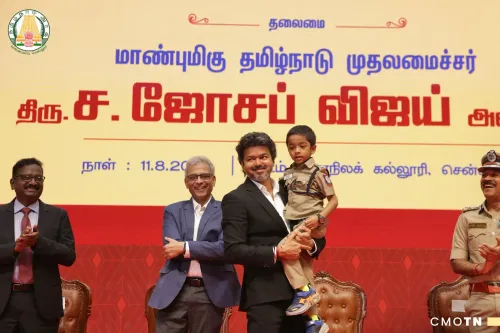
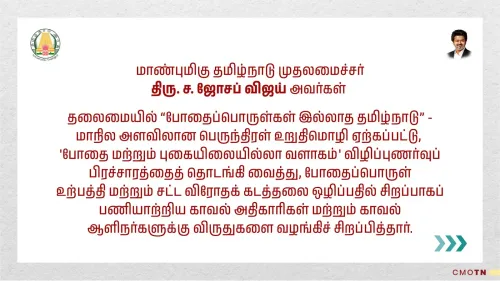
Tamil Nadu Chief Minister C. Joseph Vijay chaired a state-level mass pledge for a drug-free Tamil Nadu on August 11, 2026, launched a 'Drug and Tobacco-Free Campus' awareness campaign, and awarded police officers and top school and college anti-drug forums for their anti-narcotics efforts.
Key Takeaways
Joseph Vijay presided over a state-level mass pledge for a 'Drug-Free Tamil Nadu' on August 11, 2026 .
The CM launched the 'Drug and Tobacco-Free Campus' awareness campaign targeting schools and colleges across the state.
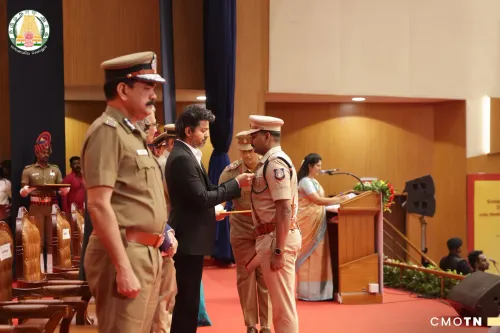
Tamil Nadu Police officers and constabulary who excelled in curbing narcotic production and illegal trafficking received awards.
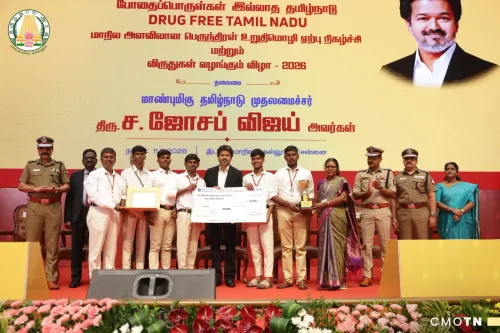
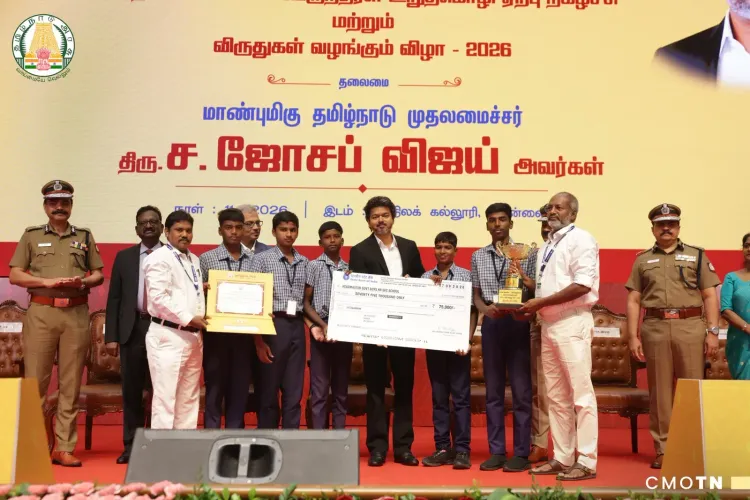
Three top anti-drug forums and three top volunteer groups each from schools and colleges were honoured with cash prizes, appreciation certificates, and trophies.
The initiative follows India's dual-track model under the NDPS Act, 1985 — enforcement by police paired with preventive education in campuses.
A mass pledge, a campus-wide ban, and a row of awards for the officers who made it happen — Tamil Nadu Chief Minister C. Joseph Vijay turned August 11, 2026 into a full-spectrum strike against substance abuse in the state, signalling that the fight against narcotics will be waged simultaneously on the streets and in the classroom.
The pledge and the campaign Tamil Nadu just launched
At a state-level event chaired by Chief Minister Vijay, Tamil Nadu formally adopted a mass public pledge under the banner 'Pothaiporulgal Illatha Tamil Nadu' — 'A Drug-Free Tamil Nadu'. In the same sitting, the Chief Minister launched a dedicated awareness campaign titled 'Drug and Tobacco-Free Campus', targeting schools and colleges across the state. The dual move — a symbolic public commitment backed by an institutional rollout — follows a pattern Indian states have long used to anchor anti-drug drives: make the pledge visible, then push the policy into campuses where the risk is highest.
Officers and student forums recognised on the same stage
Tamil Nadu Police personnel and constabulary who distinguished themselves in curbing narcotic production and illegal trafficking received awards from the Chief Minister at the event. The recognition placed law enforcement at the centre of the narrative — a deliberate signal that interdiction and prevention are two sides of the same effort. Alongside the police honours, three top anti-drug forums and three top volunteer groups each from schools and colleges were presented with cash prizes, appreciation certificates, and trophies. These campus bodies had demonstrated measurable impact in reducing substance use among students through awareness work — making them the civilian front of the same campaign.
Why campus-level enforcement matters in Tamil Nadu's drug fight
India's foundational legal architecture for narcotics control — the Narcotic Drugs and Psychotropic Substances Act, 1985 — places enforcement responsibility on state police while leaving prevention largely to state governments. Tamil Nadu's dual-track approach, combining police awards with campus-level recognition, reflects that division of labour in practice. Anti-drug forums embedded inside educational institutions serve as early-warning and peer-pressure systems, often catching at-risk students before they enter the formal enforcement net. The state's decision to reward the best-performing forums with prizes and certificates creates a competitive incentive for institutions that had none before.
The immediate test will be whether the 'Drug and Tobacco-Free Campus' campaign expands beyond the institutions represented at today's event and whether the awarded forums publish performance data that can be independently tracked. A pledge made on a stage is only as durable as the infrastructure built to keep it.
Point of View
The Tamil Nadu government is using a well-tested dual-track formula — street-level interdiction plus campus-level prevention — to build political visibility around an issue that cuts across class and geography. Rewarding student anti-drug forums with competitive prizes is a low-cost incentive mechanism that could scale quickly if the state ties future funding to performance data. The broader pattern mirrors similar drives in other southern states, suggesting that anti-drug campaigns are becoming a standard governance signal for chief ministers seeking to demonstrate decisive social policy. The real test of durability lies in whether the 'Drug and Tobacco-Free Campus' rollout reaches institutions beyond the capital and produces verifiable, trackable outcomes.
NationPress
25 Sept 2026
Frequently Asked Questions
What did Tamil Nadu CM Joseph Vijay announce on August 11 2026?
Chief Minister C. Joseph Vijay led a state-wide mass pledge for a 'Drug-Free Tamil Nadu', launched the 'Drug and Tobacco-Free Campus' awareness campaign, and presented awards to police officers and top anti-drug forums in schools and colleges.
What is the 'Drug and Tobacco-Free Campus' campaign in Tamil Nadu?
It is an awareness initiative launched by the Tamil Nadu government targeting educational institutions — schools and colleges — to reduce substance abuse among students through anti-drug forums and volunteer groups.
Which Tamil Nadu police officers received awards at the anti-drug event?
Police officers and constabulary who performed exceptionally in curbing narcotic production and illegal trafficking were recognised with awards by Chief Minister C. Joseph Vijay at the state-level event.
How were schools and colleges recognised for anti-drug work in Tamil Nadu?
The three best anti-drug forums and the three best volunteer groups each from schools and colleges were awarded cash prizes, appreciation certificates, and trophies for their awareness and prevention work.
What law governs drug control enforcement in Tamil Nadu?
The Narcotic Drugs and Psychotropic Substances Act, 1985 provides the national legal framework, with state police responsible for enforcement and state governments leading prevention efforts such as campus awareness campaigns.