CM Fadnavis to Expand Solar Fencing Scheme for Maharashtra Farmers
Synopsis
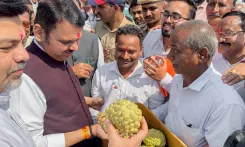
Maharashtra CM Devendra Fadnavis announced from Nagpur on November 8 that the state's solar fencing scheme will be expanded and made more effective to protect farmers from wild animal crop damage — deepening an existing agricultural protection programme for forest-fringe communities.
Key Takeaways
CM Devendra Fadnavis announced on 8 November 2026 from Nagpur the expansion of Maharashtra's solar fencing scheme.
The scheme provides solar-powered electric fences to farmers to prevent crop damage by wild animals such as boars and nilgai.
The announcement was made in both Marathi and Hindi , and tagged #DiwaliWithFarmers .
The scheme primarily benefits forest-fringe farming communities , including in Vidarbha and Marathwada.
Key implementation details — additional districts covered, budget allocation — are yet to be announced.
Crop losses to wild animals — boars, nilgai, leopards edging out of shrinking forest corridors — have long been a grinding reality for farmers living on Maharashtra's forest fringes. Now, Maharashtra Chief Minister Devendra Fadnavis has announced that the state's solar fencing scheme will be expanded in scope and implemented more effectively to reduce that burden on farmers across the state.
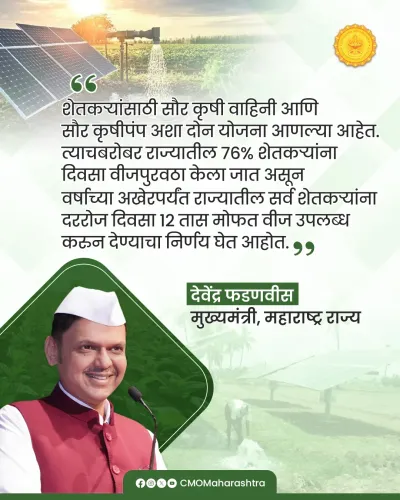
Posting from Nagpur on 8 November 2026, Fadnavis wrote in both Marathi and Hindi: 'सौरकुंपण योजनेची व्याप्ती वाढवून ती अधिक प्रभावीपणे राबविण्यात येणार आहे' — 'the solar fencing scheme will be expanded and implemented more effectively to reduce the harassment caused to farmers by wild animals.' The post carried the hashtag #DiwaliWithFarmers, framing the announcement as a Diwali-season commitment to the agricultural community.What the solar fencing scheme does — and why it matters
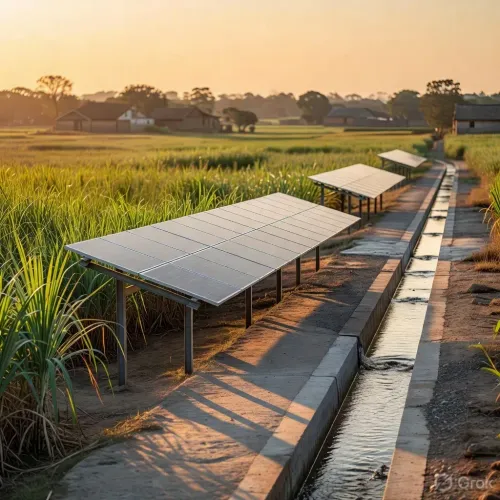
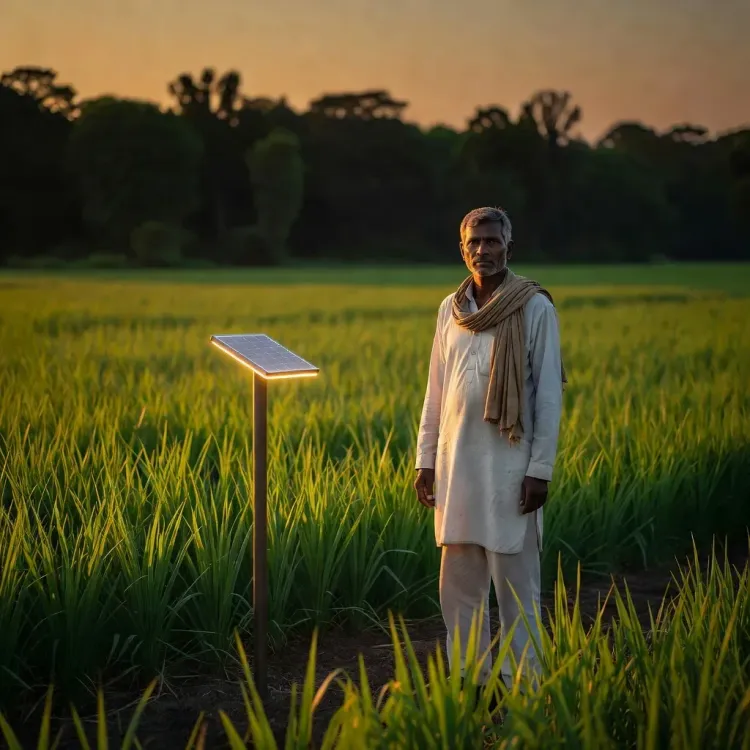
Maharashtra's solar fencing initiative provides farmers — particularly those in forest-fringe villages near wildlife corridors and protected areas — with solar-powered electric fences that deter wild animals from entering agricultural land. The approach is non-lethal, low-maintenance, and critically, runs independent of the grid, making it viable in remote areas where electricity supply is unreliable. Human-wildlife conflict of this kind does not just cause crop damage; it erodes farmer income, deepens rural debt, and in acute cases puts lives at risk.
Nagpur, where Fadnavis made the announcement, is itself the gateway to some of Maharashtra's densest tiger and wildlife reserves, including the Tadoba-Andhari Tiger Reserve corridor region. Forest-fringe farming communities in Vidarbha and parts of Marathwada have historically been among the most exposed to such conflict — and also among the most economically vulnerable.
Expanding an existing tool, not building from scratch
The state's approach here is deliberate: rather than launch an entirely new programme, the government is deepening the reach of a scheme already embedded in its agricultural protection infrastructure. This pattern — scaling proven interventions — is characteristic of how Maharashtra has moved on rural welfare in recent cycles. The key questions that follow the announcement are practical ones: which additional districts will come under coverage, what budget allocation will be earmarked, and how quickly the rollout can be operationalised for the upcoming crop season.
For farmers who have watched harvests disappear overnight to a herd of nilgai, the difference between a scheme that exists on paper and one with real coverage and timely installation is everything. Fadnavis's public commitment from Nagpur now puts the expansion firmly on the state government's accountability ledger.
Point of View
Technology-driven solutions to human-wildlife conflict rather than pursuing politically contentious culling or relocation programmes. For a BJP government with a large rural voter base in Vidarbha — a region carrying both wildlife corridor density and deep agrarian distress — expanding a visible, tangible scheme ahead of the winter session of the legislature is also strategically timed. The 'Diwali with Farmers' framing signals the government's intent to anchor its rural outreach in concrete deliverables. The real test will be in the budgetary follow-through and district-level rollout speed.
NationPress
8 Nov 2026
Frequently Asked Questions
What is Maharashtra's solar fencing scheme for farmers?
Maharashtra's solar fencing scheme provides solar-powered electric fences to farmers, especially those living near forests, to prevent wild animals such as boars and nilgai from damaging their crops. It is a non-lethal, grid-independent solution to human-wildlife conflict.
What did CM Devendra Fadnavis announce about the solar fencing scheme?
On 8 November 2026, CM Fadnavis announced from Nagpur that the solar fencing scheme's scope will be expanded and it will be implemented more effectively to reduce the hardship caused to farmers by wild animals.
Which farmers benefit from the Maharashtra solar fencing scheme?
Farmers living in forest-fringe villages near wildlife corridors and protected areas benefit most. Communities in Vidarbha and parts of Marathwada — regions with high human-wildlife conflict — are among the primary beneficiaries.
Why is Nagpur significant for this announcement?
Nagpur is Maharashtra's winter capital and is situated near major wildlife reserves including the Tadoba-Andhari Tiger Reserve corridor. It is a hub for state policy announcements on agriculture and rural issues.
What are the next steps after Fadnavis's solar fencing expansion announcement?
Key details yet to be announced include which additional districts will be covered under the expanded scheme, the budget allocation, and the timeline for rollout before the next crop season.