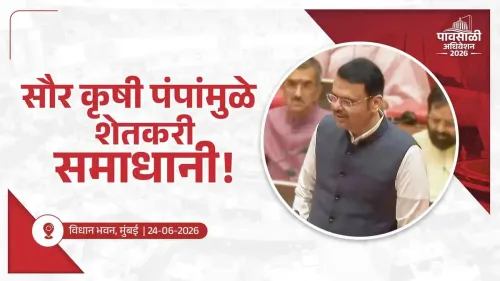
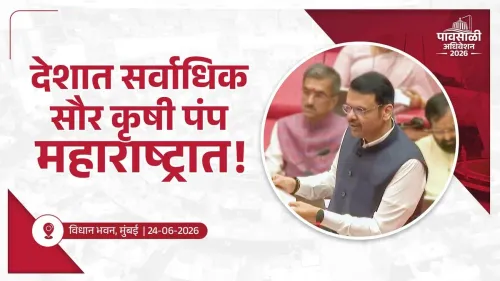
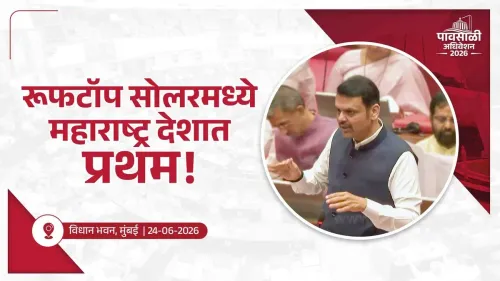
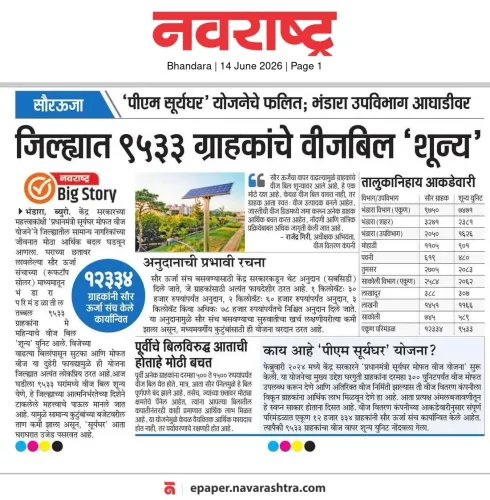
CM Fadnavis: Solar Energy to Reach 66,000+ Amravati Homes
Synopsis
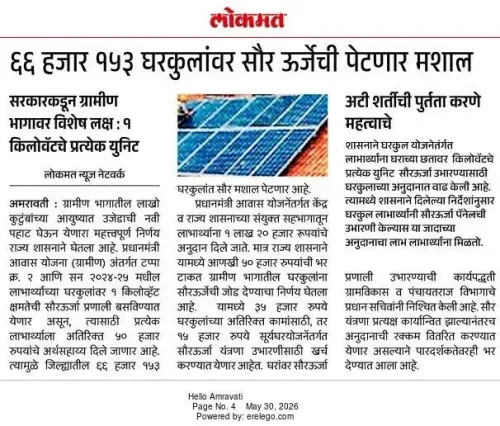
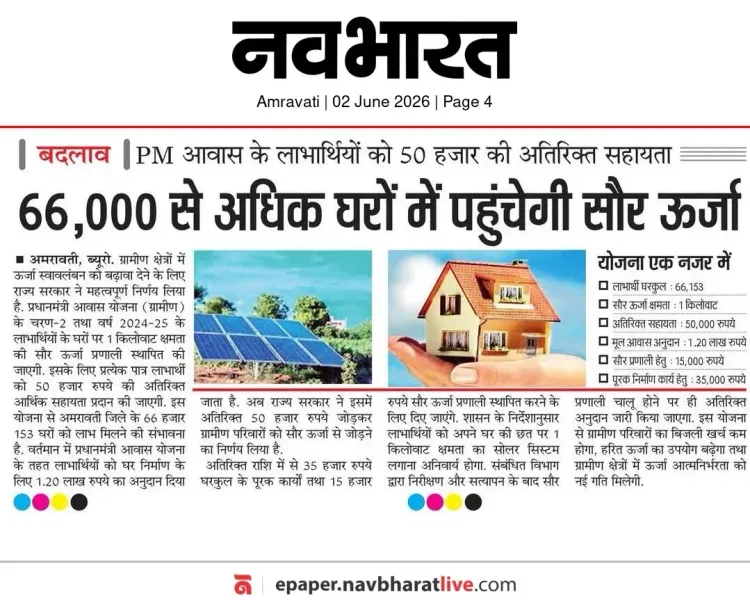
The Chief Minister's Office of Maharashtra announced on June 2, 2026, that solar energy will be extended to over 66,000 households in Amravati district. The move targets the Vidarbha region's rural population and aligns with Maharashtra's state-level renewable energy push and India's national climate commitments.
Key Takeaways
The CMO Maharashtra announced solar energy access for more than 66,000 homes in Amravati district .
The post was shared on June 2, 2026 , tagging Chief Minister Devendra Fadnavis .
Amravati is located in the Vidarbha region of eastern Maharashtra, which has a large rural and agrarian population.
The initiative aligns with Maharashtra's state-level solar programmes and India's Jawaharlal Nehru National Solar Mission framework.
Rollout timelines, subsidy structures, and budget allocations for the programme are yet to be publicly detailed.
A successful Amravati rollout could serve as a model for broader solar household schemes across Vidarbha.
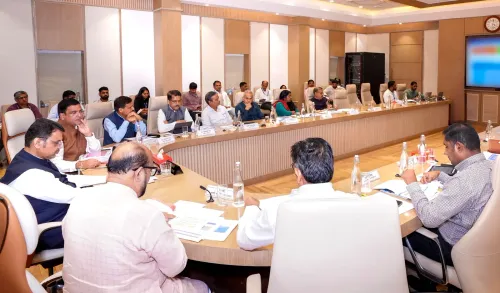
The Chief Minister's Office of Maharashtra announced on Tuesday, June 2, 2026, that solar energy will be extended to more than 66,000 households in Amravati district, tagging Chief Minister Devendra Fadnavis in the post.
Context
The post, shared by the official CMO Maharashtra account, states: 'Amravati jile ke 66,000 se adhik gharon mein pahunchegi saur urja' — 'Solar energy will reach more than 66,000 homes in Amravati district.' The announcement targets Amravati, a district in the Vidarbha region of eastern Maharashtra, which has a substantial rural and agrarian population that has historically depended on the conventional grid.
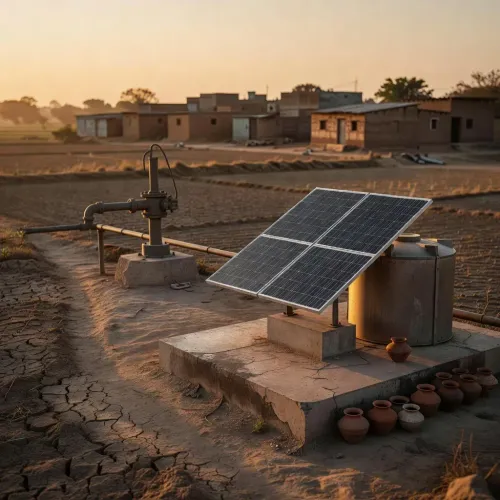
Vidarbha has long faced acute power-supply challenges, with frequent outages affecting both domestic consumers and farmers who rely on electricity for irrigation pumps. A household-level solar push in this region carries direct economic significance for rural families.
Policy Backdrop
Maharashtra has pursued state-level solar energy programmes in parallel with national renewable energy targets. The Government of India's Jawaharlal Nehru National Solar Mission, launched in 2010, set the framework for scaling up distributed and rooftop solar generation across the country, with state governments expected to design complementary schemes.
Successive Maharashtra governments have promoted rooftop solar and distributed generation, particularly for rural and semi-urban areas. The current initiative in Amravati aligns with India's broader international climate commitments, which include significantly expanding the share of renewables in the national energy mix by 2030.
Chief Minister Devendra Fadnavis, who has served multiple terms in the state's top office, has consistently positioned energy infrastructure — including solar expansion — as a pillar of Maharashtra's development agenda.
Stakeholders and Impact
The primary beneficiaries are rural households in Amravati district, where solar access can reduce monthly electricity bills, improve supply reliability, and support small home-based enterprises. Farmers in the region may also benefit indirectly through more stable daytime power for irrigation.
Beyond individual households, the rollout is expected to reduce load on the conventional distribution network in a region that has historically experienced supply deficits. Local solar installation contractors and equipment suppliers are likely to see increased activity as the programme is implemented.
What's Next
Key details to watch include the rollout timeline, the subsidy or financing structure that will make installations accessible to lower-income households, and any state budget allocations earmarked for scaling similar programmes to other Vidarbha districts.
If the Amravati model proves effective, it could serve as a template for comparable solar household drives across Maharashtra's rural belt, reinforcing the state's position as a leader in distributed renewable energy adoption in India.
Point of View
000 households in a single district is a substantive commitment that, if executed, could meaningfully shift rural energy access metrics in Maharashtra. The move also fits a broader national pattern of state governments racing to demonstrate household-level solar delivery ahead of India's 2030 climate targets. The real test will be in implementation: subsidy disbursement, grid connectivity, and post-installation maintenance have been persistent bottlenecks in comparable rural solar schemes elsewhere in India.
NationPress
21 Oct 2026
Frequently Asked Questions
How many homes in Amravati will get solar energy under this Maharashtra scheme?
More than 66,000 households in Amravati district are set to receive solar energy under the initiative announced by the Chief Minister's Office of Maharashtra on June 2, 2026.
What is the Amravati solar energy scheme announced by CM Fadnavis?
The Chief Minister's Office of Maharashtra announced a solar energy programme targeting over 66,000 homes in Amravati district, tagging CM Devendra Fadnavis. Detailed implementation and subsidy specifics are yet to be publicly disclosed.
Which region of Maharashtra is Amravati district in?
Amravati district is located in the Vidarbha region of eastern Maharashtra, an area with a significant rural and agricultural population that has historically faced electricity supply challenges.
What is Maharashtra's solar energy policy background?
Maharashtra has promoted rooftop and distributed solar generation schemes for rural and semi-urban areas, building on the national Jawaharlal Nehru National Solar Mission launched in 2010. State-level programmes have run alongside national targets to expand renewable energy capacity.
Will the Amravati solar scheme benefit farmers?
Rural households are the primary beneficiaries, but farmers in Amravati may also benefit indirectly through more reliable daytime power supply, which can support irrigation pump operations in the Vidarbha agricultural belt.