CM Fadnavis: Rooftop Solar Now Available for Rs 2,500–10,000
Synopsis
The Chief Minister's Office of Maharashtra announced that households can now install rooftop solar for Rs 2,500–10,000, a move under CM Devendra Fadnavis aimed at making clean energy affordable and advancing India's 500 GW renewable target by 2030.
Key Takeaways
The Chief Minister's Office of Maharashtra announced rooftop solar availability for households at Rs 2,500 to Rs 10,000 .
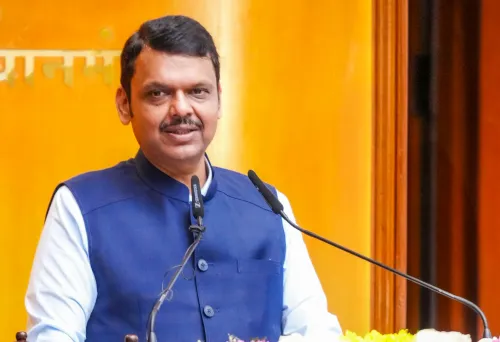
The initiative is associated with Chief Minister Devendra Fadnavis and the state's clean energy agenda.
The announcement aligns with India's national target of 500 GW non-fossil fuel capacity by 2030 .
Primary beneficiaries are residential households , particularly lower- and middle-income families priced out of rooftop solar.
Scheme implementation details — eligibility, financing structure, and district rollout — are yet to be officially detailed.
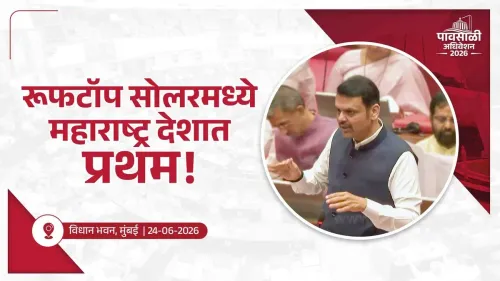
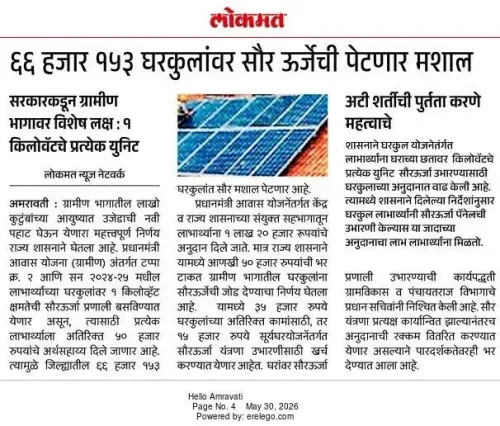
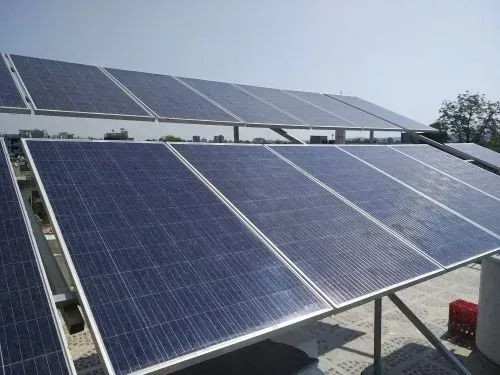
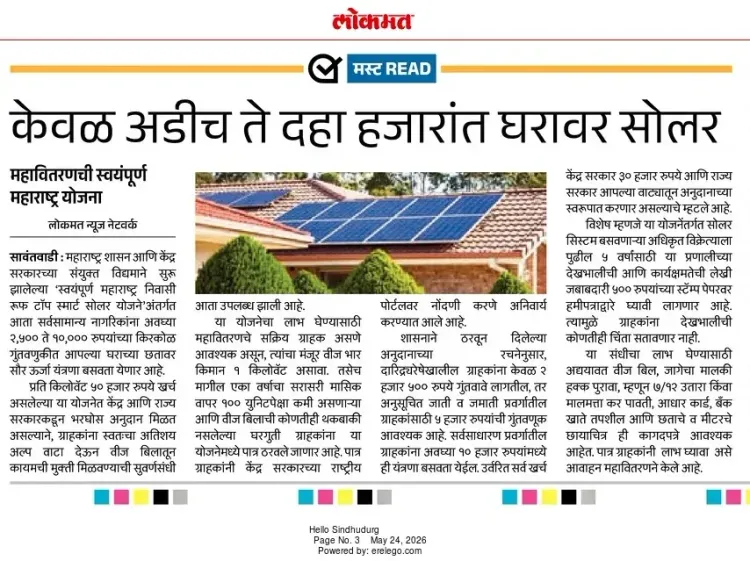
The Chief Minister's Office of Maharashtra on Sunday, 24 May 2026, posted on X highlighting a rooftop solar initiative under Chief Minister Devendra Fadnavis, stating that households can now install solar panels for as little as Rs 2,500 to Rs 10,000 — a sharp reduction in upfront costs aimed at making clean energy accessible to ordinary residents across the state.
Context
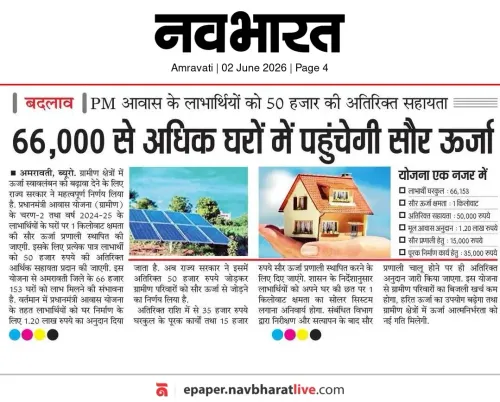
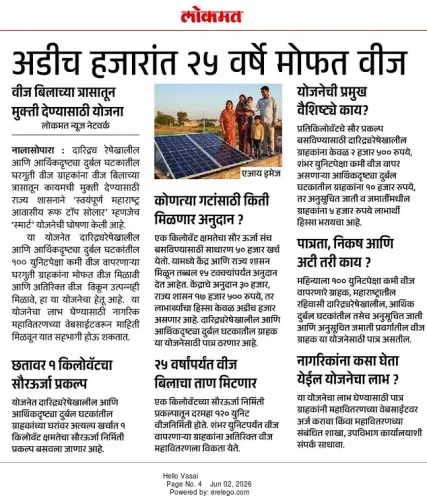
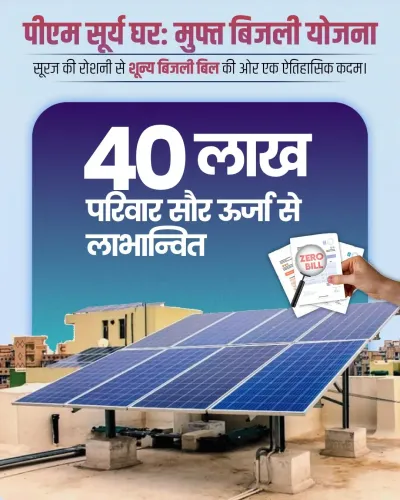
The post, shared from the official @CMOMaharashtra handle, carries the message 'केवळ अडीच ते दहा हजारांत घरावर सोलर' — meaning 'rooftop solar for just two-and-a-half to ten thousand.' The figure refers to the out-of-pocket cost a residential household would bear after subsidies or financing support, positioning this as a significant affordability breakthrough for both urban and rural families in Maharashtra.
The announcement is tagged to Devendra Fadnavis and uses the hashtags #Maharashtra, #DevendraFadnavis, and #Solar, signalling a deliberate push to associate the state government's identity with renewable energy access.
Policy Backdrop
India's rooftop solar push has deep roots: the Jawaharlal Nehru National Solar Mission, launched in 2010, set the country on a path toward large-scale solar adoption. The national government has since layered subsidy mechanisms and financing schemes to lower entry barriers for households, with the broader goal of reaching 500 GW of non-fossil fuel electricity capacity by 2030.
Several Indian states have introduced their own top-up subsidies and easy-instalment models to complement central support. Maharashtra, with its large and diverse population spanning megacities like Mumbai and Pune as well as vast rural districts, has particular incentive to drive distributed solar adoption — both to cut household electricity bills and to ease pressure on the grid.
Stakeholders and Impact
The primary beneficiaries of a scheme at this price point would be residential households — especially lower- and middle-income families who have historically been priced out of rooftop solar installations. A typical rooftop system without subsidies can cost several times more, making the Rs 2,500–10,000 range a potential inflection point for mass adoption.
Electricity distribution companies (DISCOMs) in Maharashtra stand to benefit from reduced peak demand, while the state's climate commitments receive a fillip through increased renewable generation at the household level. Local solar equipment suppliers and installers are also likely to see a surge in demand if the scheme rolls out at scale.
What's Next
The key questions now centre on implementation: how the subsidy or financing is structured, which households qualify, and what the rollout timeline looks like across Maharashtra's 36 districts. State budget allocations and official scheme guidelines will be closely watched by both policy observers and prospective beneficiaries.
If the cost figures hold at the announced levels, this initiative could serve as a model for other states seeking to democratise rooftop solar — and a significant data point in India's race toward its 2030 clean energy targets.
Point of View
Linking the Fadnavis administration directly to a tangible consumer benefit in the clean energy space. It fits a broader pattern of state governments competing to outdo central subsidies on solar, using affordability as a populist lever ahead of local electoral cycles. The credibility of the announcement will hinge entirely on the scheme's fine print — subsidy source, installer accountability, and whether the Rs 2,500 floor is genuinely accessible to rural households or only urban ones. If executed well, Maharashtra could set a replicable benchmark; if the rollout stumbles, the bold headline risks becoming a political liability.
NationPress
19 Sept 2026
Frequently Asked Questions
What is the Maharashtra rooftop solar scheme announced by CM Fadnavis?
The Chief Minister's Office of Maharashtra announced that residential households can install rooftop solar panels for as little as Rs 2,500 to Rs 10,000, making clean energy significantly more affordable through what appears to be a subsidy or financing support mechanism under CM Devendra Fadnavis.
Who can benefit from Maharashtra's low-cost solar scheme?
The scheme is targeted at residential households across Maharashtra, with the low price point designed to bring rooftop solar within reach of lower- and middle-income families who previously could not afford installation costs.
How does this Maharashtra solar scheme relate to India's national solar mission?
It builds on the foundation of India's national solar push — including the Jawaharlal Nehru National Solar Mission launched in 2010 — and supports the country's goal of achieving 500 GW of non-fossil fuel power capacity by 2030.
What is the normal cost of rooftop solar in India without subsidies?
Without government subsidies or financing support, a standard residential rooftop solar system in India typically costs several times more than Rs 10,000, which is why the Maharashtra announcement is being highlighted as a significant affordability milestone.
When did the Maharashtra government announce the cheap rooftop solar scheme?
The Chief Minister's Office of Maharashtra shared the announcement on Sunday, 24 May 2026, via its official X account, tagging Chief Minister Devendra Fadnavis.