CM Mohan Yadav Highlights 1.21 Lakh MP Homes Under PM Surya Ghar
Synopsis
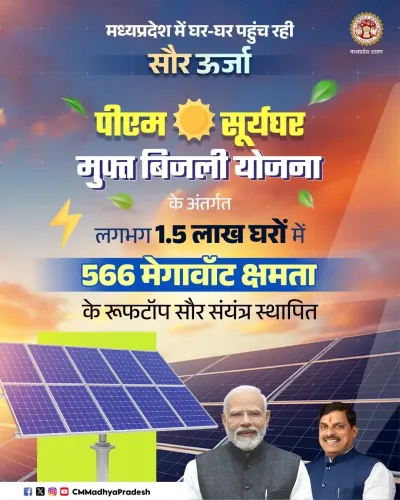
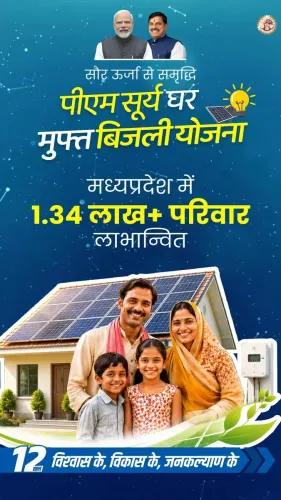
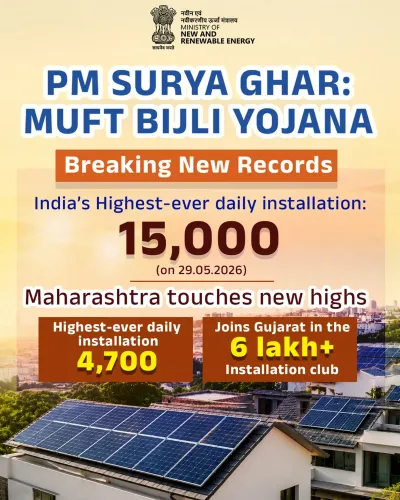
Madhya Pradesh CM Dr. Mohan Yadav announced on 29 May 2026 that over 1.21 lakh homes in the state have rooftop solar under PM Surya Ghar scheme, producing 456 MW of clean energy, as national installations cross 40 lakh households.
Key Takeaways
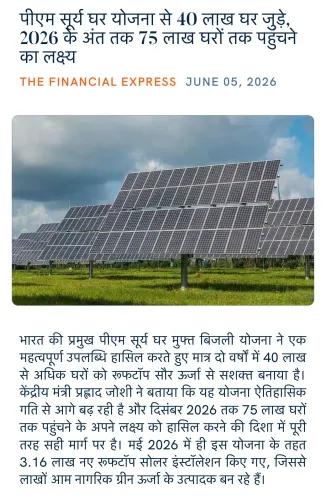
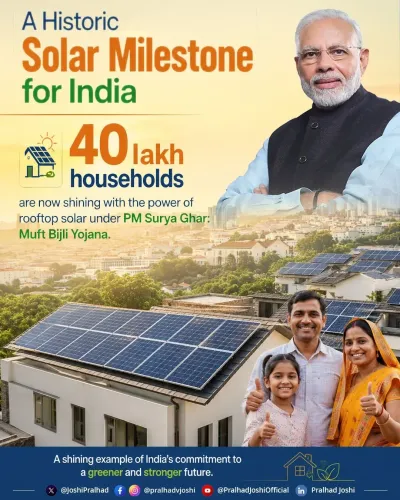
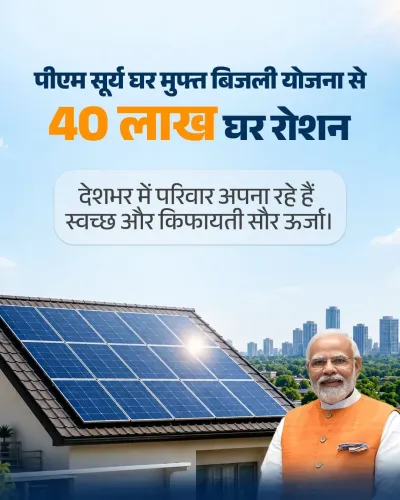
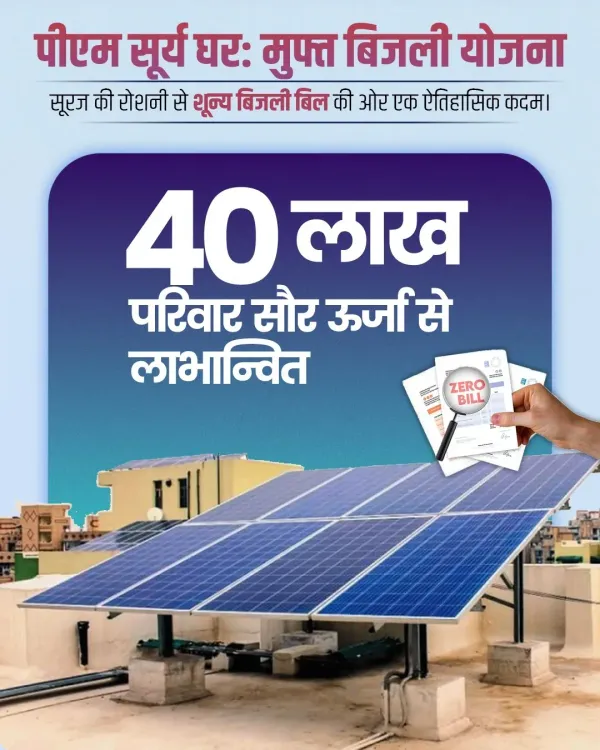
40 lakh households across India have received rooftop solar installations under the PM Surya Ghar: Muft Bijli Yojana as of 29 May 2026 .
Madhya Pradesh accounts for over 1,21,838 of those installations, generating more than 456 MW of solar power.
The scheme, announced in the Union Budget 2024-25 , targets one crore rooftop solar homes across India by 2027 .
Eligible households can receive up to 300 units of free electricity per month through central financial assistance.
The initiative supports India's goal of 500 GW non-fossil fuel capacity by 2030 under the Atmanirbhar Bharat energy framework.
Madhya Pradesh Chief Minister Dr. Mohan Yadav on Friday, 29 May 2026 highlighted the growing reach of the PM Surya Ghar: Muft Bijli Yojana, noting that over 1,21,838 households in Madhya Pradesh have received rooftop solar installations under the centrally-sponsored scheme, contributing more than 456 megawatts of clean solar energy to the state's grid.
Context
Posting on X in Hindi, Dr. Yadav framed the development as part of a larger national transformation, writing: 'स्वच्छ ऊर्जा से रोशन नया भारत' ('A new India illuminated by clean energy'). He attributed the scheme's momentum to the 'visionary leadership' of Prime Minister Narendra Modi, under whom the initiative is being implemented nationwide. Across India, the Chief Minister noted, 40 lakh households have now had rooftop solar systems installed.
Policy Backdrop
The PM Surya Ghar: Muft Bijli Yojana was announced in the Union Budget 2024-25 with a target of installing rooftop solar systems in one crore households across India by 2027. The scheme provides central financial assistance to eligible families, with beneficiaries entitled to up to 300 units of free electricity per month generated from their own rooftop panels. It builds on a lineage of national solar programmes dating back to the Jawaharlal Nehru National Solar Mission and state-level net-metering policies that have been in place since 2015.
The scheme sits within India's broader commitment to achieving 500 GW of non-fossil fuel power capacity by 2030 and the Atmanirbhar Bharat goal of energy self-reliance. Rooftop solar has been identified as a key lever for decentralising power generation and reducing household electricity bills simultaneously.
Stakeholders and Impact
For Madhya Pradesh, the figures cited by Dr. Yadav indicate that the state's share of the national rollout stands at roughly 3 per cent of total installations, with those panels collectively generating over 456 MW of solar capacity. Beneficiary households are primarily urban and peri-urban families who own their homes and qualify for central subsidy disbursement routed through the state's distribution companies.
At the national level, the 40 lakh installation milestone represents a significant step toward the one-crore target, though it also underscores the distance yet to be covered. State governments, including Madhya Pradesh, play a critical role in on-ground implementation — coordinating with empanelled vendors, processing subsidy applications, and ensuring grid integration through local DISCOMs.
What's Next
With the 2027 target of one crore installations as the benchmark, attention will turn to the pace of approvals and disbursements across states. Madhya Pradesh is expected to continue scaling its outreach, particularly in districts where solar adoption has lagged. Any expansion of state-level top-up subsidies or improvements in grid-interconnection timelines could accelerate progress. The scheme's success will also be a key indicator of India's trajectory toward its 2030 renewable energy commitments under international climate agreements.
Point of View
Timed to amplify a national scheme milestone while positioning Madhya Pradesh as an active contributor to BJP's flagship clean-energy narrative. By citing granular state-level figures alongside the national 40-lakh count, he signals administrative delivery to both a local electorate and a central leadership audience. The post fits a broader pattern in which BJP-governed states publicly align their policy scorecards with Prime Minister Modi's headline schemes, reinforcing the party's 'double-engine government' messaging. As the one-crore target deadline of 2027 approaches, such state-level accounting will increasingly become a political as well as a policy benchmark.
NationPress
16 Sept 2026
Frequently Asked Questions
What is PM Surya Ghar Muft Bijli Yojana?
PM Surya Ghar: Muft Bijli Yojana is a central government scheme that provides financial assistance for rooftop solar panel installation, entitling eligible households to up to 300 units of free electricity per month generated from their own panels.
How many homes in Madhya Pradesh have rooftop solar under PM Surya Ghar?
According to Chief Minister Dr. Mohan Yadav's post on 29 May 2026, over 1,21,838 homes in Madhya Pradesh have been covered under the PM Surya Ghar scheme.
How much solar power is Madhya Pradesh generating under the scheme?
CM Yadav stated that rooftop solar plants installed under the scheme are generating more than 456 megawatts of clean solar energy in Madhya Pradesh.
What is the national target for PM Surya Ghar installations?
The scheme, announced in the Union Budget 2024-25, has a target of installing rooftop solar systems in one crore households across India by 2027. As of May 2026, 40 lakh installations have been completed nationally.
How does PM Surya Ghar relate to India's renewable energy goals?
The scheme is part of India's broader push to achieve 500 GW of non-fossil fuel power capacity by 2030 and supports the Atmanirbhar Bharat goal of energy self-reliance by decentralising electricity generation to individual households.