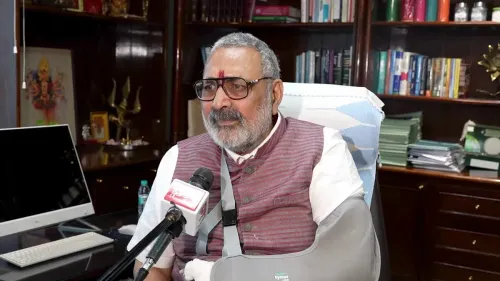
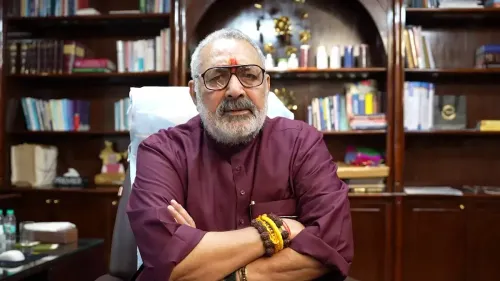
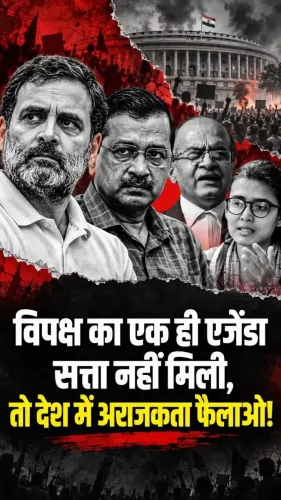
Giriraj Singh slams opposition 'regime change' bid
Synopsis
Union Textiles Minister Giriraj Singh on November 2, 2026, accused the opposition of wielding a 'fake Constitution' to push 'regime change' through anarchy, asserting that India runs on democracy, not disruption. The post escalates a long-running BJP counter-narrative against opposition protest movements.
Key Takeaways
Giriraj Singh posted on November 2, 2026 , accusing the opposition of using a fake Constitution as a prop to create anarchy.
He explicitly named 'regime change' as the opposition's goal, a phrase BJP leaders use to signal extra-constitutional intent.
Singh frames the episode as exposing the opposition's 'true face,' signalling an escalation in ruling-party rhetoric.
No specific event or opposition figure is named in the post, giving the charge a broad, sweeping application.
The BJP has consistently countered opposition constitutional arguments by reframing protests as institutional threats rather than legitimate dissent.
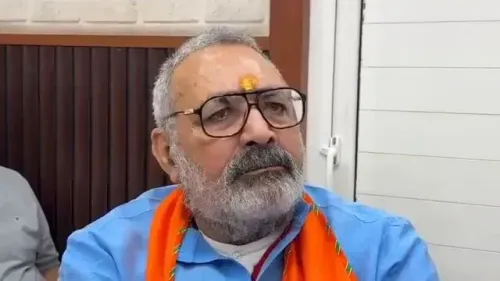
A fake Constitution in hand, a real democratic mandate on the line — Union Textiles Minister Giriraj Singh went straight for the jugular on Monday, November 2, 2026, firing a sharp broadside at the opposition over what he called a deliberate campaign to destabilise the country under the cover of constitutional rhetoric.
Posting on X, Singh wrote in Hindi: 'हाथ में संविधान की नकली किताब लेकर घूमने वाले शायद भूल गए हैं कि यह देश लोकतंत्र से चलता है, इनकी अराजकता से नहीं!' — translated: 'Those roaming around with a fake copy of the Constitution have perhaps forgotten that this country runs on democracy, not their anarchy!' He went further, accusing the opposition of trying to 'spoil the atmosphere' in the name of 'regime change' and declared that their 'true face' had now been fully exposed.
The 'fake Constitution' charge and what it signals
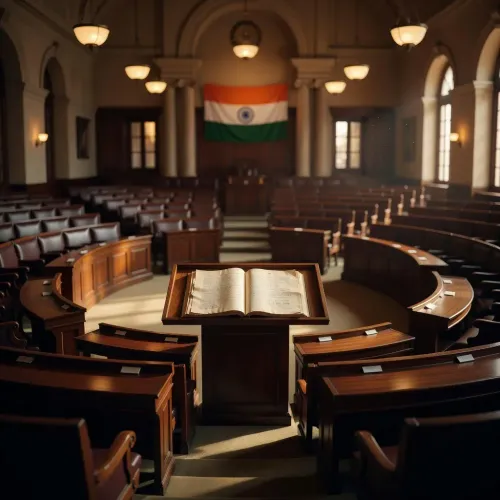
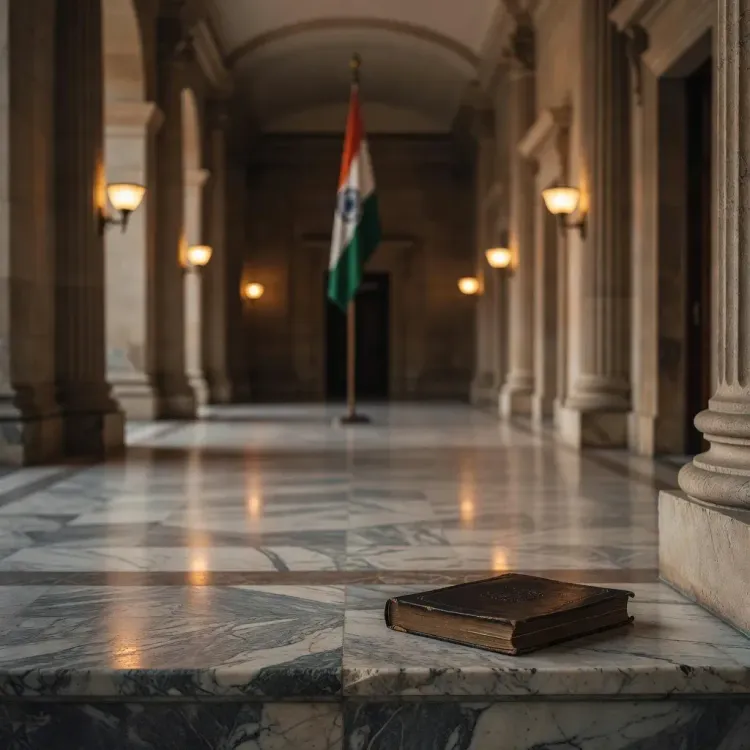
The image of a Constitution brandished at a rally is a well-worn symbol in Indian opposition politics — most visibly associated with campaigns arguing that the ruling dispensation threatens constitutional values. Singh, a Lok Sabha MP from Begusarai, Bihar and one of the BJP's most combative voices, turned that symbol on its head: the prop, he argued, is hollow, and the intent behind it is not democratic protest but organised disruption. It is a classic ruling-party counter-frame — repositioning the opposition not as guardians of the Constitution but as agents of chaos.The 'regime change' phrase — and why it stings
The phrase 'regime change' carries a specific charge in Indian political discourse. Deployed by the ruling side, it implies foreign-influenced or extra-constitutional methods aimed at toppling an elected government — language designed to question both the patriotism and the legitimacy of the opposition's movement. Singh's use of it fits a broader BJP pattern of framing street-level opposition as a threat to institutional order rather than a legitimate exercise of democratic rights. Opposition parties, for their part, have consistently countered that it is the government's own conduct that constitutes democratic backsliding. Neither a specific triggering event nor a named opposition figure is identified in Singh's post — which itself amplifies the sweep of the charge. He is not arguing with one party or one protest; he is indicting an entire political posture. Watch for formal responses from major opposition alliances and any parliamentary echo of this exchange when the winter session approaches.Point of View
It delegitimises the critique itself by questioning the sincerity of those making it. The 'regime change' phrase does double work — invoking echoes of foreign interference while casting domestic protest as inherently anti-democratic. What makes the moment notable is the sweep of the attack: by targeting a posture rather than a specific event, Singh signals that the ruling party intends to contest the opposition's entire symbolic vocabulary heading into the next political cycle. Opposition parties will need a sharper rebuttal than a rally prop to cut through that frame.
NationPress
2 Nov 2026
Frequently Asked Questions
What did Giriraj Singh say about the opposition and the Constitution?
Singh accused opposition leaders of carrying a 'fake copy of the Constitution' while forgetting that India runs on democracy, not anarchy, and charged them with trying to engineer 'regime change' by spoiling the political atmosphere.
What does 'regime change' mean in the context of Indian politics?
In BJP rhetoric, 'regime change' implies that opposition movements are aimed at toppling an elected government through extra-constitutional or foreign-influenced means rather than winning power through elections.
Who is Giriraj Singh?
Giriraj Singh is the Union Minister of Textiles , a senior BJP leader, and a Lok Sabha MP from Begusarai, Bihar , known for outspoken political commentary.
Which opposition party or event prompted Giriraj Singh's post?
Singh's November 2, 2026, post does not name a specific opposition party or triggering event, making it a broad attack on opposition protest tactics generally.
How has the opposition responded to BJP's Constitution-related charges?
Opposition parties have historically countered by arguing that it is the government's own conduct — including treatment of institutions and dissent — that constitutes democratic backsliding, though no specific response to this post has been verified.