Ramaswamy Warns Ohio's 12 Million on Stakes of Governor's Race
Synopsis
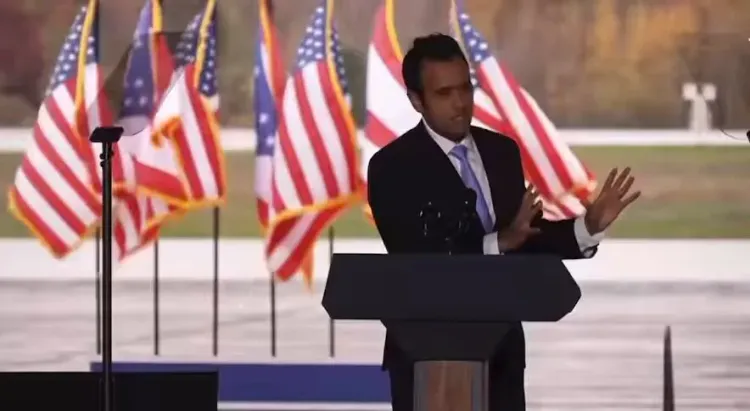
Entrepreneur Vivek Ramaswamy posted on X the night before Ohio's 2026 gubernatorial election, warning 12 million Ohioans that the incoming governor must tackle property taxes, fraud prosecution, criminal sentencing, and healthcare costs — framing the race as consequential for everyday life.
Key Takeaways
Vivek Ramaswamy posted on November 2, 2026 , the eve of Ohio's gubernatorial election, citing urgency for the state's 12 million residents.
He outlined four policy tests for the next governor: property-tax relief, fraud prosecution, criminal incarceration, and healthcare affordability .
Ohio , with approximately 11.8 million people , has seen property-tax burdens rise sharply across suburban and rural counties in recent years.
Ramaswamy is the founder of Strive Asset Management and former co-lead of the DOGE advisory effort, with strong personal ties to Ohio.
The fiscal-plus-public-safety framing echoes Republican gubernatorial messaging across the Midwest since 2018 .
Results of the November 3, 2026 Ohio governor's race will determine which candidate inherits the state's legislative and budgetary agenda.
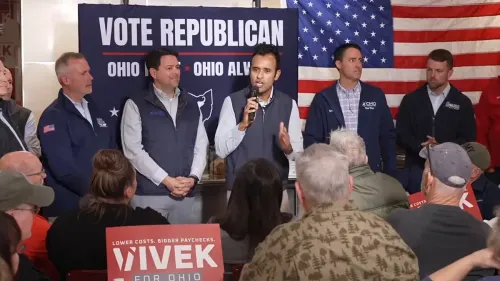
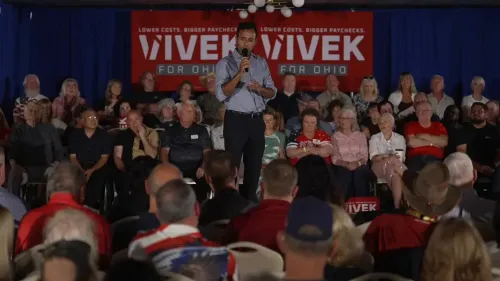
With Election Day hours away, entrepreneur Vivek Ramaswamy is turning up the heat on Ohio's 2026 gubernatorial race — telling the state's 12 million residents that the consequences of Tuesday's result will land directly in their wallets, their neighbourhoods, and their hospitals.
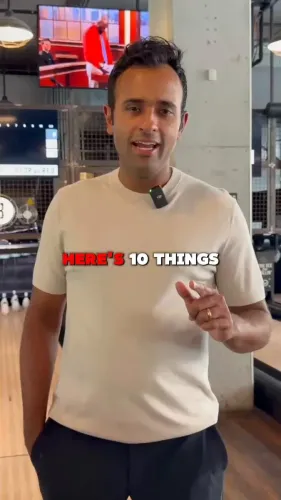
Posting late on Monday, November 2, Ramaswamy laid out a four-point test for whoever wins the governorship: taming property taxes, prosecuting fraud, keeping violent offenders behind bars, and making healthcare genuinely affordable. 'The consequences are serious,' he wrote. 'This is what's at stake.'
Property Taxes, Crime, and Healthcare — Ohio's Triple Squeeze
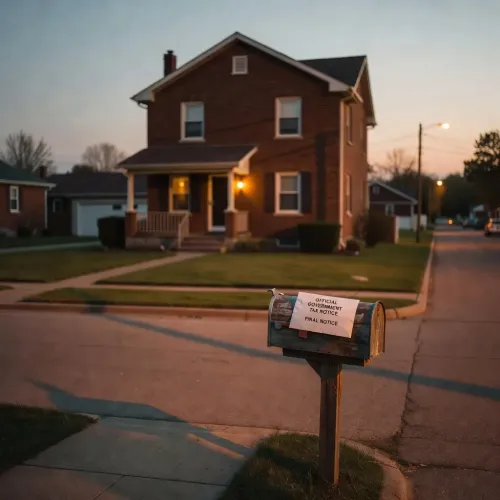
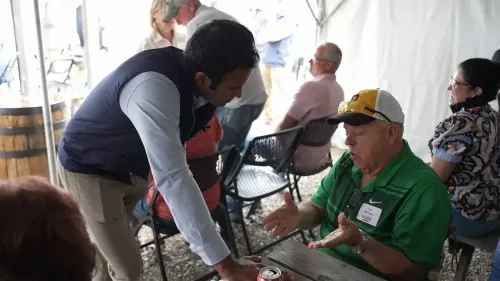
Ohio, a Midwestern state of roughly 11.8 million people, has wrestled with rising property-tax burdens across its suburban and rural counties for years. Local levies that fund schools and services have pushed homeowner bills sharply higher even as household incomes have not kept pace — making tax relief one of the most viscerally felt demands heading into this election cycle.
The law-and-order dimension has shadowed Ohio politics for multiple election cycles. Prosecutors and sheriffs across the state have faced public pressure over drug-related fraud schemes, fentanyl trafficking, and violent crime rates in cities including Columbus, Cleveland, and Cincinnati. For voters, the ask is simple: make accountability real. The incoming governor will control appointments to the state's law-enforcement infrastructure and set the tone for how aggressively fraud — from Medicaid billing abuse to opioid-supply schemes — gets pursued.
Why a National Figure Is Watching Columbus
Ramaswamy, the founder and executive chairman of Strive Asset Management and former co-lead of the U.S. Department of Government Efficiency (DOGE) advisory effort, grew up in Ohio and ran for the 2024 Republican presidential nomination partly on his Ohio identity. His intervention here follows a well-worn pattern: national figures amplifying off-year state contests to drive turnout and frame the ideological meaning of the result.
The pairing of fiscal grievance — property taxes — with public-safety and healthcare themes mirrors the playbook that Republican candidates across the Midwest have used since 2018, when affordability and crime first fused into a single electoral argument. In Ohio, that fusion proved durable through the 2022 cycle, when the previous governor campaigned on near-identical priorities.
For Ramaswamy, the post is also a signal about where he sees the Republican governing agenda at the state level: less abstract ideology, more kitchen-table arithmetic. A voter who cannot pay her property-tax bill and fears her neighbourhood is unsafe does not need a philosophical treatise — she needs a governor who picks up the phone and fixes things.
By sunrise Wednesday, Ohio will have its answer. The new governor will inherit a legislative calendar, a state budget, and — if Ramaswamy's framing holds — an electorate that will be watching every line item.
Point of View
He is signalling a pivot toward kitchen-table economics as the party's durable electoral lane in competitive Midwestern states. His DOGE background lends the call for fraud prosecution a specific institutional weight, linking federal efficiency rhetoric to state-level accountability. If the winning candidate runs on — and delivers — even modest property-tax relief, it could become a template for the broader 2028 Republican playbook.
NationPress
3 Nov 2026
Frequently Asked Questions
What did Vivek Ramaswamy say about the Ohio governor's race?
Ramaswamy posted on X on November 2, 2026, warning that Ohio's 12 million residents are depending on the outcome of the next day's gubernatorial election, citing property taxes, fraud prosecution, criminal incarceration, and healthcare affordability as the key tests for the incoming governor.
When is the Ohio 2026 governor election?
The Ohio gubernatorial election takes place on November 3, 2026 , the day after Ramaswamy's post.
Why does Vivek Ramaswamy care about Ohio politics?
Ramaswamy grew up in Ohio and ran for the 2024 Republican presidential nomination partly on his Ohio identity. He is also the founder of Strive Asset Management and former co-lead of the DOGE advisory effort, giving him a continuing platform on fiscal and governance issues.
What are the biggest issues in the Ohio 2026 governor's race?
Based on Ramaswamy's framing, the central issues are property-tax burdens on homeowners, prosecuting fraud schemes, keeping violent criminals incarcerated, and making healthcare more affordable for ordinary Ohioans.
What is Ohio's population in 2026?
Ohio has a population of approximately 11.8 million , though Ramaswamy's post rounds this to 12 million Ohioans when describing who is affected by the election outcome.