Joshi: PM Surya Ghar hits 15,000 rooftop solar installs in a day

Synopsis
India set a new single-day record of 15,000 rooftop solar installations on 29 May 2026 under PM Surya Ghar: Muft Bijli Yojana, Union Minister Pralhad Joshi announced. Maharashtra also crossed 6 lakh cumulative installs, becoming the second state after Gujarat to hit that landmark.
Key Takeaways
15,000 rooftop solar systems were installed across India in a single day on 29 May 2026 — the highest-ever daily figure under PM Surya Ghar: Muft Bijli Yojana.
Maharashtra recorded 4,700 installations in one day , setting a new state-level single-day record.
Maharashtra crossed 6 lakh cumulative installations , becoming only the second state after Gujarat to reach that milestone.
The PM Surya Ghar: Muft Bijli Yojana was launched with a Rs 75,021 crore outlay targeting one crore households with up to 300 units of free electricity per month .
The scheme supports India's 500 GW non-fossil fuel target by 2030 and net-zero by 2070 commitments.
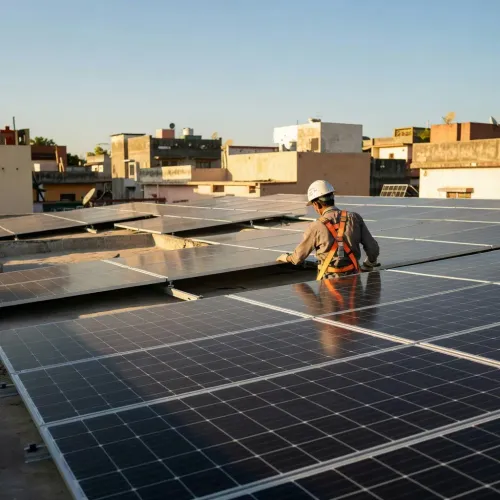
Union Consumer Affairs and New and Renewable Energy Minister Pralhad Joshi on Sunday, 31 May 2026 announced that India recorded its highest-ever single-day rooftop solar deployment on 29 May 2026, with 15,000 installations completed in one day under the PM Surya Ghar: Muft Bijli Yojana.
Context
Posting on X, Minister Joshi described the milestone as 'a landmark achievement in India's clean energy journey.' He highlighted that Maharashtra set a new state-level record of 4,700 installations in a single day and became the second state after Gujarat to cross 6 lakh cumulative installations under the scheme. The minister attributed the pace of adoption to 'the visionary leadership' of Prime Minister Narendra Modi.
Policy Backdrop
The PM Surya Ghar: Muft Bijli Yojana was approved by the Union Cabinet in February 2024 with a total outlay of Rs 75,021 crore, targeting one crore households nationwide. The scheme provides central financial assistance for rooftop solar systems capable of generating up to 300 units of free electricity per month for beneficiary families.
The programme sits within India's broader renewable energy architecture, which includes a 500 GW non-fossil fuel capacity target by 2030 and a net-zero emissions commitment by 2070 — pledges made at COP26. Rooftop solar has been a strategic pillar alongside utility-scale projects, with earlier national targets setting 40 GW of rooftop capacity as a key sub-goal under the National Solar Mission.
Stakeholders and Impact
Gujarat established early leadership in the scheme's rollout, and Maharashtra's crossing of the 6-lakh mark signals that the federal implementation model — where lead states set benchmarks that others follow — is gaining momentum. The rooftop solar industry, equipment manufacturers, and installation contractors stand to benefit directly as daily installation rates scale up.
For households, the scheme reduces electricity bills through subsidised generation and provides energy security, particularly in states with high daytime power demand. Distribution companies (discoms) are also stakeholders, as widespread rooftop generation reshapes local grid load profiles and net-metering arrangements.
What's Next
The government's stated target of one crore household installations remains the headline benchmark, and quarterly progress reports will indicate whether the pace seen on 29 May 2026 can be sustained or exceeded. Any supplementary budget allocations or state-level policy announcements in FY 2026-27 will be closely watched as indicators of the scheme's trajectory toward its one-crore goal.
If the single-day record translates into a sustained weekly run-rate, India's distributed solar capacity could see a significant step-up well ahead of the 2030 deadline — reinforcing the country's international climate commitments while delivering tangible household-level benefits.
Point of View
000 single-day installation figure, if sustained, would represent a decisive inflection point in India's distributed solar rollout — moving the PM Surya Ghar scheme from a policy promise toward verifiable mass adoption. Minister Joshi's announcement also serves a political purpose: framing the milestone as evidence of Prime Minister Modi's 'visionary leadership' ahead of state and national electoral cycles. The Gujarat-then-Maharashtra progression illustrates how competitive federalism is being harnessed as an implementation tool, with high-performing states creating pressure on laggards. The key policy question now is whether the supply chain — panels, inverters, certified installers — can absorb a sustained surge without quality or subsidy-disbursement bottlenecks.
NationPress
19 Sept 2026
Frequently Asked Questions
What is PM Surya Ghar Muft Bijli Yojana?
PM Surya Ghar: Muft Bijli Yojana is a central government scheme approved in February 2024 with an outlay of Rs 75,021 crore to install rooftop solar systems in one crore households, providing up to 300 units of free electricity per month to beneficiaries.
What was India's single-day rooftop solar installation record on 29 May 2026?
India achieved 15,000 rooftop solar installations in a single day on 29 May 2026 under the PM Surya Ghar: Muft Bijli Yojana, the highest-ever daily figure recorded under the scheme.
How many rooftop solar installations has Maharashtra completed?
Maharashtra crossed 6 lakh cumulative rooftop solar installations under the PM Surya Ghar scheme, becoming the second state after Gujarat to reach that landmark, and also set a single-day state record of 4,700 installations on 29 May 2026.
Which state leads in PM Surya Ghar rooftop solar installations in India?
Gujarat was the first state to cross 6 lakh installations under PM Surya Ghar: Muft Bijli Yojana, with Maharashtra now joining it as the second state to reach that milestone.
What is India's renewable energy target by 2030?
India has committed to achieving 500 GW of non-fossil fuel electricity capacity by 2030, with rooftop solar under schemes like PM Surya Ghar forming a key part of the distributed generation component of that goal.