Yadav: 40 Lakh Homes Join PM Surya Ghar Solar Scheme
Synopsis
Union Environment Minister Bhupender Yadav announced on 29 May 2026 that 40 lakh households have installed rooftop solar under PM Surya Ghar: Muft Bijli Yojana, which offers subsidies up to ₹78,000 per home and targets one crore households in total.
Key Takeaways
40 lakh households have adopted rooftop solar under PM Surya Ghar: Muft Bijli Yojana as of May 2026 , per Minister Bhupender Yadav.
The scheme offers a central financial subsidy of up to ₹78,000 per household for rooftop solar installation.
Eligible homes can generate up to 300 units of free electricity per month under the scheme.
The Union Cabinet approved the scheme in February 2024 with a total outlay of ₹75,021 crore , targeting one crore households .
The milestone represents 40 per cent of the scheme's one-crore household target, with roughly 60 lakh more installations needed.
The scheme aligns with India's commitment to achieve 500 GW of non-fossil fuel electricity capacity by 2030 .
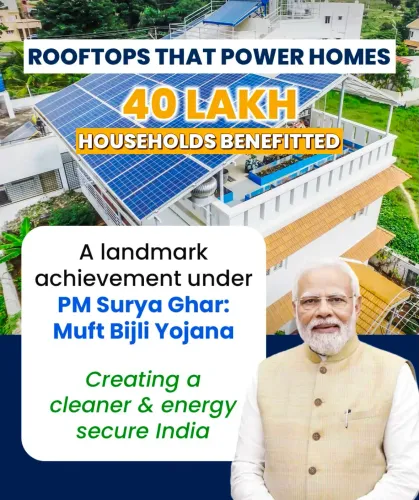
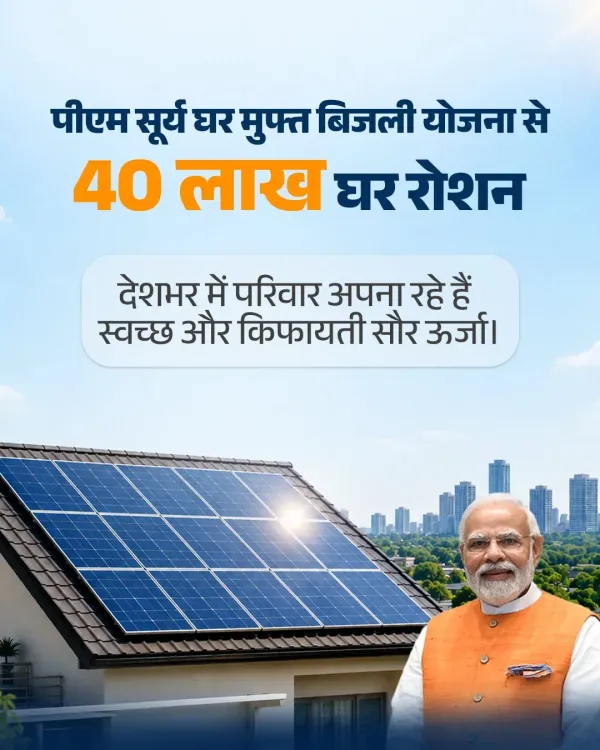
Union Environment Minister Bhupender Yadav on Friday, 29 May 2026 highlighted that 40 lakh households have adopted rooftop solar installations under the PM Surya Ghar: Muft Bijli Yojana, calling it a step toward clean energy self-reliance under Prime Minister Narendra Modi.
Context
Posting on X in Hindi, Minister Yadav wrote: 'स्वच्छ ऊर्जा और आत्मनिर्भरता की ओर बढ़ता भारत' ('India moving toward clean energy and self-reliance'). He credited PM Modi's leadership for the milestone, noting that the scheme offers a subsidy of up to ₹78,000 to make every household 'energy empowered.'
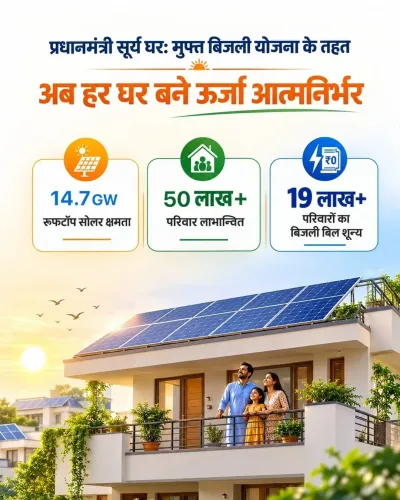
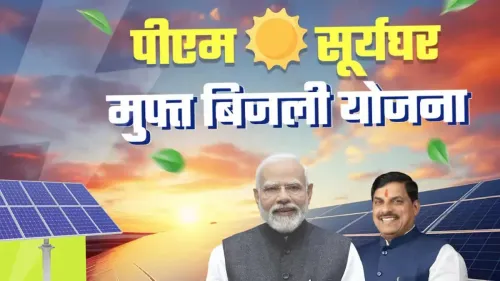
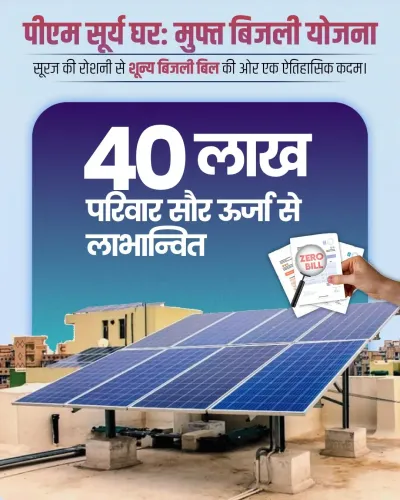
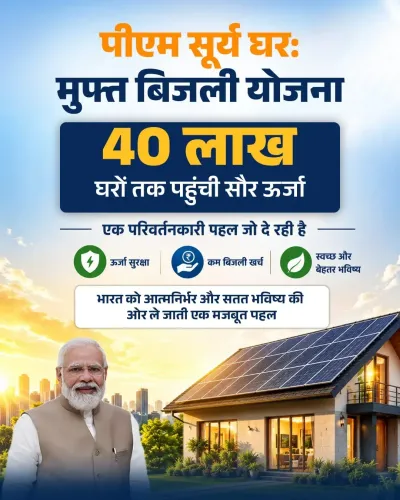
The post was accompanied by two images and carried the hashtag #40LakhsPMSuryaGhar, signalling a coordinated government communication push around the rooftop solar target.
Policy Backdrop
The PM Surya Ghar: Muft Bijli Yojana was approved by the Union Cabinet in February 2024 with a total outlay of ₹75,021 crore, targeting one crore households across India. The scheme provides central financial assistance — up to ₹78,000 — for rooftop solar installations capable of generating up to 300 units of free electricity per month for beneficiary families.
The programme builds on a lineage of solar policy stretching back to the Jawaharlal Nehru National Solar Mission launched in 2010, which first set grid-connected solar targets and later incorporated rooftop components. The current scheme is positioned as the most ambitious residential solar push to date, directly linking household energy access with India's Panchamrit climate pledges made at COP26 in 2021.
India has committed to achieving 500 GW of non-fossil fuel electricity capacity by 2030 as part of its updated nationally determined contributions. Rooftop solar for households is viewed as a critical distributed-generation pillar in reaching that target without overburdening the centralised grid.
Stakeholders and Impact
The primary beneficiaries are Indian households — particularly in states with high solar irradiance — who receive a direct subsidy to offset installation costs, reducing payback periods and making the technology accessible beyond upper-income segments. The domestic solar manufacturing and installation industry also benefits from the demand stimulus the scheme creates at scale.
The 40 lakh figure, as cited by Minister Yadav, represents 40 per cent of the one-crore household target. Sustained uptake at this pace would have implications for residential electricity bills, distribution company revenues, and grid management, since rooftop prosumers both draw from and feed back into the local grid.
What's Next
The government's stated goal remains reaching one crore households, meaning roughly 60 lakh more installations are required to fulfil the scheme's original mandate. The Ministry of New and Renewable Energy is expected to conduct mid-term reviews of subsidy disbursement timelines and grid-integration readiness as the rollout accelerates.
How quickly the remaining target is met — and whether subsidy allocations under the ₹75,021 crore outlay keep pace with demand — will determine whether PM Surya Ghar becomes a defining success story of India's energy transition or requires a course correction before the decade's end.
Point of View
Framing it as evidence of the Modi administration's clean energy delivery rather than merely a policy announcement. The 40-lakh figure — 40 per cent of the one-crore target — is presented as proof of scale, but the remaining 60 lakh installations will test both the subsidy pipeline and grid-absorption capacity. Positioning an Environment Minister, rather than the Power or New and Renewable Energy Minister, as the messenger underscores how rooftop solar has been absorbed into the broader climate-action narrative ahead of international forums. The post's tone of 'Aatmanirbhar Bharat' self-reliance signals that the scheme is being marketed as an energy-sovereignty story as much as a welfare one.
NationPress
13 Oct 2026
Frequently Asked Questions
What is PM Surya Ghar Muft Bijli Yojana?
PM Surya Ghar: Muft Bijli Yojana is a central government scheme approved in February 2024 that provides a subsidy of up to ₹78,000 to Indian households for installing rooftop solar panels, enabling them to generate up to 300 units of free electricity per month.
How many households have benefited from PM Surya Ghar so far?
According to Union Environment Minister Bhupender Yadav's post on 29 May 2026, 40 lakh households have adopted rooftop solar under the scheme, representing 40 per cent of the one-crore household target.
How much subsidy does the government give for rooftop solar in India?
Under PM Surya Ghar: Muft Bijli Yojana, the central government offers central financial assistance of up to ₹78,000 per household to cover the cost of rooftop solar installation.
What is India's renewable energy target for 2030?
India has committed to achieving 500 GW of non-fossil fuel electricity capacity by 2030 as part of its updated nationally determined contributions under the Paris Agreement.
What is the total budget of PM Surya Ghar Yojana?
The Union Cabinet approved PM Surya Ghar: Muft Bijli Yojana in February 2024 with a total outlay of ₹75,021 crore, targeting one crore households across India.