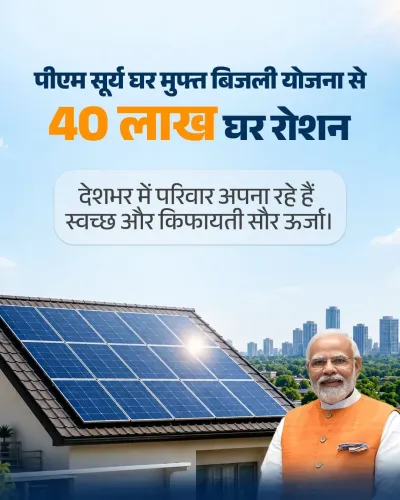
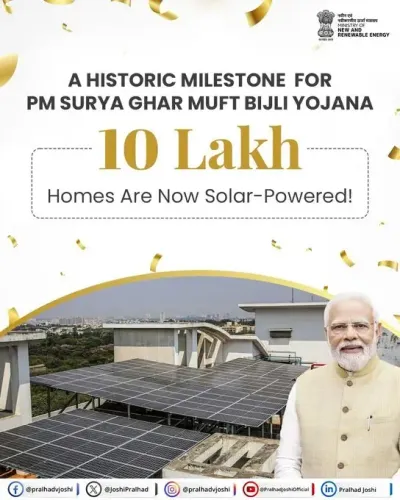
PM Surya Ghar scheme connects 40 lakh homes to rooftop solar
Synopsis
India's PM Surya Ghar scheme has quietly become one of the world's fastest-scaling household solar programmes — 40 lakh homes connected, fund utilisation nearly doubled to ₹14,585 crore in FY26, and a government projection of 720 million tonnes in lifetime CO2 savings if it reaches one crore households. The numbers suggest this is no longer a pilot; it is a structural shift in how India powers its homes.
Key Takeaways
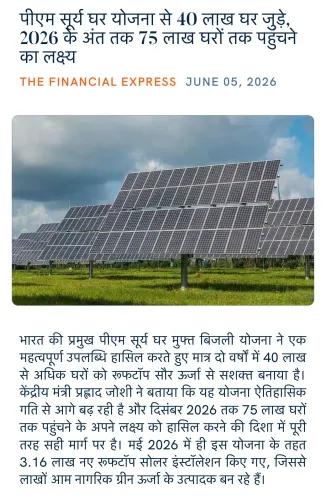
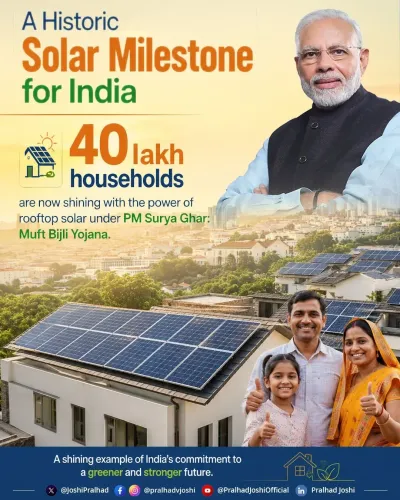
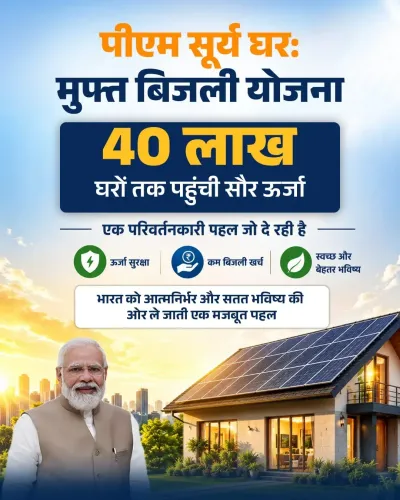
40 lakh households are now connected to rooftop solar under the PM Surya Ghar Muft Bijli Yojana , as of 29 May .
Fund utilisation surged to ₹14,585.29 crore in FY26 (till 5 March), up from ₹7,822.92 crore in FY25.
Top five implementing states: Gujarat , Maharashtra , Uttar Pradesh , Kerala , and Rajasthan .
Scaling to one crore households could generate 1,000 billion units of renewable power and cut 720 million tonnes of CO2 equivalent over 25 years.
The scheme, launched in 2024 , is demand-driven and open to all residential consumers with a grid-connected discom connection.
India has crossed a landmark threshold under the PM Surya Ghar Muft Bijli Yojana, with 40 lakh households now connected to rooftop solar power, Union Petroleum and Natural Gas Minister Hardeep Singh Puri announced on Friday, 29 May. The milestone, achieved under the leadership of Prime Minister Narendra Modi, marks a significant acceleration in the country's clean energy transition and its push for household energy self-reliance.
Key Developments
In a post on X, Minister Puri described the achievement as a major step toward making India a 'superpower of solar power', adding that the scheme is freeing ordinary citizens from electricity bills and making them Atmanirbhar (self-reliant). Commerce and Industry Minister Piyush Goyal echoed the sentiment, posting on X: 'Family is becoming empowered and life is becoming self-reliant. Under the PM Surya Ghar scheme, more than 40 lakh families have already connected with solar energy.'
Notably, fund utilisation under the scheme has nearly doubled year-on-year. Expenditure reached ₹14,585.29 crore in FY26 (up to 5 March), compared with ₹7,822.92 crore in FY25 — a signal of sharply rising demand and faster on-ground execution.
How the Scheme Works
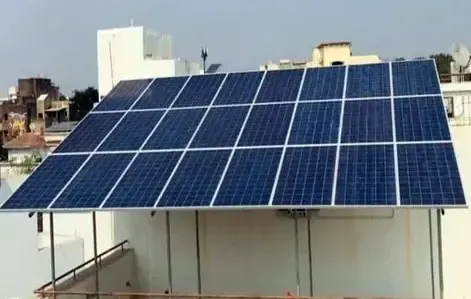
Launched in 2024, the PM Surya Ghar Muft Bijli Yojana is a demand-driven programme open to all residential consumers with a grid-connected electricity connection from their local distribution company (discom). Eligible households can apply through the scheme's National Portal to have rooftop solar systems installed. The scheme operates on a subsidy-linked model, with benefits flowing directly to applicants upon installation and grid connection.
States Leading Implementation
As of end-2025, the top five states in scheme implementation are Gujarat, Maharashtra, Uttar Pradesh, Kerala, and Rajasthan. These states have collectively driven the bulk of new connections, reflecting both strong state-level coordination and high household demand for clean energy solutions.
Long-Term Impact and Broader Energy Goals
The government estimates that scaling rooftop solar to one crore households could generate 1,000 billion units of renewable electricity and reduce emissions by 720 million tonnes of carbon dioxide equivalent over the 25-year lifetime of the installed systems. This positions the scheme as one of the largest single-programme contributors to India's climate commitments.
Separately, the government is also advancing the National Green Hydrogen Mission (NGHM), which aims to establish India as a global hub for the production, use, and export of green hydrogen and its derivatives. Together, these initiatives form the backbone of India's multi-track clean energy strategy as it heads toward its 2030 renewable energy targets.
Point of View
822 crore in FY25 to ₹14,585 crore in FY26 — is the most telling number in this announcement, more so than the headline milestone. It suggests the scheme has moved past early-adopter demand and is now drawing in mainstream households. The concentration of progress in five states, however, raises a familiar question: whether India's clean energy gains are deepening in already-capable states or genuinely spreading to energy-poor districts in the north and east. The 720-million-tonne CO2 saving projection is compelling, but it is contingent on reaching one crore homes — 60% of the current target still to go.
NationPress
19 Sept 2026
Frequently Asked Questions
What is the PM Surya Ghar Muft Bijli Yojana?
The PM Surya Ghar Muft Bijli Yojana is a central government scheme launched in 2024 that subsidises rooftop solar installations for residential households connected to the grid. Eligible consumers apply through a national portal and receive support for installing solar systems, with the aim of reducing electricity bills and promoting clean energy self-reliance.
How many homes have been connected under the scheme so far?
As of 29 May, more than 40 lakh households across India have been connected to rooftop solar under the scheme, according to Union Minister Hardeep Singh Puri.
Which states are leading in PM Surya Ghar scheme implementation?
As of end-2025, the top five states in implementation are Gujarat, Maharashtra, Uttar Pradesh, Kerala, and Rajasthan, which have collectively driven the majority of new rooftop solar connections.
What is the environmental impact projected for the scheme?
The government estimates that installations in one crore households could produce 1,000 billion units of renewable electricity and reduce emissions by 720 million tonnes of CO2 equivalent over the 25-year lifetime of the systems.
How much has the government spent on the scheme?
Fund utilisation reached ₹14,585.29 crore in FY26 up to 5 March, nearly double the ₹7,822.92 crore spent in FY25, reflecting a sharp increase in scheme uptake and execution pace.