CM Fadnavis Promotes PM Surya Ghar Scheme in Maharashtra
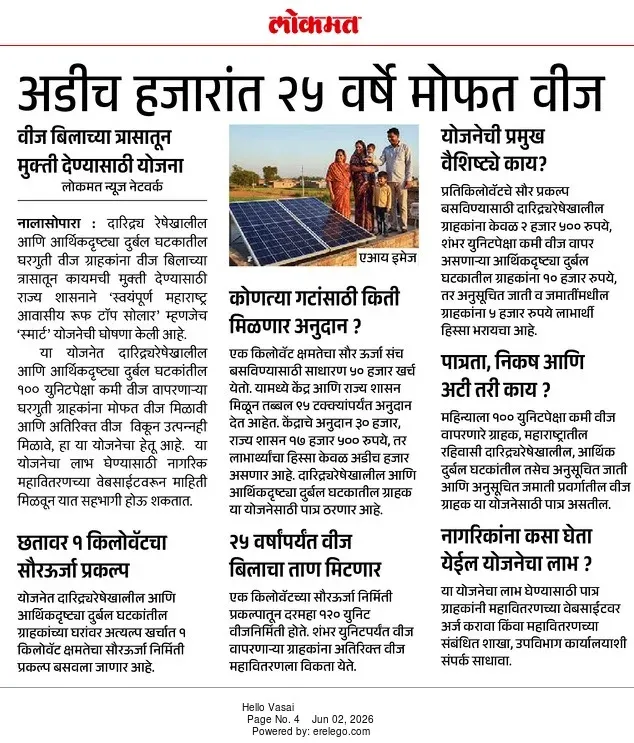
Synopsis
The Chief Minister's Office of Maharashtra promoted the PM Surya Ghar Muft Bijli Yojana on June 2, 2026, claiming households can secure 25 years of free electricity for ₹2,500. CM Devendra Fadnavis was tagged in the post, signalling state-level push for the central rooftop solar scheme.
Key Takeaways
The Chief Minister's Office of Maharashtra posted on June 2, 2026 , promoting the PM Surya Ghar Muft Bijli Yojana .
The post claims households can access 25 years of free electricity for an upfront cost of just ₹2,500 .
Chief Minister Devendra Fadnavis was tagged, signalling state-level political ownership of the scheme.
The PM Surya Ghar Muft Bijli Yojana was launched by the central government in February 2024 , offering subsidies for rooftop solar to deliver up to 300 units of free electricity per month .
The scheme is part of India's broader target to reach 500 GW of non-fossil energy capacity by 2030 .
The specific ₹2,500 figure appears to be a state-level calculation; district-level rollout and subsidy disbursal in Maharashtra remain under watch.
The Chief Minister's Office of Maharashtra on Tuesday, June 2, 2026, shared a post on X promoting the PM Surya Ghar Muft Bijli Yojana, highlighting a claim that households can access 25 years of free electricity for an upfront cost of just ₹2,500, tagging Chief Minister Devendra Fadnavis in the announcement.
Context
The post, written in Marathi, states: 'Avgha ₹2500 madhe milnar 25 varshe mofat vij!' ('For just ₹2,500, get 25 years of free electricity!'). The message is directed at Maharashtra's electricity consumers and is linked to the centrally-sponsored PM Surya Ghar Muft Bijli Yojana. The scheme was launched by the Government of India in February 2024 as a flagship initiative to expand rooftop solar adoption among Indian households.
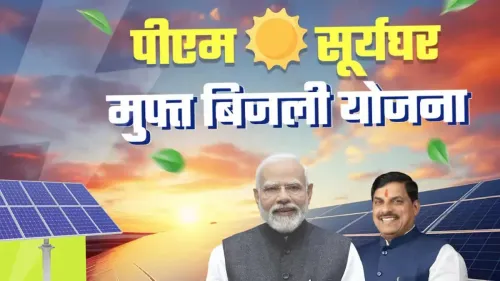
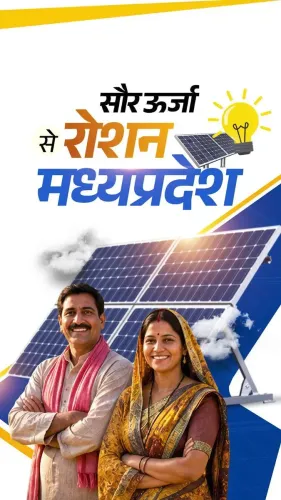
The CMO's post tags Chief Minister Devendra Fadnavis directly, signalling state-level political ownership of the scheme's rollout in Maharashtra. The post was accompanied by two images, likely carrying scheme details or promotional graphics.
Policy Backdrop
The PM Surya Ghar Muft Bijli Yojana, launched in February 2024, offers central government subsidies to households for installing rooftop solar panels, with the stated goal of delivering up to 300 units of free electricity per month to beneficiary families. The scheme is a cornerstone of India's broader push to reach 500 GW of non-fossil energy capacity by 2030.
Maharashtra, as one of India's largest states by electricity consumption, is a critical implementation ground for the programme. The state government under Chief Minister Devendra Fadnavis has been actively promoting central renewable energy schemes alongside possible additional state-level consumer support measures.
The specific claim of a ₹2,500 upfront cost for 25 years of free electricity appears to reflect a state-level calculation or incentive structure being communicated to consumers, though the precise financial breakdown has not been detailed in publicly available central scheme guidelines.
Stakeholders and Impact
The primary beneficiaries of the scheme are residential electricity consumers across Maharashtra, particularly middle- and lower-income households for whom electricity bills represent a significant recurring expenditure. Rooftop solar installations, once subsidised, are designed to sharply reduce or eliminate monthly power costs over a multi-decade horizon.
The scheme also has implications for Maharashtra's electricity distribution companies (DISCOMs), which will need to manage grid integration of distributed solar generation at scale. Installers, solar equipment manufacturers, and local contractors form another layer of stakeholders who stand to benefit from increased demand driven by subsidised adoption.
What's Next
Attention will now focus on the pace of subsidy disbursal, installation targets, and district-level rollout across Maharashtra. Independent verification of actual household bill savings after installation will be key to assessing whether the ₹2,500 and 25-year free electricity promise translates into ground-level impact for consumers.
With the state government amplifying the scheme through the Chief Minister's Office, Maharashtra's implementation record under Devendra Fadnavis is likely to be closely watched as a benchmark for other large states participating in the national rooftop solar programme.
Point of View
With Chief Minister Fadnavis personally tagged to associate his administration with a consumer-friendly promise. The ₹2,500 figure is a striking, accessible number designed to cut through to ordinary households — but the absence of a detailed breakdown invites scrutiny about whether state-level incentives are genuinely bridging the gap from the central subsidy structure. This fits a broader pattern in Indian politics where rooftop solar, once a niche green-energy talking point, has been repackaged as a direct household welfare benefit ahead of electoral cycles. The real test will be whether Maharashtra's implementation machinery can match the scale of the promise.
NationPress
18 Oct 2026
Frequently Asked Questions
What is the PM Surya Ghar Muft Bijli Yojana?
The PM Surya Ghar Muft Bijli Yojana is a central government scheme launched in February 2024 that provides subsidies for rooftop solar panel installation, aiming to deliver up to 300 units of free electricity per month to beneficiary households across India.
How can Maharashtra households get free electricity for ₹2,500?
According to the Chief Minister's Office of Maharashtra, households can enrol in the PM Surya Ghar scheme for an upfront cost of ₹2,500 and receive free electricity for 25 years, though the precise breakdown of this state-level calculation has not been publicly detailed.
Who is promoting the PM Surya Ghar scheme in Maharashtra?
The Chief Minister's Office of Maharashtra, under Chief Minister Devendra Fadnavis, is actively promoting the PM Surya Ghar Muft Bijli Yojana at the state level.
Is the ₹2,500 for 25 years free electricity claim verified?
The specific ₹2,500 upfront cost and 25-year free electricity claim appears to reflect a state-level incentive calculation. It has not been detailed in publicly available central scheme guidelines, and independent verification of actual savings is pending.
What is Maharashtra's role in India's rooftop solar programme?
Maharashtra is one of India's largest electricity-consuming states and a key implementation ground for the PM Surya Ghar Muft Bijli Yojana, with the state government under CM Devendra Fadnavis driving adoption as part of India's goal to reach 500 GW of non-fossil energy capacity by 2030.